
Staring at a massive wall of rods, reels, and terminal tackle is a frustrating experience. Every manufacturer promises theirs is the ultimate tool for catching fish, using proprietary buzzwords and flashy coatings to justify steep price tags. Yet, thousands of anglers end up with setups that feel clunky, cast poorly, or fail at the worst possible moment-not because the gear is low quality, but because the components do not work together as a cohesive system.
Selecting tackle is a mechanical equation. When your rod power, reel drag, line diameter, and lure weight match the specific physics of your target environment, casting distance increases, fatigue drops, and your hookup-to-land ratio skyrockets. When these variables are mismatched, you lose lure control, miss subtle bites, and risk structural gear failure under load.
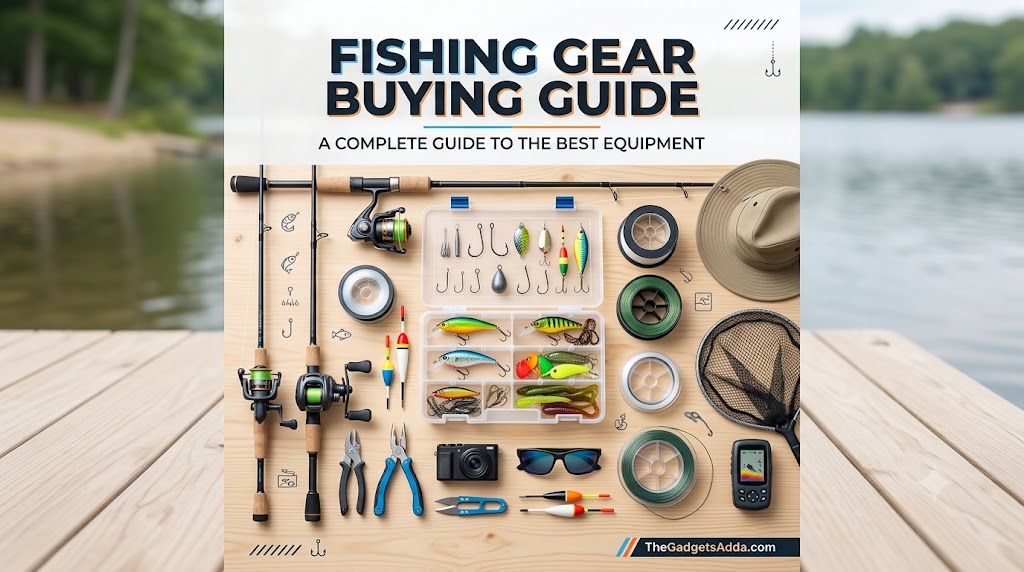
This guide breaks down the material science, mechanical engineering, and real-world dynamics of modern fishing tackle. By understanding how blank modulus, gear configurations, and line compositions interact, you can make informed purchasing decisions that maximize every dollar spent.
Defining High-Performance Fishing Tackle
High-performance fishing gear is an optimized assembly designed to transmit mechanical energy from the angler’s hand to the lure, detect changes in underwater tension, and manage the kinetic energy of a fighting fish.
[Angler Energy] ⇄ [Reel/Handle] ⇄ [Line Management] ⇄ [Rod Blank] ⇄ [Line] ⇄ [Lure/Fish]
Rather than focusing on aesthetic finishes or brand prestige, technical tackle evaluation measures precise engineering metrics:
- Tensile Strength and Modulus of Elasticity: The strain resistance of rod blank fibers.
- Start-Up Inertia: The force required to initiate drag slipping on a reel.
- Hydrodynamic Resistance: The friction and drag coefficient of a line passing through water.
- Mechanical Advantage: The torque output determined by a reel’s internal gear ratios.
Why System Balancing Matters
Buying a premium rod and pairing it with an incompatible reel defeats the purpose of high-end engineering. A high-modulus, ultra-sensitive rod blank cannot transmit vibrational data if it is weighed down by an oversized, heavy reel. Conversely, a powerful reel with a heavy-duty carbon fiber drag system will cleanly snap a light-power rod blank if the drag is set to match the reel’s capacity rather than the rod’s structural limit.
Balancing your gear creates a linear continuum of force. When a fish surges, the hook holds, the line stretches within its elastic deformation limit, the rod blank flexes to absorb kinetic energy, and the reel drag smoothly releases line right before the system reaches its breaking point. Achieving this equilibrium requires examining how each component functions mechanically.
How Fishing Gear Works: The Mechanics of the Cast and Retrieve
To select the right gear, it helps to look at the physics governing a standard casting and retrieving cycle.
The Physics of the Rod Blank
A fishing rod is a specialized lever. During a cast, the weight of the lure accelerates backward, loading energy into the rod blank (compressing the fibers on the inside curve and stretching the fibers on the outside). As the swing changes direction, the rod unloads, converting potential energy into kinetic energy to propel the lure forward.
During the retrieve and fight, the rod acts as a shock absorber and a lever that alters mechanical advantage. A longer rod moves more line per sweep of the arms, which is crucial for setting hooks at long distances, but gives the fish greater leverage against your hands. A shorter rod gives you more leverage over the fish, making it the preferred choice for heavy vertical lifting in deep water.
Reel Drag and Gear Dynamics
The reel serves two primary mechanical purposes: line storage and torque management.
When retrieving, your hand turns a handle that rotates a main gear, which drives a smaller pinion gear attached to the spool or rotor. The size ratio between these gears determines how many times the spool spins per handle turn. Higher ratios favor speed; lower ratios favor power.
High Gear Ratio (e.g., 8.1:1) ──> High Speed / Low Torque ──> Fast Lure Recovery
Low Gear Ratio  (e.g., 5.3:1) ──> Low Speed / High Torque  ──> Deep Crankbait Pulling
The drag system relies on stacked friction washers made of carbon fiber, felt, or Teflon. When a fish pulls harder than the friction threshold, these washers slide past each other, releasing line to prevent breakage.
The critical metric here is start-up inertia. Low-quality drag systems stick before they slip, creating a sudden spike in tension that can break light lines. Premium drag systems use precision-ground washers and specialized synthetic lubricants to ensure line moves smoothly the instant the threshold is crossed.
Analytical Comparison: Benefits and Limitations of Tackle Frameworks
Anglers face a fundamental choice: assemble a highly specialized arsenal or build a versatile, multi-species setup. Both paths have engineering trade-offs.
Specialized Tackle Systems
Designed for a singular presentation, such as a rod engineered exclusively for throwing 8-ounce swimbaits or a reel dialed in for deep-water finesse drop-shotting.
- Pros: Maximizes sensitivity for specific techniques; optimizes casting distance for exact lure weights; reduces physical fatigue by using minimal necessary material weight.
- Cons: Extremely high total cost of ownership; low adaptability if environmental conditions shift on the water; requires carrying a large volume of gear.
Versatile Tackle Systems
Medium-power, fast-action setups configured to handle a broad midrange of line strengths and lure weights (e.g., a 7-foot medium-heavy spinning or casting combo).
- Pros: Highly cost-effective; reduces clutter in boats or on shorelines; allows quick transitions between surface lures, mid-water presentations, and bottom rigs.
- Cons: Fails at the extremes (cannot cast ultra-light lures effectively; lacks the lifting power for heavy cover); lower overall sensitivity compared to dedicated tournament gear.
Rod Selection: Material Science, Power, and Action
The rod is the foundation of your casting accuracy and fish control. Choosing one requires breaking down its construction, power rating, and action taper.
Blank Materials and Modulus
Modern rod blanks are constructed from graphite (carbon fiber), fiberglass, or a composite blend of both.
- Graphite / Carbon Fiber: Measured by “modulus” (the stiffness-to-weight ratio of the carbon fibers). Higher modulus means the fibers are stiffer and thinner, producing a lighter, more sensitive rod that transmits vibrations clearly. However, ultra-high modulus rods are more brittle and less forgiving of high-sticking or blunt impacts.
- Fiberglass: Highly durable with a low modulus of elasticity. It bends deeply under minimal load and is highly resilient. Fiberglass is the preferred material for moving baits with treble hooks (like crankbaits) because its slower reaction time prevents you from pulling the bait out of a fish’s mouth too quickly.
- Composites: These blanks blend carbon fiber in the base for lifting power with fiberglass in the tip for flexibility, balancing durability and sensitivity.
Deciphering Power vs. Action
These two terms are frequently confused, but they describe entirely distinct mechanical properties.
Rod Power: The amount of force required to bend the rod blank. Ratings range from Ultra-Light (for tiny lures and light lines) to Extra-Heavy (for punching thick vegetation or pulling large saltwater gamefish).
Rod Action: Where along the blank the rod bends when a load is applied. This dictates how quickly the rod transitions from a flexible tip to a stiff backbone.
| Action Rating | Flex Point Location | Ideal Tactical Application |
| Extra Fast | Top 10-15% of the blank | Single hooks, jigs, soft plastics (requires quick hook-setting power) |
| Fast | Top 20-25% of the blank | All-around utility, spinnerbaits, topwaters, Texas rigs |
| Moderate | Top 30-40% of the blank | Crankbaits, jerkbaits, chatterbaits (keeps treble hooks pinned) |
| Slow | Bends evenly into lower half | Live bait fishing, specialized ultra-light panfish presentations |
Reel Architecture: Spinning, Baitcasting, and Conventional Systems
Reel selection depends on the weight of the lure you intend to cast, the thickness of your line, and the mechanical demands of the technique.
Spinning Reels (Open Face)
Spinning reels utilize a fixed spool mounted parallel to the rod blank. During a cast, line uncoils freely off the lip of the spool, driven entirely by the momentum of the lure.
- When to use: Lightweight lures (under 1/4 ounce), windy conditions, finesse tactics, and light fluorocarbon or monofilament lines.
- Key Advantage: Near-zero line resistance during casting makes it impossible to get backlashes (birds’ nests).
- Limitation: Poor handling of thick, stiff lines; lower total winch torque due to the 90-degree gear transition from the handle to the rotor.
Baitcasting Reels (Revolving Spool)
Baitcasting reels feature a spool that rotates during the cast, feeding line directly out in line with the rod guides.
- When to use: Heavy lures (1/4 ounce to several ounces), thick line diameters (heavy braid or fluorocarbon), fishing heavy cover, and scenarios requiring precise accuracy.
- Key Advantage: Direct mechanical connection provides exceptional winch power and lets you thumb the spool to stop a lure precisely next to structure.
- Limitation: Requires careful management of spool speed via mechanical and magnetic braking systems to avoid backlashes when casting into the wind.
Conventional and Trolling Reels
Designed for heavy saltwater or large freshwater species where casting is secondary to raw line capacity and maximum sustained torque. These reels lack a casting trigger mechanism and are optimized for dropping baits vertically or trailing them behind a boat.
Line Dynamics: Choosing Between Monofilament, Fluorocarbon, and Braid
Your line is the only direct physical link between you and the fish. Selecting the wrong material can ruin the performance of an otherwise perfect rod and reel setup.
Monofilament (Nylon)
The traditional choice, monofilament is a single strand of extruded nylon. It is inexpensive, easy to knot, and has a high degree of elasticity (stretching up to 25% or more under load).
- Pros: High shock absorption prevents hooks from ripping out; naturally buoyant (excellent for topwater lures); highly manageable on spinning reels.
- Cons: Susceptible to UV degradation; high stretch reduces sensitivity and hook-setting power at long distances; absorbs water, which weakens it over time.
Fluorocarbon
Extruded from polyvinylidene fluoride, fluorocarbon shares a similar refractive index to water, making it nearly invisible beneath the surface.
- Pros: Sinks quickly (ideal for diving lures and bottom rigs); highly abrasion-resistant against rocks and wood; low stretch provides excellent sensitivity.
- Cons: Stiff material memory makes it prone to jumping off spinning spools; low knot strength if not lubricated properly during tying; expensive.
Braided Line
Constructed by weaving multiple strands of high-strength synthetic fibers (like Spectra or Dyneema) into a round, ultra-thin cord.
- Pros: Zero stretch offers unmatched sensitivity and instant hooksets; incredibly high tensile strength relative to its thin diameter; casts long distances.
- Cons: Highly visible in clear water (usually requires a fluorocarbon or mono leader); zero abrasion resistance against sharp rocks or zebra mussels; slips easily if knots are not tied perfectly.
Common Gear Selection Pitfalls to Avoid
- Over-spooling or Under-spooling Reels: Filling a spinning reel too close to the lip causes loops to slide off simultaneously, creating severe knots. Under-filling increases friction against the spool lip, drastically shortening your casting distance. Leave exactly a 1/8-inch gap between the line and the edge of the spool rim.
- Matching Heavy Rods with Light Lines: Using a 10 lb test monofilament line on a heavy-power flipping rod is an engineering mismatch. The rod blank is too stiff to flex under the pressure required to break a 10 lb line, meaning any sudden shock will snap the line before the rod can bend to absorb the force.
- Ignoring Guide Material Quality: Cheap aluminum oxide rod guides wear down quickly when paired with modern braided lines. The micro-frictional heat creates deep grooves in the guide inserts, which will shred your fishing line during a cast or fight. Look for silicon carbide (SiC), Alconite, or solid titanium guides.
Step-by-Step Guide: Selecting and Balancing Your First Tactical Configuration
Follow this systematic checklist to build a properly engineered rod, reel, and line setup tailored to your target species.
Step 1: Define Your Target Species and Environment
Determine where and what you are fishing for. Heavy cover (stumps, lily pads) demands heavy line and solid rod power. Clear, open water allows for lighter, more sensitive finesse gear.
Step 2: Establish Your Lure Weight Baseline
Look at the weight of the lures you will cast most frequently. Check the manufacturer specifications printed just above the handle on any quality rod blank. Choose a rod where your target lure weight sits squarely in the middle of the recommended range.
Step 3: Match the Rod Power and Action to the Hook Type
- If using thick, single wire hooks (jigs, Texas rigs), choose a Heavy or Medium-Heavy power rod with a Fast or Extra-Fast action to drive the hook point through bone.
- If using thin wire treble hooks (crankbaits, topwaters), choose a Medium or Medium-Light power rod with a Moderate action to protect the hooks from bending out.
Step 4: Select the Reel Type and Form Factor
- For lure weights under 1/4 ounce, select a 2500 or 3000 size spinning reel.
- For lure weights over 1/4 ounce and lines thicker than 10 lb test, select a low-profile baitcasting reel in a 100 or 150 size frame.
Step 5: Calculate the Ideal Gear Ratio
- 5.1:1 to 5.5:1 (Low Speed): Best for high-resistance lures like deep-diving crankbaits where you need mechanical leverage.
- 6.2:1 to 6.8:1 (All-Purpose): Ideal for spinnerbaits, swimbaits, and multi-presentation setups.
- 7.1:1 to 8.5:1+ (High Speed): Crucial for techniques where you must pick up slack line instantly, such as jig fishing, frog fishing, or soft plastics.
Step 6: Spool with the Correct Line Architecture
Match the line diameter to the reel’s capacity ratings. If clear-water stealth and high strength are both needed, spool the reel with a braided main line for casting performance, and attach a 5-to-10-foot fluorocarbon leader using an FG knot or Double Uni knot.
Best Practices for Gear Maintenance and Longevity
High-quality tackle will last for decades if maintained systematically. Frictional heat, salt crystallization, and structural fatigue are the primary causes of gear degradation.
- Post-Saltwater Rinse: Saltwater evaporates and leaves behind microscopic sodium chloride crystals that scour aluminum gears and corrode ball bearings. Lightly mist your rods and reels with fresh water after every saltwater outing. Never use high-pressure hoses, as the force drives water and salt deep past the rubber seals into the internal gear chassis.
- Back Off the Drag Tension: When storing reels for extended periods, back the drag star or lever completely off. Leaving the drag locked down compresses the internal felt or carbon washers, flattening their texture and permanently reducing the smoothness of the drag system.
- Check for Micro-Cracks in Guides: A cracked ceramic guide ring acts like a razor blade on fishing line. Periodically run a standard cotton swab through the inside of your rod guides. If the cotton catches or frays, there is a microscopic fracture in the ceramic insert that requires replacing the guide.
Field Profiles: Four Balanced Tactical Configurations
Here are four examples of perfectly balanced configurations optimized for specific freshwater and saltwater scenarios.
1. The Finesse Bass / Inland Trout Setup
- Target Application: Clear water drop-shots, ned rigs, and inline spinners.
- Rod: 7’0″ | Medium-Light Power | Fast Action | High-Modulus Carbon Fiber
- Reel: 2500 Size Spinning Reel | 6.2:1 Gear Ratio
- Line System: 10 lb Braided Main Line down to a 6 lb Fluorocarbon Leader (joined via an Alberto Knot).
2. The Power Bass / Inshore Redfish Setup
- Target Application: Casting Texas rigs, chatterbaits, and shallow paddletails into moderate cover.
- Rod: 7’2″ | Medium-Heavy Power | Fast Action | Graphite Composite
- Reel: Low-Profile Baitcasting Reel | 7.3:1 Gear Ratio
- Line System: 40 lb Braided Main Line or a straight 15 lb Fluorocarbon line.
3. The Heavy Cover Frog / Heavy Cover Pitching Setup
- Target Application: Pulling apex predators out of dense mats, lily pads, and heavy timber.
- Rod: 7’6″ | Extra-Heavy Power | Extra-Fast Action | Solid Graphite Blank
- Reel: Heavy-Duty Baitcasting Reel with Aluminum Frame | 8.1:1 Gear Ratio
- Line System: Straight 65 lb Braided Line tied directly to the lure with a Palomar Knot.
4. The Coastal Surf Casting Setup
- Target Application: Throwing heavy metal spoons and heavy bait rigs past the breaking surf line.
- Rod: 10’6″ | Heavy Power | Moderate-Fast Action | Reinforced Composite Blank
- Reel: 5000 or 6000 Size Sealed Spinning Reel | 5.7:1 Gear Ratio
- Line System: 30 lb Braided Main Line paired with a 50 lb Monofilament Shock Leader.
Key Takeaways
- Tackle is a integrated system: Always balance your rod power, reel drag, and line class to prevent catastrophic component failures.
- Power and Action are distinct: Power measures stiffness and load resistance; Action dictates the specific flex point along the rod blank.
- Reel sizes must match line diameters: Using oversized lines on small spools creates excessive line memory, causing twists and reducing casting distance.
- Preventative maintenance saves money: Backing off drag stacks before storage and performing freshwater rinses protects your internal mechanical bearings from premature wear.
Frequently Asked Questions
What is the difference between a 2500 and a 3000 size spinning reel?
The primary difference is spool capacity and, occasionally, rotor size. In most modern reel lineups, 2500 and 3000 size reels share the exact same internal gear chassis, but the 3000 features a deeper or wider spool cut to hold thicker line diameters.
Why does my braided line slip on the reel spool?
Braided line has a smooth, slick exterior coating and lacks the natural elasticity of nylon. If tied directly to a smooth metal spool under tension, the entire wrap of line will rotate around the arbor instead of turning the spool. To fix this, always spool a few yards of monofilament backing first, or tape down your braid to a braid-ready spool arbor with a small piece of electrical tape.
Can I use saltwater fishing gear in freshwater?
Yes. Saltwater gear is engineered with advanced corrosion resistance, shielded stainless steel ball bearings, and anodized aluminum coatings. It performs exceptionally well in freshwater environments. However, freshwater gear should rarely be used in saltwater, as its internal bearings and zinc components lack protection against rapid salt oxidation.
When should I use a high-gear-ratio reel vs. a low-gear-ratio reel?
Use high ratios (7.1:1 or higher) when the rod moves the lure and the reel’s job is to collect slack line quickly (e.g., fishing jigs or soft plastics). Use low ratios (5.1:1 to 5.8:1) when the lure creates immense water resistance and you need pure winching torque to pull it through the water column (e.g., deep-diving crankbaits or heavy spinnerbaits).
What causes a fishing rod to snap mid-blank?
Barring manufacturing defects, most rod breaks occur from “high-sticking” or unrecognized micro-fractures. High-sticking happens when an angler lifts the rod past a 90-degree vertical angle during a fight or boat-flip, forcing the thin tip section to bear the entire load instead of distributing the force down into the thick, powerful backbone.
Is fluorocarbon actually invisible to fish?
While not completely invisible, fluorocarbon has a refractive index of 1.42, which is remarkably close to water’s refractive index of 1.33. In comparison, nylon monofilament sits around 1.53. This makes fluorocarbon significantly harder for fish to detect in clear water, directly improving catch rates for wary or heavily pressured fish.
How often should I replace my fishing line?
Monofilament should be replaced once a season because it degrades from UV sunlight exposure and absorbs water. Fluorocarbon lasts longer but should be swapped out every one to two seasons if it begins to show heavy physical memory or surface abrasions. High-quality braided line can easily last three to five years; you can even unspool it and reverse it onto another reel to use the fresh, unworn bottom half.
What is the advantage of a one-piece rod over a two-piece rod?
One-piece rods offer uninterrupted vibrational transfer along the blank, resulting in superior sensitivity and a perfectly smooth parabolic bend under load. Two-piece rods introduce a rigid dead zone at the connection joint (ferrule), which slightly reduces sensitivity and adds a minor point of structural stress, though they offer vastly superior transport convenience.
Why do some rods cost $50 and others cost $500?
The price difference reflects the raw material quality, manufacturing tolerances, and component engineering. A $500 rod uses premium high-tonnage carbon fiber pre-preg sheets, resin technologies that minimize dead weight, ultra-light titanium frame guides with silicon carbide rings, and precision-shaped AA cork handles. This creates a tool that is noticeably lighter, significantly more sensitive, and structurally more resilient than mass-market options.
What knot should I use to connect braid to a fluorocarbon leader?
The FG Knot is widely considered the best connection knot by professional guides and tournament anglers because it features an incredibly slim profile that glides cleanly through rod guides without catching. For a quicker field tie that is easier to execute in high winds, use the Alberto Knot or the Double Uni Knot.