When a hair-growth product promises thicker-looking hair in only 10 minutes a day, the natural question is not simply whether the gadget looks convincing. The better question is whether the device’s underlying technology makes sense, whether the specific product can be independently verified, and whether the seller’s terms are clear enough to justify spending your money.
The ROVAY Red Light Brush is an at-home scalp-care device marketed around 630nm red light, brushing/scalp stimulation and optional serum delivery. Its central pitch is convenience: combine several scalp-care steps into one short daily routine.
My preliminary verdict is cautious rather than enthusiastic. Red-light therapy is a legitimate area of research, and certain hair-growth devices have FDA clearances and clinical evidence behind them. But I could not verify the same level of product-specific evidence for ROVAY. More importantly, ROVAY’s own website contains meaningful inconsistencies around returns, shipping and company identity.
For me, that makes this a product to investigate before buying, not a device to buy solely because of its marketing claims.
Quick verdict of Rovay Red Light Brush
Best suited to: someone who wants an at-home scalp-care routine and is interested in red-light therapy but understands that evidence for the technology does not automatically validate this particular device.
Less suitable for: someone with sudden or unexplained hair loss, someone who wants an FDA-cleared device specifically, or someone unwilling to deal with unclear return terms.
Biggest advantage: the format is convenient. One handheld tool is intended to combine light treatment, scalp contact/massage and optional serum application.
Biggest concern: important commercial details are inconsistent across the seller’s own pages.
Bottom line: ROVAY is a real product being actively sold online, but the available evidence does not justify treating its hair-growth claims as clinically established for this particular device.
What is the ROVAY Red Light Brush?
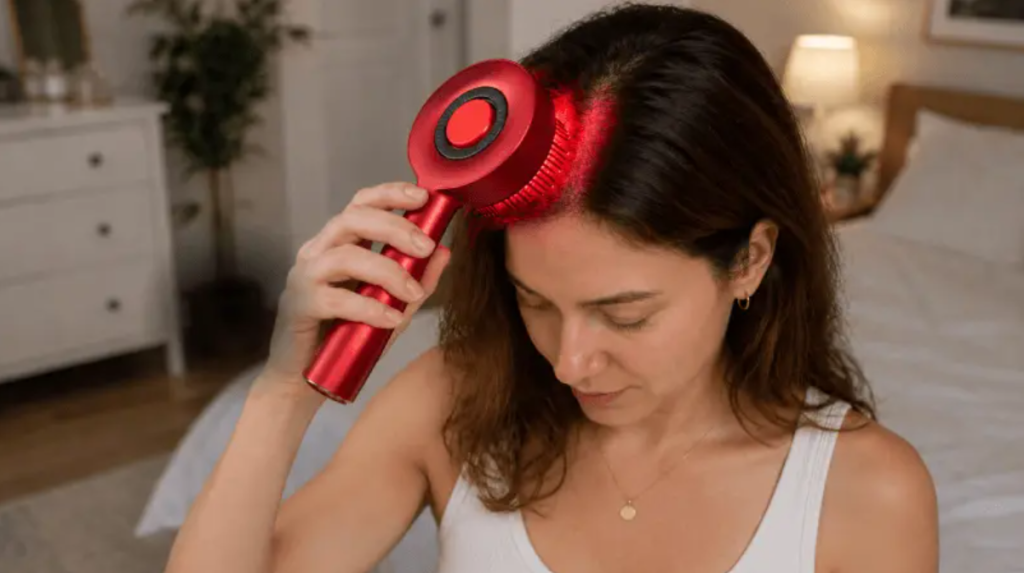
ROVAY is marketed as a handheld scalp device rather than an ordinary cosmetic hairbrush. The official website describes it as a 630nm red-light tool designed to contact the scalp directly while brushing. It is marketed toward concerns such as thinning areas, widening parts, thinning hairlines and postpartum shedding.
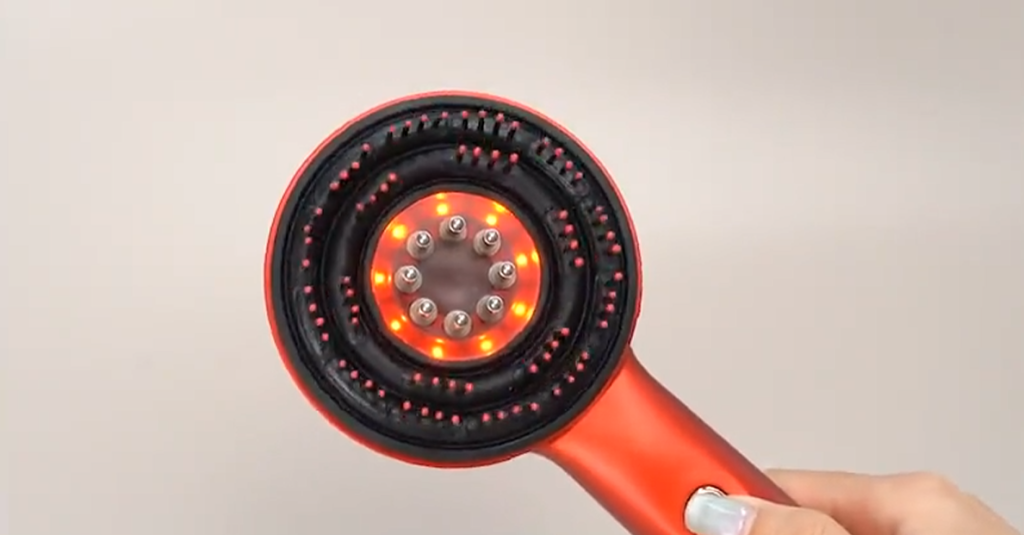
Promotional material describing the product adds a 72-tooth micro-vibration system and an optional serum reservoir. The intended idea is straightforward: part the hair, place the light closer to the scalp and combine light exposure with mechanical stimulation and optional topical application.
That makes ROVAY different from a conventional hairbrush, but it should not be confused with a medically established hair-loss treatment simply because it uses a technology that has been studied elsewhere.
How does Rovay Red Light Brush work?
The manufacturer’s basic explanation has three parts.
1. Red light
ROVAY states that it uses 630nm red light. This falls within the visible red portion of the electromagnetic spectrum. The rationale for photobiomodulation is that particular wavelengths of light can interact with tissue and potentially influence cellular processes.
2. Scalp stimulation
The product is also designed to brush or massage the scalp as it operates. ROVAY and associated promotional material describe micro-vibration as a way to stimulate the scalp while helping separate hair around the treatment area.
3. Optional serum delivery
The product is marketed as having a reservoir that can apply a user’s serum while brushing. The brand says a serum is not required and that the device can be used by itself.
The important caveat is that I could not independently verify how much serum is dispensed, how evenly it is distributed or whether the mechanism improves the absorption or effectiveness of a particular serum.

Does red-light therapy actually work for hair growth?
There is credible evidence that some forms of low-level light or laser therapy can help certain people with hair loss, particularly androgenetic alopecia.
A systematic review and meta-analysis published in 2024 identified 38 studies involving 3,098 patients and evaluated low-level laser/LED therapy for alopecia. Most participants had androgenetic alopecia, and the analysis found evidence of improvement in hair density compared with control treatment across the included literature.
Another systematic review of randomized controlled trials found a significant increase in hair density with low-level laser therapy compared with sham treatment in adults with androgenetic alopecia.
The AAD likewise says repeated red-light treatment can produce some hair regrowth in some people, while stressing that not every cause of hair loss has been adequately studied and that a full head of hair should not be expected from red light alone.
That is the evidence-backed part of the story.
The unsupported leap would be:
Red light works in some studies, therefore ROVAY’s advertised 2–4 week results are clinically proven.
I could not make that leap from the evidence I found.
What can Rovay Red Light Brush actually help with?
The most defensible description is at-home scalp and hair-care support with a red-light component.
The brand markets ROVAY for thinning hair, a widening part, receding temples, postpartum shedding and stress-related loss. Those are marketing target groups, not diagnoses established for a particular reader.
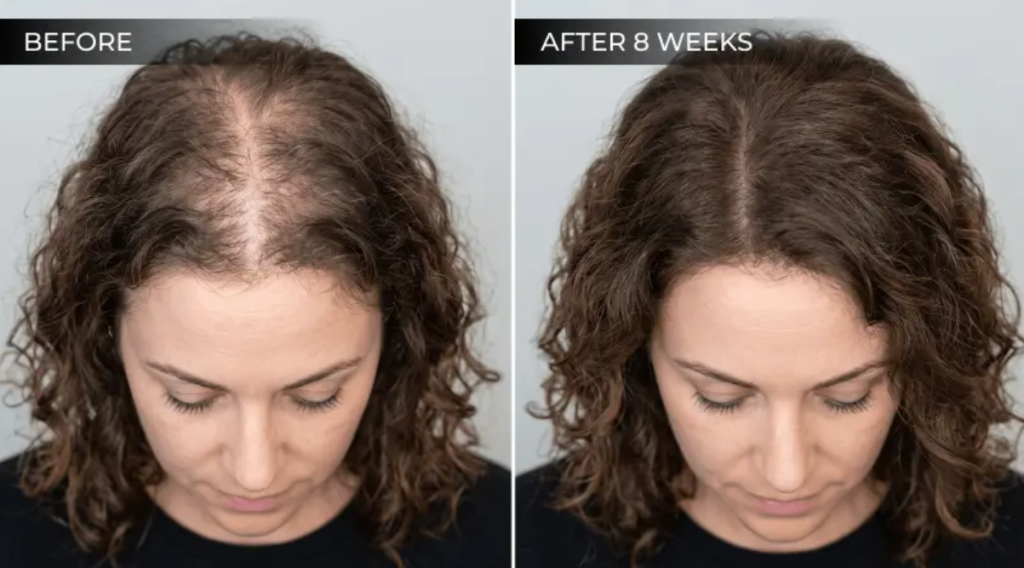
Hair loss is complicated. Causes include hereditary pattern hair loss, medications, hormonal changes, nutritional issues, illness, stress and other conditions. Treatment depends on the cause.
That is why someone with sudden, severe or unexplained hair loss should not assume that a consumer light device is the right first step. Cleveland Clinic similarly emphasizes identifying the cause of hair thinning and treating accordingly.
ROVAY Red Light Brush features: what is verified?
| Feature | What the buyer should understand | Evidence |
|---|---|---|
| 630nm red light | Brand-stated wavelength; potentially relevant because wavelength is an important parameter in photobiomodulation | Manufacturer |
| 10-minute routine | Official checkout and homepage repeatedly promote a 10-minute daily routine | Manufacturer |
| Scalp massage/vibration | Promotional materials describe micro-vibration and scalp contact | Brand/promotional material; not independently tested |
| 72 soft teeth | Repeated in promotional coverage, but no independent measurement found | Promotional sources |
| Serum reservoir | Brand says serum can be delivered while brushing and is optional | Manufacturer/promotional material |
| Rechargeable/cordless | Described in promotional product material | Brand/promotional material |
| Automatic shutoff | Promotional material describes a 10-minute automatic timer | Brand/promotional material |
| Actual irradiance | Not verified | No independent specification located |
| Energy dose / fluence | Not verified | No independent specification located |
| Vibration frequency | Not verified | No independent specification located |
| Battery runtime | Not verified | No independent test located |
| Dimensions/weight | Not verified | No reliable current specification located |
That last group is important.
For a red-light device, knowing the wavelength is useful, but wavelength alone is not enough to assess therapeutic performance. Treatment dose, exposure time and other device characteristics matter.
How to use the ROVAY Red Light Brush
The brand’s marketing describes a simple routine: charge the device, use it directly on the scalp and run the approximately 10-minute session; optional serum can be added using the built-in tank.
A practical buyer should follow the actual instructions supplied with the device rather than relying solely on marketing copy.
One useful point is that direct scalp contact matters for this type of device. Hair can physically obstruct light from reaching the skin, which is one reason comb-style and scalp-contact designs are used in hair-growth light devices. FDA documentation for cleared laser-comb products specifically describes comb teeth being used to part the hair so laser light can reach the scalp.
ROVAY Red Light Brush benefits: what is reasonable to expect?
The strongest potential benefit is routine convenience.
A person who already wants to try red-light scalp treatment may like the idea of combining brushing, scalp stimulation and optional serum application into a single ten-minute ritual.
The evidence becomes weaker when moving from convenience to guaranteed biological results.
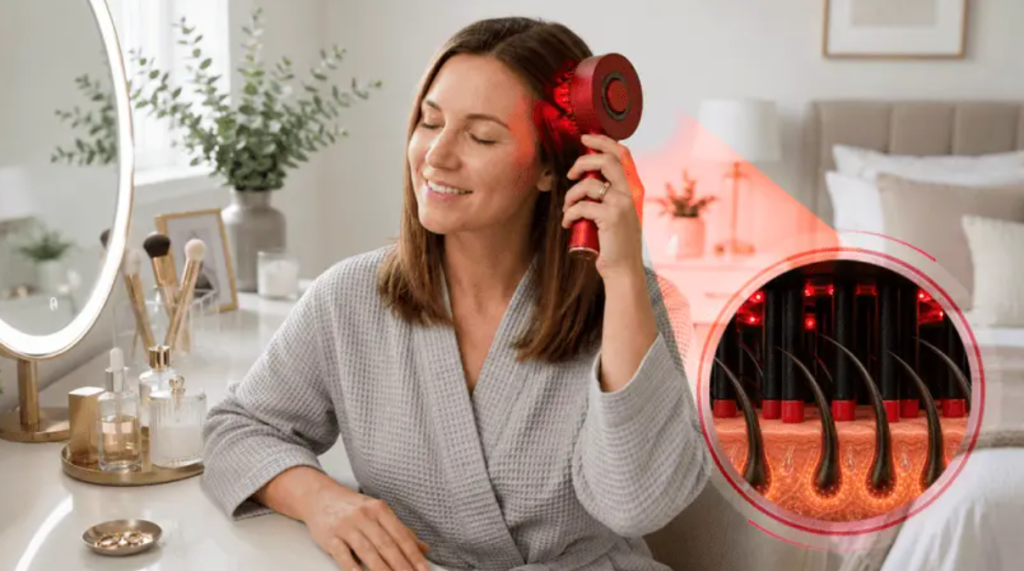
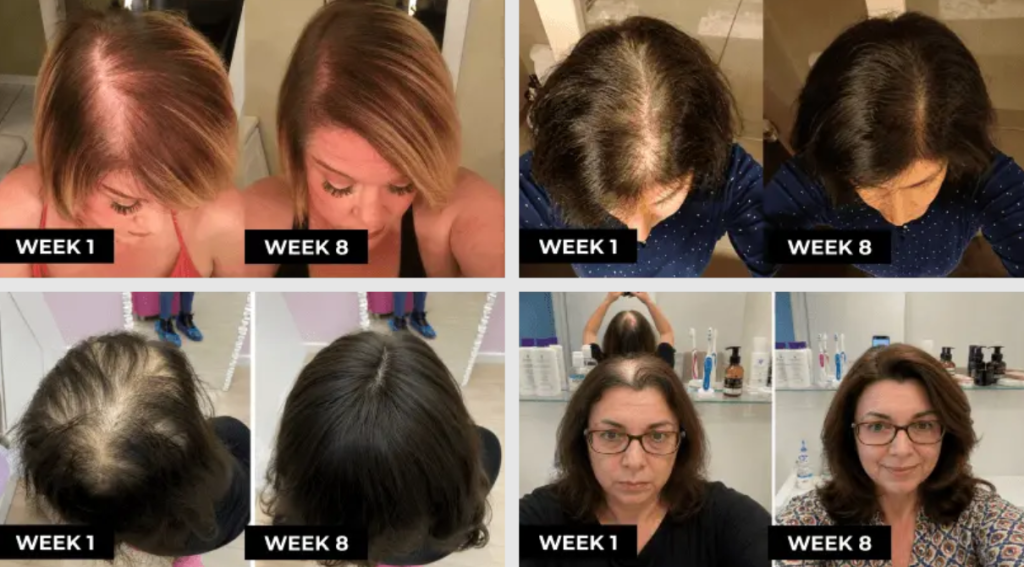
ROVAY’s website says users may see fuller-looking hair within weeks and describes specific milestones at two, four, six and eight weeks. Those are brand marketing claims, not timeframes I could independently substantiate for ROVAY itself.
For comparison, the AAD says results from home red-light devices take time, require regular treatment and do not occur for everyone.
So I would not buy the device expecting a guaranteed transformation by week four.
Is Rovay Red Light Brush safe?
Red-light therapy is fundamentally different from ultraviolet radiation. The AAD states that red light has not been found to cause cancer in the way UV exposure is known to cause skin cancer, and home devices are generally considered safe when used appropriately.
That does not mean every person should automatically use every red-light device.
The AAD recommends discussing home red-light treatment with a board-certified dermatologist, particularly because certain light-sensitive conditions and some medications can make light therapy inappropriate. Cleveland Clinic’s 2026 guidance similarly advises caution for people with photosensitive conditions or medications that increase light sensitivity.
For unexplained hair loss, the bigger safety issue is sometimes not the light itself but delaying a proper diagnosis.
ROVAY vs. FDA-cleared hair-growth devices
This is one area where buyers should be careful with terminology.
The FDA maintains an established category for hair-growth laser/comb devices, and specific products have received 510(k) clearances. For example, FDA documentation for a hair-growth LaserComb describes a randomized placebo-controlled trial and a defined intended use for male androgenetic alopecia.
Another FDA record describes a home-use low-level laser comb using approximately 655nm light, again with defined intended use and device-specific testing.
That is very different from saying “ROVAY is FDA cleared.”
I found no ROVAY-specific FDA clearance record in the FDA materials searched for this review.
That does not prove ROVAY is unsafe or ineffective. It means a buyer should not assume that regulatory status transfers from other red-light or laser products.
Pros and Cons: Rovay Red Light Brush
The Rovay Red Light Brush is best understood as a convenient serum applicator and scalp massager with cosmetic red LED light, rather than a clinical-grade medical laser device. Below is a realistic, evidence-based breakdown of its strengths and limitations.
The Pros
- Mess-Free Serum Application: The built-in liquid reservoir channels hair serums (such as minoxidil, peptide solutions, or diluted rosemary oil) directly through the comb teeth. This places active ingredients directly on the scalp instead of coating the hair strands.
- Mechanical Scalp Stimulation: Its micro-vibration massage mode helps loosen scalp tension, clears flaking buildup, and encourages local surface blood circulation.
- Affordable Entry Point: Priced around $50 to $70, it is far more accessible than clinical, FDA-cleared low-level laser therapy (LLLT) helmets and caps, which often cost between $600 and $1,200.
- Lightweight and Portable: The cordless USB-C rechargeable design is compact and travel-friendly, avoiding the bulky setup of wearable dome helmets or wired salon units.
- Quick Routine: Designed for a simple 10-minute daily session, making it easy to integrate into a standard morning or evening grooming regimen.
The Cons
- LEDs Instead of Medical Lasers: The device uses diffuse red light-emitting diodes (LEDs) rather than focused, coherent laser diodes. LEDs have significantly lower tissue penetration and energy density (fluence), meaning they do not deliver the clinical potency of medical LLLT devices.
- Uneven Manual Coverage: Unlike wearable caps that deliver hands-free, uniform light across the entire head, a brush requires continuous manual movement. This frequently leads to patchy, inconsistent light exposure and hand or arm fatigue during 10–15 minute sessions.
- Hair Blocks the Light: Even though the teeth part sections of hair, adjacent strands quickly shade the LEDs from reaching deeper follicular roots.
- Prone to Clogging: Viscous or heavy oils (like unrefined castor oil) can clog the fine dispensing conduits. The reservoir requires frequent rinsing with warm water after every use to prevent blockages.
- Exaggerated Marketing Claims: Advertorial claims that promise “rapid regrowth in weeks” are unrealistic. Follicle cycles take 3 to 6 months to demonstrate visible density shifts, and red light alone will not reverse advanced genetic hair loss.
- Strict Return Policies: While direct-to-consumer landing pages advertise a 30-day or 90-day money-back guarantee, return policies often exclude opened, used, or liquid-filled devices.
The biggest problem: ROVAY’s return policy is inconsistent
This is the section I would pay the most attention to before ordering.
The ROVAY sales and checkout pages repeatedly advertise a 90-day money-back guarantee.
But the Terms of Service state:
- the return policy lasts 30 days from delivery;
- certain cancellations can incur fees;
- a return of an item can potentially incur a 25% product-price fee;
- refunds are subject to the stated return procedures.
Those documents are not saying the same thing.
A reasonable buyer should therefore obtain written confirmation from the seller stating which return window applies to the specific order.
Do not assume that the large “90-Day Guarantee” message overrides the legal terms.
Shipping: another inconsistency worth noticing
The product pages advertise 3–7 day U.S. delivery with tracking.
The legal Terms are substantially broader. They describe processing that can take several business days, possible shipping periods extending much longer, and an estimated delivery period of up to 60 business days in one provision.
That does not necessarily mean your package will take 60 business days. It does mean the marketing promise and legal framework are not aligned cleanly enough for me to treat “3–7 days” as a guaranteed delivery deadline.
Who is actually selling Rovay Red Light Brush?
The official site does not provide a clean single answer.
The Terms of Service say the site is operated by GPC Ecomm Ltd.
The checkout footer says Global Performance Commerce Limited Inc, with a San Diego address.
The Contact page lists Sapience Group LLC as the company address.
These may have a legitimate corporate or fulfillment relationship, but the pages I reviewed do not clearly explain it.
The Contact page also contains text about UVBrite, clean water and reusable bottles, which appears unrelated to ROVAY’s hair-care product.
I would classify this as a transparency problem, not proof of fraud.
What do ROVAY reviews say?
The official site displays a 4.9 rating based on 1,847 customer reviews and several testimonials.
However, those reviews are presented on the seller’s own sales site, and I could not verify an independent review platform, independent audit of the review count or representative sampling of customers.
That means the safest wording is:
ROVAY reports a 4.9/5 customer rating on its own website.
It would be misleading to convert that into “independently verified 4.9/5 reviews.”
I also found promotional/affiliate-style pages claiming personal testing, but those accounts are not a substitute for independently controlled product testing, so I have not used them as evidence of ROVAY’s effectiveness.
ROVAY Red Light Brush price and value
At the time of research, the live checkout displayed:
| Package | Displayed price | Approx. price per brush |
|---|---|---|
| 1 brush | $77.77 | $77.77 |
| 2 brushes | $133.32 | $66.66 |
| 3 brushes | $177.77 | $59.26 |
| 4 brushes | $222.21 | $55.55 |
The corresponding reference prices displayed by the checkout were $168.99, $337.99, $506.99 and $675.99 respectively.
These are current captured offer prices, not permanent prices. The Terms explicitly say prices can change without notice.
Shipping may also be charged separately, depending on the promotion and checkout. The Terms say shipping costs are generally the customer’s responsibility unless free shipping is expressly provided.
Is $77.77 a good value?
That depends heavily on what you are buying it for.
For basic scalp massage, a dedicated electric scalp massager is likely to be a much simpler purchase.
For red-light therapy, paying for a device with an established clinical history and clearly documented regulatory status may make more sense for someone who considers those factors important.
For someone specifically attracted to the convenience of combining red light, brushing and serum application, ROVAY’s integrated design is its main value proposition.
Rovay Red Light Brush Main advantages
The strongest advantages I can defend are practical rather than clinical.
Integrated routine. The device is designed to combine several steps rather than require a separate brush, light device and serum-application routine.
Short stated session. The 10-minute format is easy to fit into an existing daily routine.
Red-light technology is not purely a marketing invention. There is legitimate research behind low-level light therapy for certain forms of hair loss.
At-home convenience. No appointments are required.
ROVAY disadvantages
The disadvantages are more significant because some concern information that determines the financial risk of the purchase.
No ROVAY-specific clinical evidence located.
No ROVAY-specific FDA clearance verified.
Key device measurements are not publicly established well enough for independent comparison, particularly irradiance, energy dose and treatment-area performance.
90-day versus 30-day return conflict.
Shipping terms conflict with the headline 3–7 day message.
Multiple company names and phone numbers appear on official pages.
The sales funnel uses urgency language and countdown mechanisms. The official site includes “flash sale,” “limited stock” and countdown messaging, but I found no independent evidence establishing that inventory really was about to sell out.
I would ignore those urgency signals when making the decision.
Who should consider Rovay Red Light Brush?
ROVAY makes the most sense for a buyer who:
- wants to experiment with an at-home scalp-care routine;
- understands that red-light research is stronger for some types of hair loss than others;
- values the all-in-one format;
- accepts that the device’s own clinical performance has not been independently established;
- is willing to confirm the return policy in writing before purchase.
Who should skip it?
I would look elsewhere if you:
- need an FDA-cleared device with verifiable documentation;
- have sudden, severe or unexplained hair loss;
- want strong product-specific clinical evidence before spending money;
- do not want to deal with contradictory return or shipping language;
- expect dramatic hair regrowth in a few weeks.
For someone experiencing significant hair loss, diagnosis should come before gadget selection.
ROVAY Red Light Brush alternatives
1. FDA-cleared laser combs or helmets
This is the most obvious alternative for someone whose priority is evidence and regulatory documentation.
FDA records contain examples of specific laser-comb and hair-growth devices that were evaluated for defined intended uses.
Trade-off: potentially better documented, but often more expensive and less focused on the convenient “brush + serum” format.
2. Minoxidil
Minoxidil is a more established hair-loss treatment option for certain forms of hair loss and is recommended in mainstream clinical guidance. Cleveland Clinic lists topical minoxidil among common treatments for pattern hair loss.
Trade-off: it is a medication rather than a device and has different instructions, contraindications and side effects.
3. Simple scalp massage
For someone whose primary interest is scalp stimulation rather than photobiomodulation, a basic scalp massager can provide mechanical stimulation without paying for red-light electronics.
Trade-off: it does not provide light therapy.
4. Dermatologist-directed treatment
This is the strongest alternative when the cause of hair loss is unclear.
A dermatologist can help determine whether the problem is pattern hair loss, temporary shedding, medication-related loss, inflammation or another condition.
Trade-off: consultation costs money and takes more effort, but the goal is to treat the actual cause rather than guess.
Is ROVAY Red Light Brush legit?
I would not label ROVAY a scam based on the evidence available.
There is an active product site, an operational checkout, published terms and identifiable contact information.
But “a real product for sale” and “a well-verified hair-growth treatment” are different conclusions.
My assessment is:
ROVAY appears to be an actively marketed consumer product, but its marketing transparency is weaker than I would prefer.
The unresolved 90-day/30-day guarantee conflict, multiple legal/company names, multiple phone numbers and mismatched shipping language are concrete reasons for caution.
I would therefore describe it as worth investigating, not automatically trustworthy simply because it has a functioning website and testimonials.
How to buy the ROVAY Red Light Brush more safely
The most transparent route is the official ROVAY site rather than an unknown marketplace seller, because that is where the published terms and checkout are located.
Before paying, I would send customer support one short written message:
“Please confirm that my order qualifies for the 90-day money-back guarantee, that there is no cancellation/return fee applicable to my order, and provide the legal seller name that will appear on my transaction.”
Keep the response with your receipt.
Also save a screenshot of the offer page, the displayed price, the guarantee language and your order confirmation. That is sensible whenever an online retailer has conflicting terms.
Faq’s About Rovay Red Light Brush
Is the ROVAY Red Light Brush FDA approved?
I did not verify an FDA clearance, approval or authorization for the ROVAY device specifically. FDA records do show other individual hair-growth light/laser devices that have been cleared for defined uses, but those clearances do not transfer automatically to ROVAY.
Does ROVAY actually regrow hair?
The underlying red-light category has evidence for some forms of hair loss, particularly androgenetic alopecia. I did not find ROVAY-specific clinical evidence strong enough to say that the device itself reliably regrows hair.
How much does ROVAY cost?
The live checkout I reviewed displayed $77.77 for one brush, with larger bundles priced at $133.32, $177.77 and $222.21. Prices can change.
Is ROVAY’s guarantee really 90 days?
The sales pages say 90 days, but the official Terms of Service say the return policy lasts 30 days from delivery. That conflict should be resolved with customer service before purchase.
Can men use the ROVAY brush?
The brand says yes and markets the device to any gender. That is a marketing statement rather than independent evidence that it is equally effective for every type of male or female hair loss.
What is the biggest thing to verify before ordering?
Confirm the actual refund period and any applicable cancellation/return fees in writing. Also confirm the expected delivery date and the legal seller name.
Does the Rovay Red Light Brush actually regrow hair on its own?
There is no independent clinical evidence proving that the Rovay device alone reverses genetic hair loss. While red light phototherapy can support cellular metabolism, low-output LEDs used manually are unlikely to generate the energy density required for significant regrowth without accompanying topical medications or proven clinical treatments.
Can I put any liquid or oil in the brush reservoir?
The reservoir works best with low-viscosity, water-based or light alcohol-based serums (such as minoxidil or peptide solutions). Highly viscous oils (like thick castor oil) will clog the fine ball-point teeth unless thinned with a lightweight carrier oil.
How often should I use the brush?
Most manufacturers suggest using the brush once daily for 10 to 15 minutes, typically alongside the application of your chosen topical serum.
Is the light emitted dangerous to the eyes?
The LEDs emit visible red light, not high-powered coherent industrial lasers. While brief casual reflection is not harmful, you should avoid staring directly into the emitting diodes when the device is powered on.
How do I clean the reservoir?
Drain any leftover serum after your session, add a few milliliters of warm water, and gently press the dispensing tips on a clean paper towel until the fluid runs clear. Allow it to air dry with the cap removed.
What is the return window for the Rovay Brush?
The storefront advertises a 30-day window. However, return conditions typically state the product must be in its original, unopened packaging. Make sure to read the merchant’s current terms before opening the unit if you are unsure about keeping it.
Final verdict: Is ROVAY worth it?
For me, ROVAY is a cautious “maybe,” not a confident recommendation.
The reason is not that red-light therapy is fake. It isn’t. There is legitimate scientific literature showing potential benefit for certain forms of hair loss, and FDA-cleared hair-growth light/laser devices do exist.
The problem is that those facts do not prove that ROVAY itself provides the same performance.
The device’s most appealing characteristic is its convenience. Its biggest weakness is the lack of strong product-specific evidence combined with inconsistent purchasing terms.
A buyer who wants an easy daily scalp-care gadget may find ROVAY interesting. A buyer who prioritizes clinical evidence, transparent specifications and clearly documented regulatory status has better reasons to consider a more established alternative.
Most importantly, do not treat the manufacturer’s 2–4 week or 4–8 week marketing timelines as guaranteed outcomes. And do not rely on the 90-day promise without first resolving the contradictory 30-day return language in the Terms.