
Travel Backpack Guide: You’re standing in your hotel room, staring at an overstuffed suitcase that won’t close. You’ve got a train to catch in 45 minutes, cobblestone streets to drag that thing across, and three flights ahead of you with baggage fees that could have paid for a nice dinner.
I’ve been there. More times than I’d like to admit.
After logging thousands of miles across six continents with everything from a 20-liter daypack to a 65-liter expedition bag, I’ve learned one thing: the right travel backpack changes everything. The wrong one? It’ll make you miserable-sore shoulders, disorganized chaos every time you need your passport, and the nagging feeling that you packed too much.
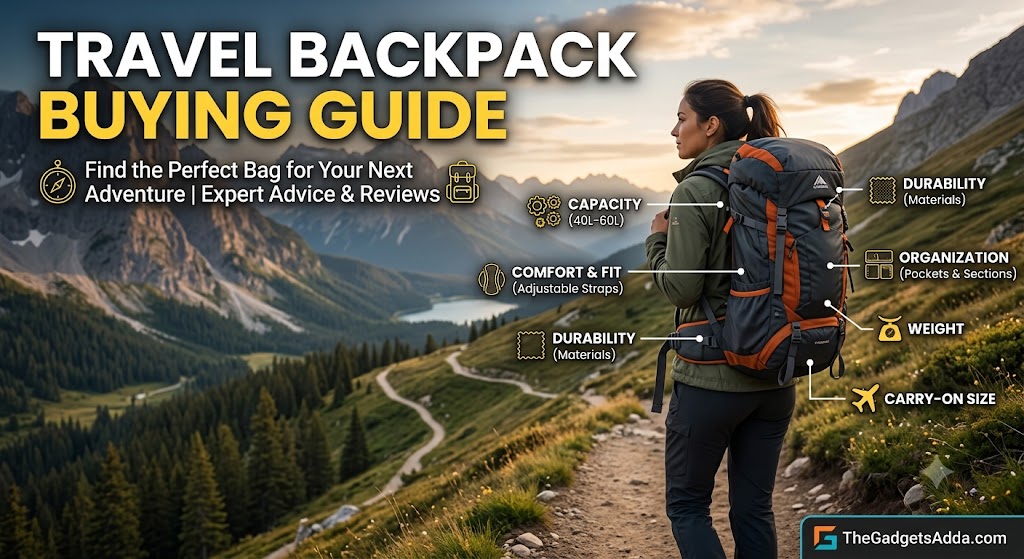
This guide isn’t another list of “top 10 backpacks” written by someone who read product descriptions. It’s a practical, experience-driven breakdown of everything that actually matters when choosing and using a travel backpack. Whether you’re planning a weekend city break, a month-long backpacking trip through Southeast Asia, or a business trip where you need to look presentable upon arrival, you’ll find what you need here.
Here’s what we’ll cover: how to determine the right size for your trips, the different types of travel backpacks and which one fits your style, key features that separate a good bag from a great one, material differences that affect durability, packing techniques that maximize space, airline carry-on rules you need to know, and common mistakes that even experienced travelers make.
What Is a Travel Backpack?
A travel backpack is a bag designed specifically for transportation and mobility during trips—distinct from hiking backpacks, school backpacks, or casual daypacks. The defining characteristics include:
- Carry-on compatibility – Most travel backpacks are sized to fit in overhead bins, typically between 30 and 45 liters.
- Suitcase-style opening – Unlike top-loading hiking packs, travel backpacks often open clamshell-style (like a suitcase) for easy packing and access.
- Organized compartments – Dedicated laptop sleeves, multiple pockets, and internal dividers keep gear accessible without unpacking everything.
- Comfort-focused harness systems – Padded shoulder straps, sternum straps, and hip belts distribute weight to prevent fatigue.
- Durable, travel-friendly materials – Fabrics that withstand airport handling, overhead bin scuffs, and the occasional rainstorm.
The travel backpack sits in a unique space: it’s more organized than a hiking pack, more mobile than a rolling suitcase, and more versatile than a duffel bag.
Why Choose a Travel Backpack Over a Suitcase?
This is the first question most travelers ask. The answer depends on your trip style, but travel backpacks offer distinct advantages:
Hands-free mobility – Navigating crowded train stations, cobblestone streets, or uneven terrain is exponentially easier with a backpack. Your hands are free for tickets, phones, or coffee.
Carry-on convenience – Most travel backpacks fit airline overhead bins, eliminating checked baggage fees and the risk of lost luggage. You walk off the plane and straight out of the airport.
Flexibility and spontaneity – With a backpack, you can change plans on a whim. No waiting at baggage carousels. No worrying about stairs or escalators. No struggling with wheels on dirt roads.
Weight savings – Backpacks are generally lighter than suitcases of comparable capacity, giving you more room for actual belongings within airline weight limits.
Durability in tough conditions – Backpacks handle rough treatment better than hard-shell suitcases. They compress into tight spaces and survive being shoved into overhead bins or under seats.
That said, suitcases have their place. If you’re staying in one hotel, moving primarily by car or taxi, and packing formal wear that needs to stay wrinkle-free, a suitcase is often the better choice. The backpack shines when you’re moving frequently, using public transportation, or traveling to destinations with less-than-perfect infrastructure.
How to Choose the Right Travel Backpack Size
Size is the most critical decision you’ll make. Get it wrong and you’ll either be lugging around empty space or playing Tetris every time you pack.
Liter Capacity Explained
Backpack capacity is measured in liters-the total volume of the main compartment and pockets combined. Here’s how sizes break down for travel:
| Capacity | Best For | Trip Duration | Airline Compatibility |
|---|---|---|---|
| 20-30L | Minimalist travel, day trips, personal item | 1-3 days | Fits under most seats |
| 30-40L | Weekend getaways, one-bag travel | 3-7 days | Standard carry-on |
| 40-50L | Extended travel, one-bag for indefinite trips | 1-4 weeks | Carry-on (check dimensions) |
| 50L+ | Long-term backpacking, gear-heavy trips | 1+ months | Usually checked baggage |
Most travelers find the 35-40 liter range to be the sweet spot. It’s large enough for a week’s worth of clothing yet small enough to qualify as a carry-on for most airlines.
How Much Can You Actually Fit?
Here’s a practical reference based on real-world packing:
- 25-30 liters: A weekend’s worth of clothing, a laptop, toiletries, and a pair of shoes.
- 35-40 liters: 5-7 outfits, laptop, toiletries, two pairs of shoes, a light jacket, and miscellaneous gear.
- 45 liters: Everything above plus extra layers, a second pair of pants, and room for souvenirs.
The 40-liter Osprey Farpoint and 35-liter Cotopaxi Allpa are perennial favorites precisely because they hit this sweet spot-enough space for most trips without exceeding carry-on limits.
Torso Length and Fit
Here’s something many guides skip: liter capacity isn’t everything. A 40-liter pack that doesn’t fit your torso will be uncomfortable regardless of how well it’s designed.
Most quality travel backpacks come in multiple sizes (S/M/L) or feature adjustable harness systems. Before buying, measure your torso length-the distance from your C7 vertebra (the prominent bone at the base of your neck) to your iliac crest (the top of your hip bones). Most packs list recommended torso ranges.
A properly fitted backpack transfers roughly 80% of the weight to your hips via the hip belt, leaving only 20% on your shoulders. This is the difference between enjoying your walk through a new city and counting down the minutes until you can set the bag down.
Types of Travel Backpacks
Not all travel backpacks are created equal. Here are the main categories and who they’re for.
Carry-On Travel Backpacks (30-45L)
Best for: Most travelers, one-bag trips, city breaks, business travel.
These packs are designed specifically to fit airline overhead bins. They open clamshell-style, have dedicated laptop compartments, and feature compression straps to keep contents secure. The Osprey Farpoint 40 and Cotopaxi Allpa 35L are the gold standards in this category.
Personal Item Backpacks (20–30L)
Best for: Minimalists, budget airlines with strict personal item rules, travelers who pack extremely light.
These fit under the seat in front of you, saving you from overhead bin battles. They’re ideal for short trips or as a secondary bag alongside a larger carry-on. The trade-off is obvious: limited space requires discipline.
Convertible Backpacks / Hybrid Bags
Best for: Travelers who want options, business travelers, multi-modal trips.
These bags convert between backpack and duffel or backpack and briefcase. The Patagonia Black Hole MLC is a standout-it carries as a backpack, duffel, or briefcase depending on your needs. Some even convert to rolling luggage, though this adds weight and complexity.
Adventure / Expedition Backpacks (50L+)
Best for: Long-term backpacking, camping, gear-heavy trips.
These are essentially hiking backpacks adapted for travel. They’re top-loading (or hybrid), feature advanced suspension systems, and can handle serious weight. The trade-off is they’re often too large for carry-on and less convenient for urban travel.
Urban / Business Travel Backpacks
Best for: Professionals, digital nomads, city travelers.
These prioritize sleek aesthetics, laptop protection, and organization over raw capacity. The Aer Travel Pack 3 and Peak Design Travel Backpack are excellent examples-they look professional enough for meetings while offering travel-friendly features.
Key Features to Look For
After testing dozens of travel backpacks, these are the features that actually matter.
Opening Style
Clamshell (suitcase-style) opening is non-negotiable for travel. Top-loading packs force you to dig through layers to find items at the bottom. Clamshell packs open flat, giving you full visibility and access to everything.
Harness System
The harness system-shoulder straps, sternum strap, and hip belt-determines comfort. Look for:
- Padded, contoured shoulder straps that don’t dig in
- Load-lifter straps that pull the pack closer to your body
- A sternum strap that stabilizes the pack
- A padded hip belt that transfers weight to your hips
A stowable harness system is a bonus-it lets you zip away the straps when checking the bag, preventing them from catching on conveyor belts.
Laptop Compartment
A dedicated, padded laptop compartment is essential for most travelers. Ideally, it should be:
- Separate from the main compartment for easy access at security
- Suspended (raised off the bottom) to protect against drops
- Fits your laptop size (most accommodate 15-16-inch laptops)
Organization Features
The right organization saves you from unpacking your entire bag to find a charging cable. Look for:
- Multiple internal pockets for smaller items
- External quick-access pockets for passport, phone, and snacks
- Compression straps to secure contents and reduce bulk
- Mesh dividers that keep clothing organized (common on Cotopaxi bags)
Security Features
- Lockable zippers that accept TSA-approved locks
- Hidden or RFID-blocking pockets for passports and cards
- Anti-slash materials (more common in urban packs)
Water Resistance
You don’t need a fully waterproof bag (unless you’re kayaking), but water-resistant materials are essential. Look for:
- DWR (durable water-repellent) coatings
- Water-resistant zippers
- TPU-coated fabrics like those on the Patagonia Black Hole
Weight
Every ounce counts when you’re carrying a bag for hours. Quality travel backpacks typically weigh between 2.5 and 4.5 pounds empty. Lighter is generally better, but don’t sacrifice durability or comfort for a few ounces.
Travel Backpack Materials: Nylon vs. Polyester
The material debate comes up constantly. Here’s the reality: both nylon and polyester are excellent backpack materials when constructed properly. The choice depends on your priorities.
Nylon
Best for: Durability, heavy loads, rugged conditions, abrasion resistance.
Nylon has a higher strength-to-weight ratio than polyester. It’s more abrasion-resistant and tear-resistant, making it ideal for bags that get dragged across rough surfaces. Nylon also has a softer, more premium feel.
Trade-offs: Nylon absorbs more water (taking longer to dry) and degrades faster under UV exposure. It can also stretch or lose shape over time.
Polyester
Best for: Hot/humid climates, color retention, shape retention, affordability.
Polyester holds its shape better than nylon, which helps structured bags maintain their carry-on dimensions. It resists UV damage and color fading, dries quickly, and is generally less expensive.
Trade-offs: Polyester is weaker than nylon at the same weight and thickness. It doesn’t have the same abrasion resistance or tear strength.
Denier and Coating Matter More Than Material
Here’s what many guides miss: the denier (fabric thickness) and coating matter more than whether it’s nylon or polyester. A 1000-denier polyester will outlast a 200-denier nylon. Similarly, a TPU-coated fabric adds significant durability regardless of base material.
Practical advice: For most travel, either material works well. Focus on fabric weight (higher denier = more durable), coating quality, and brand reputation rather than getting hung up on nylon vs. polyester.
How to Pack a Travel Backpack Like a Pro
Packing technique is just as important as the bag itself. Here’s what works.
The 40-Liter Rule
For one-bag travel, 40 liters is the sweet spot. It’s enough space for indefinite travel if you pack strategically, and it fits most airline carry-on requirements.
Use Packing Cubes
Packing cubes are non-negotiable. They organize clothing by category, compress items to save space, and let you access specific items without unpacking everything.
Strategy: Use one cube for tops, one for bottoms, one for undergarments, and one for outer layers. Compression cubes can save up to 30% of space.
Roll, Don’t Fold
Rolling clothes saves space and reduces wrinkles. Bundle rolled items in packing cubes for maximum efficiency.
Pack by Weight Distribution
Pack heavy items (shoes, toiletries, electronics) close to your back and centered between your shoulder blades. This maintains your center of gravity and prevents the pack from pulling you backward. Light items (clothing, towels) go toward the outside.
The Capsule Wardrobe Approach
Pack clothing that mixes and matches. Choose a color palette (neutrals work best) so every top works with every bottom. Stick to fast-drying, odor-resistant fabrics like merino wool or synthetic blends.
Shoes and Bulky Items
Wear your heaviest/bulkiest shoes on travel days. Pack lighter shoes in the bag. Stuff socks or small items inside shoes to save space.
Keep Essentials Accessible
Passport, phone, wallet, chargers, and medications go in external pockets or the top of the bag. You shouldn’t have to dig through the main compartment for these items.
Airline Carry-On Requirements
Understanding airline rules is essential if you plan to travel with a carry-on backpack.
Standard Carry-On Dimensions
Most international airlines allow cabin luggage up to 55 x 40 x 20 cm (22 x 16 x 8 inches) with a weight limit between 7-10 kg (15-22 lbs).
Personal Item Dimensions
Personal items (the bag that goes under the seat) typically max out around 40 x 30 x 20 cm (16 x 12 x 8 inches).
Airline Variations
- Budget airlines (Ryanair, easyJet) have stricter limits-Ryanair’s free personal item is just 40 x 30 x 20 cm.
- Full-service carriers (Lufthansa, Emirates) are more generous but enforce weight limits strictly.
- US domestic airlines generally allow 22 x 14 x 9 inches and don’t weigh carry-ons as strictly.
Practical Advice
- Check before you fly. Airline policies change, and enforcement varies.
- Aim for 22 x 14 x 9 inches (56 x 36 x 23 cm) as a safe carry-on size.
- Know your bag’s dimensions including all pockets—airlines measure the full bag.
- Keep weight under 8 kg to be safe across most carriers.
Best Travel Backpacks by Category
Based on extensive testing and real-world use, here are the standouts in each category:
Best Overall: Osprey Farpoint 40
The Osprey Farpoint 40 has been the default recommendation in the one-bag travel community for years. At 40 liters, it fits most airline carry-on requirements. The suspension system transfers weight effectively to the hips, and the entire harness stows away for checking. It’s comfortable, durable, and versatile-everything a travel backpack should be.
Best Organization: Cotopaxi Allpa 35L
The Allpa opens clamshell-style with mesh dividers that keep clothing organized and visible. It’s lightweight (3.3 lbs), durable, and available in distinctive color-block designs. Comfort is good for urban travel, though the harness system isn’t as refined as Osprey’s.
Most Durable: Patagonia Black Hole MLC 45L
Built with a TPU-coated weather-resistant shell, the Black Hole MLC handles rough conditions. At 45 liters, it maximizes carry-on allowance. The convertible design lets you carry it as a backpack, duffel, or briefcase.
Best for Business: Aer Travel Pack 3
Sleek, professional, and packed with organization, the Aer Travel Pack 3 is designed for urban travel. It includes a dedicated shoe compartment and laptop access.
Best for Photographers: Peak Design Travel Backpack 45L
Expandable from 35 to 45 liters, this pack features customizable internal dividers for camera gear. Weatherproof zippers and magnetic latches add security and convenience.
Best Budget: Osprey Daylite Carry-On
Quality doesn’t have to break the bank. The Osprey Daylite Carry-On offers durable construction, dedicated organization pockets, and a laptop compartment at roughly half the price of premium bags.
Common Travel Backpack Mistakes
Avoid these pitfalls.
Buying Too Large
The biggest mistake is buying a bag that’s too big. A 50+ liter bag encourages overpacking, may not fit as carry-on, and becomes uncomfortable when fully loaded. Start with 35–40 liters and learn to pack light.
Ignoring Fit
Liter capacity means nothing if the bag doesn’t fit your torso. A poorly fitted pack causes shoulder pain, back strain, and general misery. Try bags on with weight in them before buying.
Overlooking Weight
Empty bag weight matters. A 5-pound pack leaves less room for actual belongings within airline weight limits. Aim for under 4 pounds.
Skimping on the Harness System
A comfortable harness system is worth paying for. Cheap packs have thin, unpadded straps that dig into shoulders. Quality packs have contoured, padded straps and proper hip belts.
Not Testing Zippers and Materials
Cheap zippers fail. Thin materials tear. Before buying, inspect zipper quality, fabric thickness, and stitching. These are the failure points on budget bags.
Packing Too Much
The bag itself doesn’t cause overpacking-you do. Be ruthless. Lay everything out, then remove half. You won’t miss it.
Expert Tips from the Road
After years of travel with backpacks of all sizes, here are the lessons that stick:
Pack for one week, wear it indefinitely. Do laundry every 5–7 days. You don’t need 14 shirts for a 2-week trip.
Wear your heaviest items on travel days. That means boots, jeans, and jacket go on your body, not in the bag.
Keep a small “emergency kit” in an external pocket: earplugs, eye mask, hand sanitizer, and a portable charger. These are the things you’ll reach for most.
Use a dry bag for dirty laundry. It keeps odors contained and doubles as a makeshift washing bag.
Learn the “one in, one out” rule. If you buy something new, something old goes home or gets donated. This prevents bag creep.
Practice packing at home. Do a trial run before your trip. You’ll discover what fits, what doesn’t, and what you actually need.
Frequently Asked Questions
What size travel backpack is best for carry-on?
35-40 liters is the sweet spot. Most 40-liter packs fit airline overhead bins, and 35-liter packs are even safer for strict budget airlines.
Can I use a hiking backpack for travel?
Yes, but hiking packs are typically top-loading and less convenient for urban travel. They also tend to be deeper, which can exceed carry-on depth limits.
How much should I spend on a travel backpack?
Quality travel backpacks range from $150-$300. Below $100, you’re compromising on materials, zippers, or comfort. Above $300, you’re paying for brand or specialty features.
Is a travel backpack better than a suitcase?
For mobility, public transportation, and multi-destination trips, yes. For formal wear, extended stays in one place, or car-based travel, a suitcase is often better.
How do I clean a travel backpack?
Spot clean with mild soap and water. For deep cleaning, hand wash in a tub or use a front-loading washing machine on a gentle cycle. Never use a top-loader with an agitator-it can damage the bag.
What’s the best fabric for a travel backpack?
Both nylon and polyester work well. Choose nylon for maximum durability and abrasion resistance; choose polyester for shape retention, UV resistance, and affordability.
Can I bring a travel backpack as a personal item?
Only if it’s under 30 liters and fits the airline’s personal item dimensions (typically 16 x 12 x 8 inches). Most 35-40L packs are too large for personal item status.
How do I prevent my backpack from being stolen?
Use lockable zippers, keep valuables in hidden pockets, and never leave your bag unattended. In crowded areas, wear the bag on your front or keep a hand on it.
What’s the lightest travel backpack?
Ultralight travel backpacks can weigh under 2 pounds, but they sacrifice padding and organization. The Matador SEG45 is a lightweight option at 4.3 lbs.
How do I pack a travel backpack for a 2-week trip?
Use packing cubes, roll your clothes, pack heavy items close to your back, and stick to a capsule wardrobe. Do laundry once during the trip.
Do travel backpacks have hip belts?
Most quality travel backpacks do. The hip belt transfers weight from your shoulders to your hips, significantly improving comfort.
What is a clamshell backpack?
A clamshell backpack opens flat like a suitcase, with a zipper that runs around three sides of the main compartment. This provides full access to everything inside.
Are travel backpacks waterproof?
Most are water-resistant, not fully waterproof. They can handle light rain but not submersion. For heavy rain, use a rain cover or dry bags inside.
How do I know if a backpack fits my torso?
Measure from your C7 vertebra (the prominent bone at the base of your neck) to your iliac crest (the top of your hip bones). Compare this to the pack’s recommended torso range.
What’s the best travel backpack for budget airlines?
Look for a 30–35L pack that fits personal item dimensions. The Osprey Daylite 26+6 and CabinZero 28L are popular choices for strict airlines.
Key Takeaways
- 35-40 liters is the optimal size for most travelers-enough space for indefinite travel while fitting most airline carry-on requirements.
- Clamshell opening is essential for easy packing and access.
- Fit matters more than capacity-a properly fitted pack transfers weight to your hips, not your shoulders.
- Packing cubes and rolling save space and keep you organized.
- Nylon and polyester both work well-focus on fabric weight and construction quality instead of getting hung up on the material.
- Know your airline’s rules before you buy-dimensions and weight limits vary significantly.
- The best backpack is the one that fits your specific travel style, not the one with the most features or highest price.
Final Verdict
A travel backpack is one of the most impactful purchases you’ll make as a traveler. The right one makes moving between cities, navigating airports, and exploring new places effortless. The wrong one turns every transit day into a chore.
Start with these principles:
- Choose 35-40 liters unless you have a specific reason not to.
- Prioritize fit and comfort over brand or aesthetics.
- Look for clamshell opening, a good harness system, and durable materials.
- Pack light and use packing cubes.
- Know your airline’s rules before you fly.
The Osprey Farpoint 40 remains the gold standard for most travelers-it’s comfortable, durable, and carry-on compatible. The Cotopaxi Allpa 35L offers superior organization for those who value structure. The Patagonia Black Hole MLC 45L is the rugged choice for adventurous travelers.
Whatever you choose, remember: the bag is just a tool. The real skill is learning to travel with less. Master that, and you’ll never look back.