
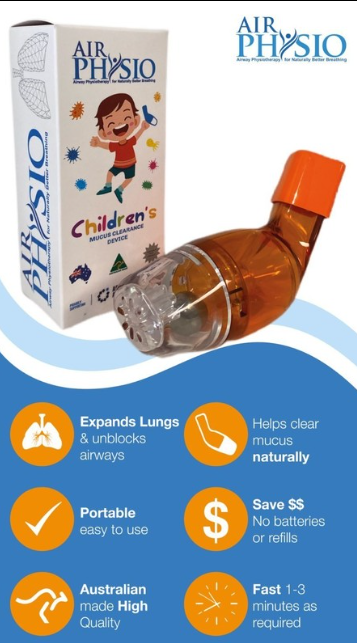
AirPhysio for Children is a handheld OPEP device designed to assist with mucus clearance. The official child product page currently lists a low-resistance version for children ages 3–10 at $66.99.
The underlying OPEP concept is legitimate: breathing out through resistance can create positive expiratory pressure and oscillations that help mobilize airway secretions. The FDA’s 2021 510(k) record for AirPhysio identifies its indication as improving clearance of mucus secretions from the airways.
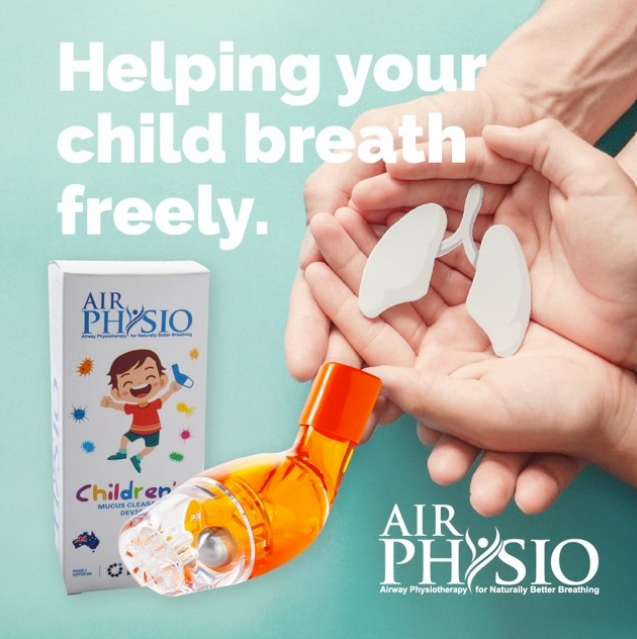
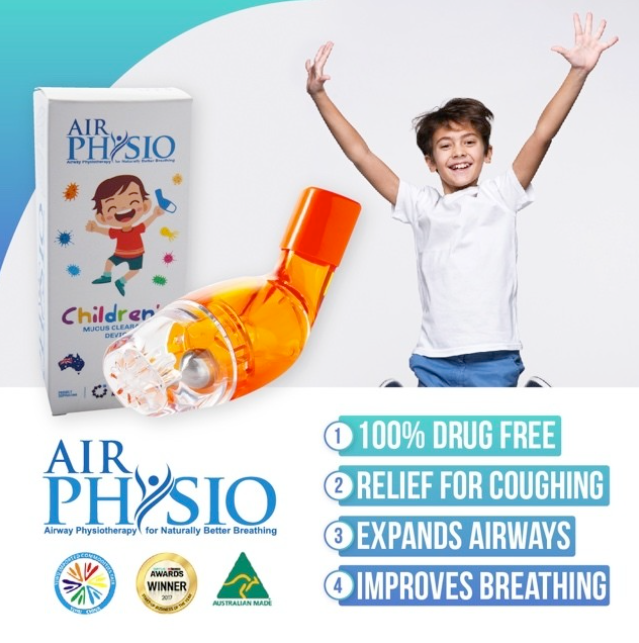
The important qualification is that this does not mean AirPhysio is proven to treat every respiratory problem marketed on its sales pages. The manufacturer promotes the children’s model for asthma and recovery from colds and flu, while the FDA indication is narrower and focused on mucus clearance.
For a child who has a clinician-recognized need for airway clearance and can use an OPEP device correctly, AirPhysio may be a reasonable device to discuss with that healthcare professional. For a child with unexplained breathing difficulty, a serious respiratory condition, or symptoms that need diagnosis, buying a mucus-clearance gadget should not come before medical evaluation.
Quick verdict About AirPhysio for Children
Best suited to:
- Children for whom a clinician has identified a role for airway-clearance or PEP therapy.
- Families looking for a compact, non-powered OPEP device.
- Children who can follow breathing instructions and can use the device under appropriate supervision.
Less suitable for:
- A child having an acute breathing emergency.
- Parents looking for a replacement for prescribed asthma medicines.
- Children who cannot reliably cooperate with the breathing technique.
- Families who are uncomfortable with the manufacturer’s unresolved warranty/product-version information.

Bottom line: AirPhysio for Children appears to be a genuine OPEP device rather than a mystery wellness gadget. The strongest case for buying it is the underlying airway-clearance function, not the broader promises about asthma, sleep or lung performance.
What Is AirPhysio for Children?
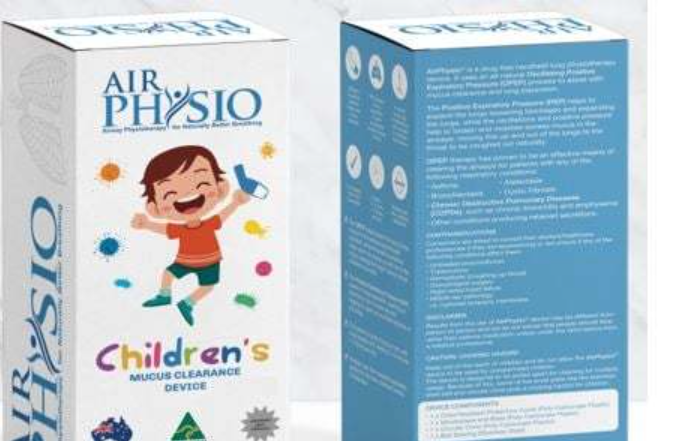
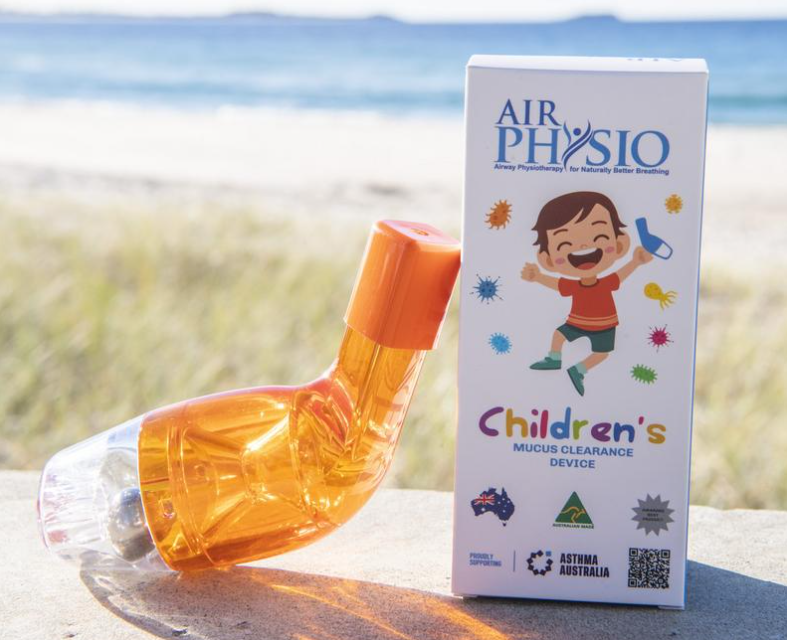
AirPhysio for Children is a small, reusable airway-clearance device. The manufacturer describes it as an oscillating positive expiratory pressure device, or OPEP. The children’s version uses a low-resistance ball bearing intended for children with lower expiratory strength or lower lung capacity and is currently marketed for ages 3–10.
The listed size is 46 × 56 × 126 mm, and the listed weight is 120 g.
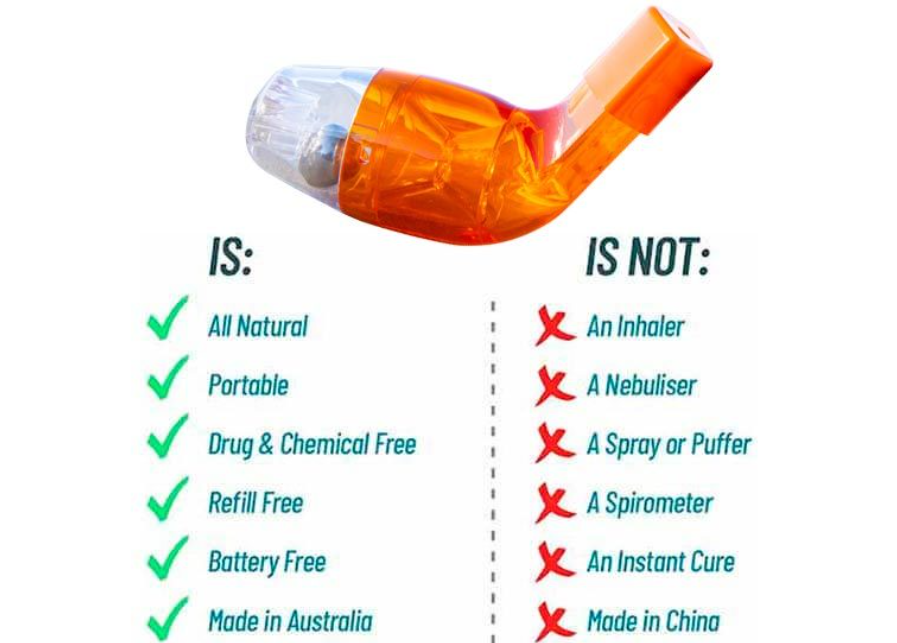
Inside the device is a stainless-steel ball seated in a cone. When the user exhales through the device, the airflow moves the ball, creating resistance and oscillation. The FDA’s 510(k) documentation describes the same basic mechanical principle: a moving stainless-steel ball creates resistance, oscillates during exhalation, and helps mobilize mucus.
That is the key distinction: AirPhysio is an airway-clearance device, not a conventional medication-delivery device.
What problem is it designed to address?
The FDA’s intended-use description is much more specific than the advertising language: improving clearance of mucus secretions from the airways through positive expiratory pressure.
That makes AirPhysio most logically relevant when mucus retention or airway-clearance problems are part of a child’s respiratory care.
It does not mean that every child with coughing, wheezing or asthma automatically needs an OPEP device.
How does AirPhysio for Children work?
The mechanism is easier to understand than some of the marketing makes it sound.
When the child exhales through the device, the airflow lifts the internal stainless-steel ball. Gravity then pulls it back down. This repeated movement creates oscillating airflow and positive expiratory pressure. The FDA describes the resulting action as helping loosen mucus and maintain airway patency during exhalation.

In practical terms, the device is trying to make exhaling against resistance produce a physical airway-clearance effect.
The broader OPEP concept is well established enough that PEP/OPEP appears in airway-clearance guidelines and research. However, different devices can behave differently mechanically, and correct technique matters.
What makes the children’s model different?
The exact child model is supplied with a lower-resistance ball bearing than standard configurations, according to AirPhysio. The purpose is to make the expiratory load more appropriate for children or people with lower lung capacity.
This is a meaningful feature because an OPEP device only helps if the user can generate the required expiratory flow and pressure consistently.
One important point for parents
Technique matters.
A pediatric study involving 21 children with cystic fibrosis found substantial variation in how children performed OPEP therapy; none reached the study’s target therapeutic pressure range during their normal routine despite standardized instruction. The authors concluded that poor technique could compromise airway-clearance effects.
So “Can my child blow into this?” is not the only question. A better question is:
Can my child consistently follow the breathing instructions well enough for an OPEP device to be useful?
What does AirPhysio for Children actually do?
This is where the review needs to separate mechanism from marketing.
Supported by documentation
The device is intended to:
- Provide positive expiratory pressure.
- Create airway oscillations.
- Assist mucus secretion clearance.
- Be used as a non-sterile, reusable home device.
Manufacturer marketing claims
AirPhysio’s children’s page also promotes claims involving:
- Asthma management.
- Recovery from colds and flu.
- Improved lung function.
- Reduced respiratory symptoms.
- Increased physical activity.
- Easier breathing.
- Improved sleep.
These claims should not all be treated as equally established.
The FDA record does not specifically give “treats childhood asthma” as the device’s indication. It describes mucus clearance and PEP therapy instead.
That distinction is one of the most important findings in this AirPhysio for Children review.
What Does the FDA Say About AirPhysio for Children?
This is one of the most important details to understand before purchasing.
The FDA has a public 510(k) record, K203209, for the AirPhysio Positive Expiratory Pressure (PEP) Device. The FDA classified it as a Class II device and determined it substantially equivalent to a legally marketed predicate device. The listed indication is improving clearance of mucus secretions from the airways.
That is more precise than saying simply “FDA approved.”
A 510(k) substantial-equivalence decision is not the same thing as a premarket approval determination, and the FDA’s letter explicitly explains that distinction.
What that means for shoppers
The FDA record supports the existence and regulatory status of the AirPhysio PEP device for its stated mucus-clearance use.
It does not, by itself, establish that AirPhysio Children cures asthma, treats every cold-related cough, prevents respiratory infections, or replaces prescribed therapy.
That distinction is especially important because the current children’s marketing page makes broader claims around asthma, colds, lung function and respiratory conditions.
AirPhysio for Children Features
Low-resistance design
The manufacturer says the child model uses a low-resistance ball bearing and is designed for children ages 3–10.
No batteries or power cord
The device is mechanically powered by the user’s exhaled breath, so there is no battery to recharge during use. The FDA describes the power source as manual exhalation.
Small and portable
At 120 g and roughly 12.6 cm in length, it is considerably easier to carry than larger powered respiratory equipment.
Reusable
It is designed for repeated home use rather than a single session. That means cleaning becomes part of the ownership routine.
Child-resistant protective cover
The device includes a child-resistant protective cover. This is not merely a convenience feature: the manufacturer warns that internal small components, including the steel ball and cone, can present a choking hazard if the device is disassembled.
What Are the Potential Benefits of AirPhysio for Children?
The most defensible benefits relate to airway clearance, rather than sweeping claims about lung health.
Helping mobilize mucus
This is the core intended use described in the FDA record.
Adding a portable option to an airway-clearance routine
OPEP devices can be useful because they allow airway clearance to be performed with a small handheld device rather than relying entirely on larger equipment or manual techniques.
The Cystic Fibrosis Foundation includes PEP and OPEP among established airway-clearance options and emphasizes that the best approach should be individualized.
Potentially improving adherence for some children
A 2026 randomized study in children with non-CF bronchiectasis found that the group using OPEP alongside a multicomponent chest-physiotherapy program had higher adherence, although the addition of OPEP did not produce additional clinical benefits over the broader program.
That is a useful real-world lesson: ease of use and willingness to perform therapy can matter, but a device is not automatically superior just because it oscillates.
What AirPhysio for Children Has Not Been Proven to Do
This is where many online reviews become too confident.
I did not locate a pediatric clinical trial showing that the AirPhysio Children model specifically:
- cures asthma
- prevents asthma attacks
- shortens the common cold
- prevents respiratory infections
- permanently strengthens a child’s lungs
- replaces prescribed respiratory medication
The manufacturer does make broader claims around these areas, but those should be presented as manufacturer claims, not as established AirPhysio-specific clinical outcomes.
The distinction matters because evidence for a whole category of OPEP devices is not automatically evidence that one specific branded device produces the same clinical outcome in every child.
AirPhysio for Children Safety: Who Should Be Careful?
The manufacturer’s current pages list contraindications including:
- pneumothorax
- tuberculosis
- coughing up blood (hemoptysis)
- esophageal surgery
- right-sided heart failure
- certain middle-ear problems, including a ruptured tympanic membrane
The manufacturer also warns about a choking hazard and says children should not use the device without supervision because the device can be disassembled and contains small parts.
For children, that warning deserves more attention than it usually gets in promotional articles.
Talk to the child’s healthcare professional before using it when:
- the breathing problem has not been diagnosed
- the child has a significant chronic respiratory disease
- the child has difficulty generating the required exhalation
- the child has any condition included in the manufacturer’s contraindication list
- you are considering using it instead of prescribed treatment
For children with bronchiectasis, ERS guidance recommends individualized, age-appropriate airway-clearance techniques taught by clinicians experienced in pediatric respiratory care.
My research and testing methodology
I did not perform first-hand testing.
That matters because some online reviews use language such as “I tested it for 30 days” and then attribute improvements in symptoms directly to the device. The supplied Secret Trends article is an example: it describes an alleged parent-and-child trial and major symptom changes. Because those results cannot be independently verified, they are not included here as product-testing evidence.
A stronger review separates:
Regulatory evidence: the FDA 510(k) record.
Manufacturer information: product specifications, instructions, warnings and pricing.
Independent evidence: peer-reviewed research on OPEP and pediatric airway clearance.
Editorial analysis: whether those facts make the product a sensible purchase for a particular buyer.
That is the framework used here.
How to Use AirPhysio for Children
The manufacturer’s general instructions are based on a controlled exhalation rather than forceful blowing.
A typical sequence is:
Breathe in → hold briefly → breathe out through AirPhysio → allow the device to oscillate → cough/clear mucus when appropriate → repeat according to the prescribed routine.
Do not encourage a child to blow as hard as possible. The manufacturer’s instructions specifically caution against excessive force and note that lightheadedness can occur with overexertion.
Because this is a children’s respiratory device, the instructions supplied with the specific model and any clinician instruction should take priority over a generic online guide.
Cleaning and Maintenance
For single-patient use, the manufacturer says to clean the device after every therapy session.
The general cleaning process is:
- disassemble the device
- wash the components with tap water and mild soap or detergent
- rinse thoroughly
- dry with a clean towel
- reassemble and store it in a clean, dry place
The manufacturer’s guide also recommends more vigorous cleaning at least once daily using an alcohol solution in the stated concentration range.
This is one practical downside compared with disposable devices: you have to actually keep up with cleaning.
AirPhysio for Children vs. Other Airway-Clearance Options
There is no universal “best” OPEP device for every child.
| Option | What it does | Important consideration |
|---|---|---|
| AirPhysio Children | Mechanical OPEP/PEP airway clearance | Low-resistance child model; simple design; current manufacturer age claim 3–10 |
| Aerobika OPEP | OPEP airway clearance | Manufacturer offers a prescription device and describes use with or without nebulizer therapy |
| Acapella Choice | PEP plus oscillation | Used in pediatric and adult airway-clearance settings |
| PEP mask / other ACTs | Positive pressure or breathing-based airway clearance | Often individualized and taught as part of respiratory physiotherapy |
The Cystic Fibrosis Foundation says no single airway-clearance technique has been shown to be universally superior, and that choices should be individualized according to patient factors, age, preference and history.
Monaghan Medical says its respiratory devices, including Aerobika, require a prescription in the US.
Great Ormond Street Hospital describes the Acapella Choice as a treatment used for children and adults who need help clearing secretions.
The practical takeaway
The relevant comparison is not:
“Which device has the most impressive marketing?”
It is:
“Which airway-clearance approach can my child use correctly, safely, consistently and appropriately for their respiratory condition?”
What I like about AirPhysio for Children
The strongest aspect of AirPhysio for Children is not the “drug-free” marketing. It is the straightforward physical mechanism.
The FDA documentation explains exactly what happens: exhaled airflow moves a weighted stainless-steel ball, creating resistance and oscillations. That gives the buyer something concrete to evaluate instead of asking them to trust a vague “natural breathing” claim.
I also like that the exact child device is relatively compact and includes a lower-resistance configuration intended for children.
What concerns me about AirPhysio for Children
The biggest concern is how easily a buyer could interpret AirPhysio as an asthma-treatment replacement.
That is not how I would frame it.
NHLBI asthma guidance focuses on evidence-based asthma management, including inhaled corticosteroids, bronchodilator strategies, trigger reduction and individualized asthma action plans. I did not find AirPhysio presented by NHLBI as a rescue treatment for an acute asthma attack.
An OPEP device may have a role in airway clearance for selected patients, but that is different from treating the underlying inflammatory process of asthma.
A second concern is technique. Pediatric research shows that simply handing a child a device doesn’t guarantee that the desired expiratory pressure and oscillation are being produced.
AirPhysio for Children Price & Cost
At the time of this research, the official product page listed AirPhysio Children at $66.99.
That price can change, so it is better to treat it as a current research snapshot rather than a permanent MSRP.
Other ownership costs
There is no battery or medication cartridge to keep buying, but there is an ongoing cleaning and maintenance requirement.
One thing I would verify before buying
The manufacturer’s current pages are inconsistent about lifespan.
The children’s marketing page says the device is expected to last up to three years, while the terms page states that the device’s operational lifespan is two years from the date of opening.
I would not treat either figure as definitive without confirmation from the seller for the exact child model you are ordering.
Shipping, Returns & Warranty
The official shipping page currently lists an estimated 4–5 business days for the USA, while warning that actual delivery can vary.
The current returns page states that returns must be requested within 30 days after receiving the item, that the product must be in the original packaging with proof of purchase, and that the customer is responsible for return shipping.
Warranty
A warranty-registration page exists, but the public warranty page I reviewed does not state a clear warranty duration.
That is worth checking before purchase.
Another policy inconsistency
The separate terms page contains language stating that refunds will not be given after production or shipment has started, while the returns page describes a 30-day return policy after receipt.
Because of that discrepancy, I would save a copy of the policy shown at checkout before placing the order.
Is AirPhysio for Children Legit?
There is evidence that it is a real medical-device product from an identifiable company.
AirPhysio has:
- a current manufacturer website
- a published children’s product page
- a public FDA 510(k) record for the AirPhysio PEP device
- published instructions and maintenance information
- customer support information
- a defined return process
But legitimate product and proven clinical effectiveness for every marketing claim are two different questions.
The available evidence supports the OPEP mechanism and airway-clearance concept. It does not justify treating every claim in promotional advertorials as clinically established.
Who Should Consider AirPhysio for Children?
AirPhysio may be worth discussing with a pediatric respiratory professional when:
- the child has a known condition involving problematic airway secretions
- airway clearance is already part of the child’s management plan
- the child can follow breathing instructions
- a portable, non-powered OPEP device fits the family’s routine
- the device is being used as part of an appropriate respiratory-care plan
The strongest medical rationale is airway clearance, not a vague promise of “stronger lungs.”
Who Should Probably Skip It?
This product is less compelling when:
- the child’s breathing problem has not been medically evaluated
- you are looking for an asthma replacement rather than an airway-clearance aid
- the child cannot reliably perform the breathing technique
- you want something that requires virtually no cleaning
- you expect a device purchase alone to resolve recurring respiratory problems
- the child has a contraindication listed by the manufacturer
For children with significant respiratory disease, the question should be “Is this the right airway-clearance method?”, not simply “Does this gadget work?”
AirPhysio for Children Pros and Cons
AirPhysio for Children Pros
- Small, portable design
- No battery or power source
- Low-resistance child version
- Reusable
- Straightforward OPEP mechanism
- Current official US price is relatively easy to find
- Manufacturer publishes cleaning and usage instructions
AirPhysio for Children Cons
- Product-specific pediatric clinical evidence is limited
- Correct technique matters
- Cleaning is required after use
- The manufacturer’s age language is inconsistent across marketing materials
- Lifespan information is inconsistent
- Public warranty duration is unclear
- Some marketing claims go beyond what the FDA indication establishes
- Not suitable for unsupervised use because of small internal parts
Where to Buy AirPhysio for Children
The cleanest source for independently checking the current listed price is the manufacturer’s product page, which currently shows $66.99.
For readers using our affiliate link, note that the supplied link currently routes to a WellWellWell promotional advertorial. The page contains strong personal success stories and promotional claims, so it should be treated as a purchase funnel rather than independent clinical evidence.
Check the current offer:
View the current AirPhysio for Children offer
Before paying, confirm the child model, age guidance, current total price, return terms and warranty terms.
AirPhysio for Children reviews and consumer reports
There is a major information-quality problem with this search query.
I found online testimonials and third-party review pages, but I would not treat them as equivalent to clinical evidence.
The official children’s page contains testimonials describing mucus clearance and improved breathing, but these are consumer statements presented by the manufacturer.
The Secret Trends article goes further and claims a 30-day parent-led testing experience, including large reductions in wheezing and rescue-inhaler use. Those are interesting anecdotes, but they are not independently verified clinical measurements, and I would not use them to establish efficacy.
I also did not find evidence of a Consumer Reports product rating for this exact product that I would regard as authoritative.
What should parents check before ordering?
A good pre-purchase checklist is simple:
First: Ask whether the child’s clinician actually wants an OPEP/PEP approach.
Second: Confirm the correct resistance and model for the child.
Third: Make sure the child can cooperate with the breathing technique.
Fourth: Read the contraindications and choking warning.
Fifth: Confirm the exact product SKU, especially given the AirPhysio Children/Better Breathing Kids discrepancy.
Sixth: Review the return policy and verify the warranty duration before payment.
Those questions are more meaningful than a generic “does it work?” headline.
Frequently Asked Questions About Air physio For Children
Is AirPhysio for Children worth it?
Its value depends heavily on whether OPEP is appropriate for the child. For a child with a clinician-identified airway-clearance need, the portable mechanical design may be useful. It is harder to justify based only on general “better breathing” marketing claims.
How does AirPhysio for Children work?
The child exhales through the device, causing an internal stainless-steel ball to oscillate. This creates positive expiratory pressure and oscillations intended to help mobilize airway mucus.
How old does a child need to be to use AirPhysio?
The current official AirPhysio Children page says ages 3–10. However, one current promotional advertorial says 4+, so parents should verify the appropriate age/model before ordering.
Does AirPhysio treat asthma?
The manufacturer markets the children’s device for assisting with asthma management, but the FDA’s stated indication is improving clearance of mucus secretions from the airways. That is narrower than treating asthma itself.
Can AirPhysio replace an inhaler?
There is no basis here for recommending it as a replacement for prescribed asthma or respiratory medication. The manufacturer’s own guide describes using AirPhysio after aerosol medication, which is consistent with an adjunctive role.
Does AirPhysio help with a cold?
The manufacturer markets the children’s version for recovery from colds and flu, but I did not find an AirPhysio-specific clinical trial establishing that it shortens a common cold.
Is AirPhysio FDA approved?
The AirPhysio PEP device has a public FDA 510(k) substantial-equivalence record, K203209. Calling that simply “FDA approved” without qualification would be imprecise.
How often should a child use it?
The manufacturer provides general instructions for repeated breaths and sessions, but the appropriate frequency should depend on the child’s condition and instructions from the healthcare professional overseeing airway clearance.
Does AirPhysio have a warranty?
The manufacturer provides a warranty-registration page, but the public page reviewed does not state a clear warranty duration.
Is AirPhysio safe for children?
The manufacturer includes contraindications and warns of a choking hazard from small internal parts. Children should not be allowed to disassemble the device or use it unsupervised.
What age is AirPhysio Children for?
The exact product page for the AirPhysio Device for Children says 3–10 years old. A separate product called Better Breathing Kids is listed for 4–14 years, which is why buyers should confirm the exact model.
Can AirPhysio replace an asthma inhaler?
It should not be treated as a replacement for prescribed asthma medication or emergency treatment. Its FDA indication centers on mucus clearance and PEP therapy rather than replacing asthma drugs.
Is AirPhysio FDA approved?
The FDA database shows a 510(k) substantial-equivalence decision for the AirPhysio Positive Expiratory Pressure device. “510(k) cleared/substantially equivalent” should not be casually described as the same thing as FDA approval through the PMA pathway.
What are the main drawbacks?
The biggest issues are technique requirements, the need for supervision with children, incomplete clarity around the current warranty duration, and the difference between the exact AirPhysio Children listing and the newer Better Breathing Kids product.
What are the alternatives?
Other OPEP approaches include Aerobika and Acapella, but the appropriate choice depends on the child’s condition, technique, resistance requirements and clinician guidance.
Final verdict
AirPhysio for Children is a real, verifiable OPEP/PEP airway-clearance device, and its basic mechanism is supported by regulatory documentation and the broader medical literature on airway-clearance therapy. The FDA record supports its use as a PEP device for improving mucus clearance.
Where I would be more cautious is the marketing around asthma, lung strengthening, sleep and broad improvements in respiratory health. Those claims extend beyond the narrowest evidence I could verify for this exact children’s model. Pediatric OPEP research also shows that technique and adherence can materially affect outcomes.
So the practical question is not “Is AirPhysio a miracle breathing product?”
It is: Does this particular child have a clinically appropriate need for OPEP airway clearance, and can the family use this specific device correctly and consistently?
At the current listed $66.99, it may be reasonable to consider for an appropriate child, but I would verify the model, resistance, warranty and clinician suitability before purchasing.