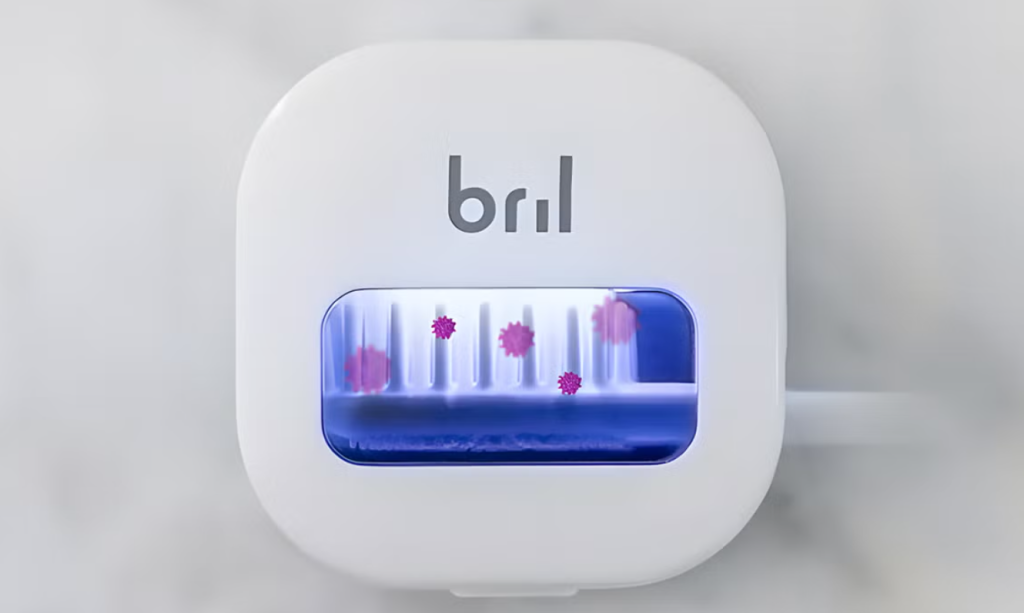
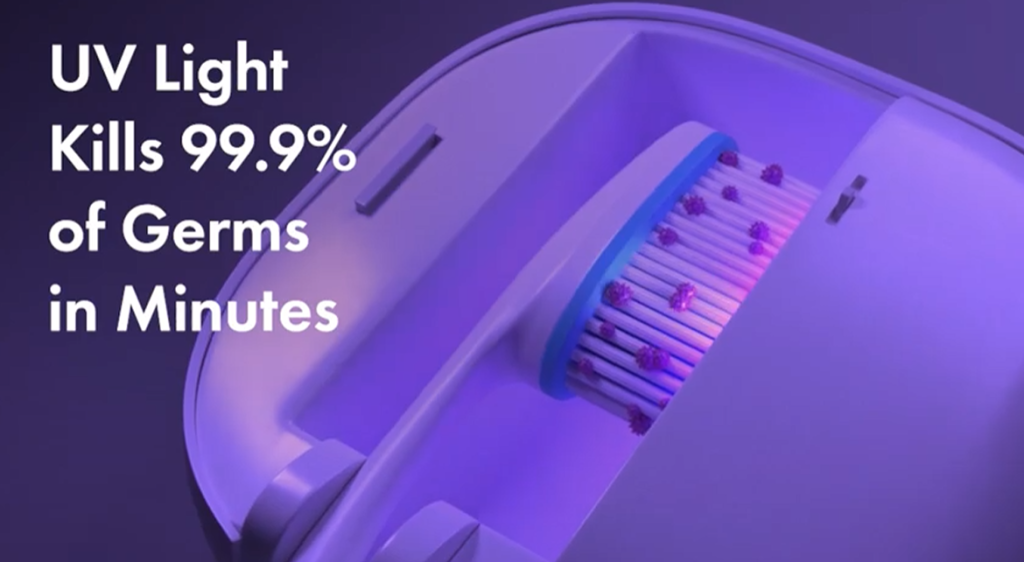
Bril is a compact UV-C toothbrush sanitizer designed to place your toothbrush head inside a closed case and run a short sanitizing cycle. The company says Bril can kill up to 99.9% of bacteria and viruses, works in about three minutes, fits standard and electric toothbrushes, and can run for about 30 days on a charge. Those are manufacturer claims, however, and I did not find independent testing showing that Bril itself achieves a 99.9% reduction.
There is legitimate scientific evidence that UV-based toothbrush sanitizers can reduce microbial contamination. The more recent research, however, also shows why it is important not to treat every UV toothbrush device as interchangeable. A 2026 systematic review found a significant effect from UV-based toothbrush disinfection but rated the overall certainty of evidence as very low, partly because studies differed considerably in methods and results.
So, is Bril worth considering? It makes the most sense as a convenience and hygiene gadget for someone who specifically wants a compact UV-C sanitizer and enclosed toothbrush storage. It is harder to justify if you expect a clinically proven 99.9% health benefit or simply want the cheapest way to store a toothbrush.
Quick Verdict
Best suited to:
- People who specifically want a compact, rechargeable toothbrush sanitizer
- Users who want covered toothbrush storage rather than an open cup
- Travelers or people with limited bathroom counter space
- Buyers who are comfortable treating the germ-kill percentage as a manufacturer claim rather than independently verified Bril performance
Not ideal for:
- Buyers looking specifically for independently verified Bril laboratory performance
- Anyone expecting a device to treat gingivitis, prevent illness, or replace normal dental hygiene
- Large families wanting one sanitizer for several toothbrushes
- Buyers who require clearly documented FDA clearance for a toothbrush sanitizer

Bottom line: Bril is a real consumer product with a traceable brand owner, an active trademark record, a functioning official sales site, and a published return policy. Its core concept is plausible and supported by broader UV-toothbrush research. However, the evidence available publicly is much stronger for UV toothbrush disinfection as a category than for Bril itself, so I would evaluate it primarily as a convenience and hygiene accessory rather than a medically meaningful oral-health device.
What Is Bril?
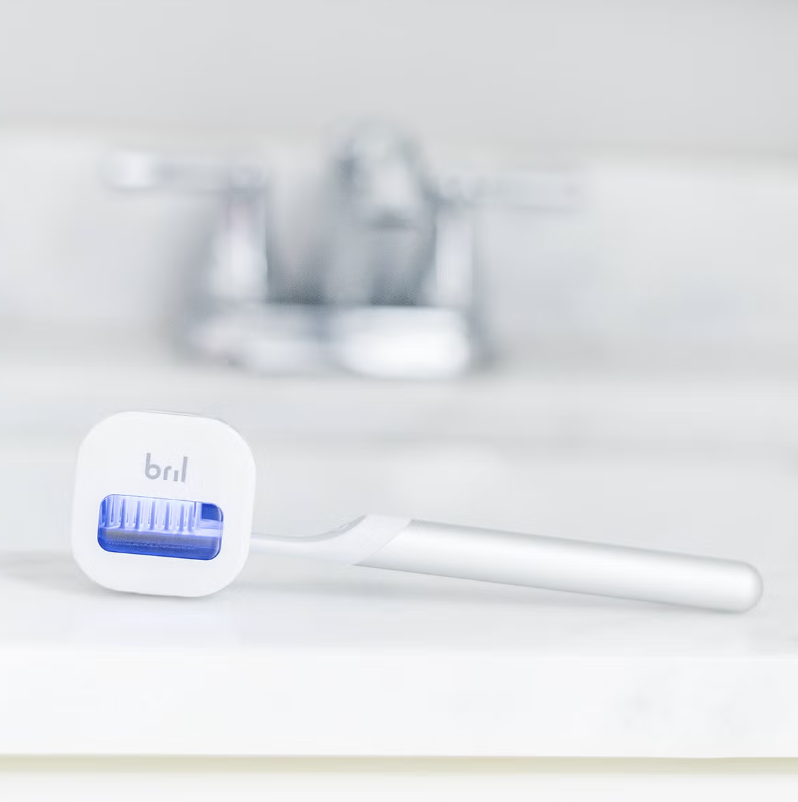
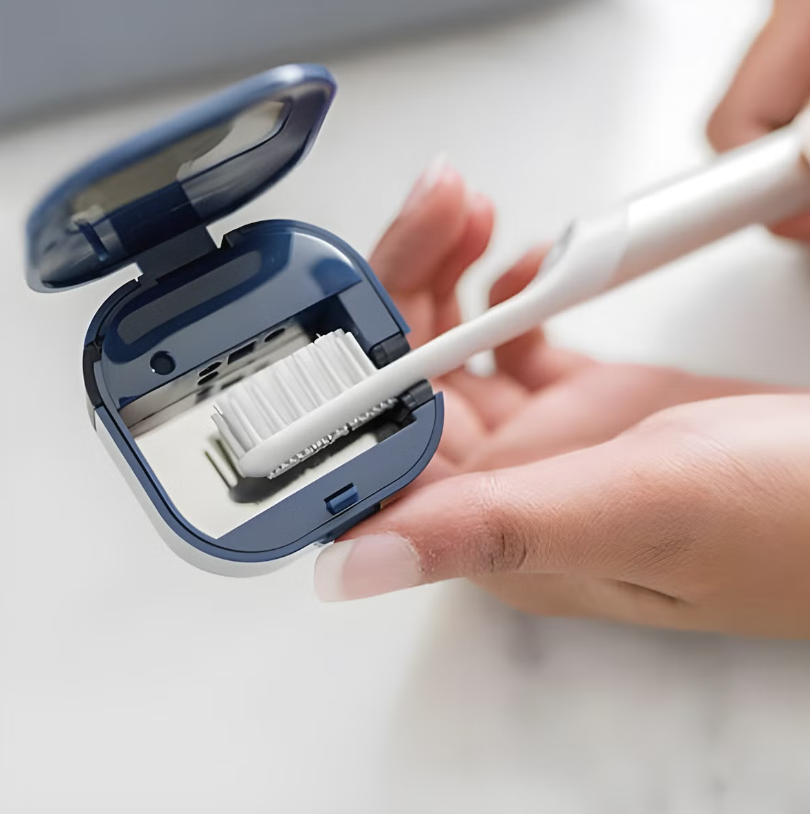
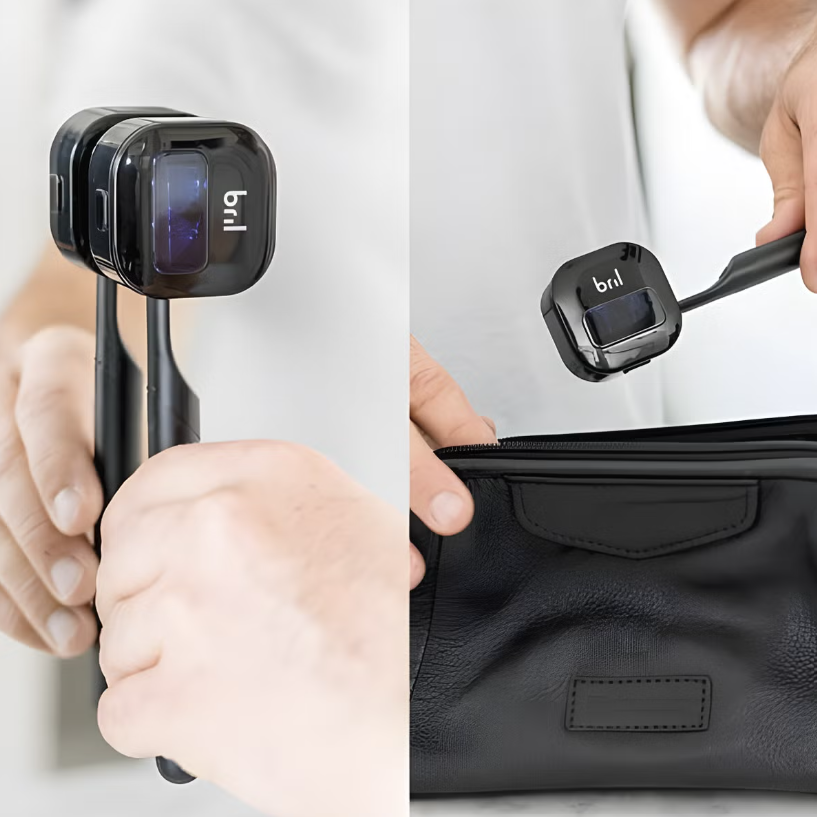
Bril is a portable UV toothbrush sanitizer and holder sold through getbril.com. The official website identifies SlingShop Products Inc. as the company behind the brand and states that Bril is a trademark of that company. A Canadian government trademark record also lists SlingShop Products Inc. as the current owBril is a small toothbrush case that combines storage with UV-C light sanitation. The intended process is simple: insert the toothbrush head, close the case, and allow the sanitizing cycle to run. The company says the UV-C light activates when the case is closed and completes a cycle in roughly three minutes.
The design has two functions.
First, Bril is intended to expose the toothbrush head to UV-C light. Second, it gives the toothbrush a dedicated enclosed place to sit between uses rather than leaving it in an open countertop cup.
The latter point is important, but it also needs some context: the ADA recommends rinsing a toothbrush thoroughly after brushing, storing it upright, and allowing it to air-dry. The ADA specifically cautions that a moist toothbrush stored in a closed container can encourage microbial growth compared with open-air drying.
Bril itself says the brush does not need to be completely dry, but recommends removing excess moisture before placing it inside.
Who Makes Bril?
The public information supports identifying SlingShop Products Inc. as the brand owner and seller. I did not find sufficient public evidence to confidently identify a separate manufacturing company, so calling SlingShop the manufacturer would go beyond what I could verify. The official site gives a Birmingham, Alabama business address and a customer-service email.
Product Identity Verification
| Item | What I could verify |
|---|---|
| Product | Bril UV toothbrush sanitizer |
| Category | Consumer UV toothbrush sanitizer / holder |
| Brand owner | SlingShop Products Inc. |
| Official site | getbril.com |
| Intended use | Home consumer toothbrush sanitizing |
| UV technology | UV-C / ultraviolet LED technology, according to the brand |
| Cycle | As little as 3 minutes, according to the brand |
| Charging | USB |
| Mounting | Included magnetic/adhesive mounting system |
| Claimed compatibility | Manual and electric toothbrushes |
| Official single-unit price | $34.99 on the current shop page |
| Return policy | 30 days, subject to conditions |
| Publicly verified warranty | Not established from the current official policy pages I found |
| FDA clearance for Bril | Not independently verified |
The official site’s current shop page is the strongest source for the current product listing.
How Does Bril Work?
Bril uses ultraviolet-C light inside a closed chamber.
UV-C has enough energy to damage genetic material in microorganisms, which is why ultraviolet disinfection is used in certain controlled applications. Independent toothbrush studies have also found that UV treatment can reduce microbial contamination.
But there is an important distinction:
Evidence that UV-C can reduce microbes on toothbrushes is not the same as proof that Bril kills 99.9% of all relevant microorganisms on every toothbrush.
For example, an older controlled study of a Violight UV toothbrush holder reported an average 86% reduction in total colony-forming units. Another study comparing UV toothbrush sanitization methods found a 47.4% reduction in Streptococcus mutans for the UV device evaluated.
The results show that device performance depends on the actual design, UV exposure, wavelength, dosage, geometry and experimental conditions.
That is why the Bril-specific 99.9% figure should be treated as a manufacturer claim, rather than an independently established result.
Bril’s Key Features
1. Three-Minute UV-C Cycle
Bril says the sanitizing cycle takes about three minutes. That is considerably shorter than some traditional UV toothbrush sanitizers, including a Philips Sonicare sanitizer that specifies a 10-minute UV cycle.
A short cycle matters because convenience affects whether a hygiene gadget actually becomes part of a daily routine.
The limitation is that cycle duration by itself does not establish sanitizing effectiveness. UV dose and exposure conditions matter too.
2. Rechargeable Battery
Bril says one charge can last approximately one month under normal use. It uses USB charging and includes a red indicator to signal when recharging is needed.
A rechargeable design is useful for travelers because it avoids having the case permanently connected to a wall outlet.
The catch is simple: rechargeable electronics eventually depend on battery reliability. Several consumer complaints on Trustpilot specifically mention charging failures or devices that stopped working, although these reports are individual experiences rather than a measured failure rate.
3. Magnetic Mount
Bril includes a magnetic mounting system intended to keep the unit off the bathroom counter.
That can be useful in small bathrooms because the product doubles as a storage location.
There is also a reason to treat the mounting system as a practical rather than purely cosmetic feature. Recent Trustpilot feedback includes complaints from a buyer who said the magnetic adhesive detached shortly after installation. That is one user’s experience, not evidence that every unit has the problem, but it is worth knowing before mounting the device permanently.
4. Compact, Travel-Oriented Design
Bril describes itself as compact and travel-friendly, approximately the size of an earbud case.
This makes the product different from larger countertop UV toothbrush sanitizers.
For travelers, the attraction is obvious: the same device is intended to provide both toothbrush protection and UV sanitation.
5. Broad Compatibility Claim
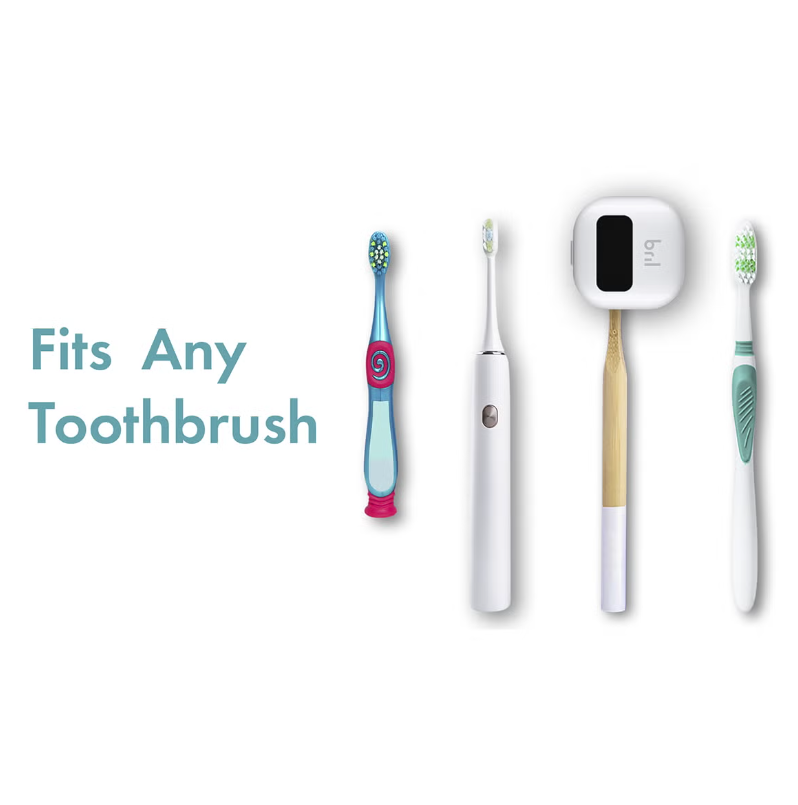
The manufacturer says Bril works with standard and electric toothbrushes, including children’s brushes.
That is a useful feature, but buyers with unusually large electric toothbrush heads should still verify fit before ordering because “fits all toothbrushes” is a seller claim rather than an independently tested compatibility standard.
What Does Bril Actually Do?
There are two different functions here.
1. It is an active sanitizer
Bril uses UV-C exposure to reduce microorganisms on the toothbrush according to the manufacturer’s design and claims. The product page says the device can sanitize the brush in as little as three minutes.
2. It is also a storage case
This may actually be one of Bril’s more practical features.
The company designed the product to replace an ordinary toothbrush holder, and says it can be mounted to a mirror or wall. The covered design also keeps the brush physically separated from the open bathroom environment.
However, covered storage needs to be handled carefully. The American Dental Association recommends rinsing a toothbrush thoroughly, storing it upright, and allowing it to air dry. ADA guidance specifically warns that storing a moist toothbrush in a closed container can promote microbial growth more than open-air storage.
Bril itself says the toothbrush does not need to be completely dry, but recommends knocking off excess moisture before inserting it.
That makes the moisture-management point particularly important: Bril should not be thought of as a substitute for rinsing and sensible toothbrush care.
Does Bril Really Kill 99.9% of Germs?
The 99.9% figure should be treated as a Bril marketing claim, not as an independently verified Bril-specific result based on the evidence I could locate.
The official Bril pages repeatedly advertise the ability to kill up to 99.9% of bacteria and viruses.
There is legitimate research behind UV toothbrush sanitation generally. A controlled study published in PubMed found that one UV toothbrush holder reduced total bacterial colony-forming units by an average of 86%. Other studies have reported significant bacterial reductions after UV treatment.
However, a 2026 systematic review concluded that the overall certainty of evidence for toothbrush disinfection methods was very low because of methodological differences and heterogeneity between studies.
That makes the correct interpretation:
UV-C sanitation is scientifically plausible and supported by device-level research, but the exact performance of Bril cannot be established simply by borrowing results from other UV products.
What About the “FDA Registered” Claim?
This deserves particular attention.
Some current Bril promotional material displays an “FDA Registered” badge.
FDA guidance says that registration and device listing do not mean that the FDA has approved, cleared, certified or authorized a product. The agency explicitly warns consumers not to interpret “FDA Registered” as equivalent to FDA approval or clearance.
The official Bril site also includes a disclaimer stating that representations regarding Bril’s efficacy and safety have not been evaluated by the FDA and that the products are not intended to diagnose, prevent, treat or cure disease.
There are FDA records for other ultraviolet toothbrush sanitizers, including the proSonic Ultraviolet Toothbrush Sanitizer and the OTRES Toothbrush Sanitizer, showing that this is an established device category.
That does not, however, establish that Bril itself has received an equivalent FDA clearance.
What Does the Independent Evidence Say About UV Toothbrush Sanitizers?
The science is more nuanced than most product advertisements suggest.
The ADA says toothbrushes can harbor microorganisms and recommends normal toothbrush-care practices: rinse the brush, store it upright, allow it to air-dry, avoid sharing it and replace it approximately every three to four months. It also notes that there is no evidence that bacteria found on toothbrushes themselves cause adverse health effects.
Meanwhile, published research indicates that UV treatment can reduce bacterial contamination.
One study using a UV toothbrush holder reported an average 86% reduction in total bacterial colony-forming units.
Another study evaluating different toothbrush disinfection methods found that its UV sanitizer reduced S. mutans colonies by 47.4%.
A 2026 systematic review found statistically significant reductions from UV-based toothbrush disinfection but emphasized substantial heterogeneity and very low certainty of evidence.
So the evidence supports the concept, but it does not justify treating every consumer UV sanitizer as a clinically proven 99.9% germ-elimination system.
What the Science Says About UV Toothbrush Sanitizing
This is where Bril deserves a more careful analysis than a typical affiliate review.
A randomized clinical study published in the American Journal of Dentistry examined a UV toothbrush holder and found an average 86% reduction in total colony-forming units compared with a control condition after two weeks.
Another clinical study comparing UV treatment with other toothbrush-disinfection methods found that UV treatment significantly reduced bacterial counts.
A later meta-analysis also found that ultraviolet disinfection significantly reduced microbial counts on toothbrushes. But the review noted substantial heterogeneity among studies and assessed the overall certainty of evidence as very low.
That leads to a balanced conclusion:
UV toothbrush sanitization is scientifically plausible and has evidence showing microbial reduction, but that does not establish that every consumer UV device reaches the same performance level, nor that lowering toothbrush contamination necessarily produces a measurable improvement in disease outcomes.
The ADA makes a similar distinction. It acknowledges that toothbrushes can harbor microorganisms and that some people may want to sanitize them, but also notes limited evidence around toothbrush sanitizing and says consumers should look for a sanitizer cleared by the FDA. The ADA also notes that there is no evidence that the bacteria found on toothbrushes necessarily cause adverse health effects.
Research Methodology
This review was not based on first-hand testing.
I did not independently purchase Bril, measure its UV output, test its battery life, inspect its build quality, run microbiological cultures, or compare its actual performance against another sanitizer.
Instead, the evaluation used:
- Official Bril product, company, shop and returns pages
- Trademark records identifying the brand owner and product category
- Current American Dental Association toothbrush-care guidance
- FDA material concerning UV-C technology and consumer UV devices
- Peer-reviewed research and systematic reviews on UV toothbrush sanitization
- Google Search Central’s current guidance on helpful content, reviews and spam policies
- The two supplied reference articles, used as research inputs rather than authoritative sources
That limitation matters. A genuine hands-on review should include physical evidence such as photos, fit testing, charge-cycle testing and ideally independent lab measurements.
Bril Pros and Cons
Bril Pros
- Compact design
- Short advertised three-minute UV-C cycle
- Rechargeable battery
- Claimed month-long battery life
- Magnetic wall mounting
- Intended for both travel and home use
- Provides covered toothbrush storage in addition to UV treatment
- No disinfecting liquid or spray required
Bril Cons
- Bril’s 99.9% figure is not independently established in the evidence located for this review
- Official pricing is inconsistent across pages
- Official delivery estimates are inconsistent
- No clearly documented current warranty period was found
- Charging and mounting complaints appear in consumer feedback
- An enclosed holder still requires sensible moisture management
- UV-C treatment does not remove toothpaste residue or physical debris
- A dedicated sanitizer is unnecessary for many consumers who simply follow standard toothbrush-care practices
Bril vs. a Regular Toothbrush Cover
A normal toothbrush cover is primarily passive protection.
It can protect a brush during travel or keep it from contacting certain surfaces, but it does not provide UV sanitation.
Bril adds an active UV-C cycle to the storage function.
| Feature | Regular Cover | Bril |
|---|---|---|
| Covers toothbrush head | Yes | Yes |
| UV-C sanitization | No | Yes |
| Rechargeable | Usually no | Yes |
| Wall mounting | Rare | Yes |
| Travel use | Yes | Yes |
| Needs charging | No | Yes |
| Removes physical debris | No | No |
| Requires sensible drying | Yes | Yes |
For someone who only wants to keep a toothbrush from touching the inside of a toiletry bag, a conventional cover is simpler and cheaper.
For someone specifically interested in UV sanitation, Bril provides functionality that a passive cover does not.
Bril vs. Philips Sonicare UV Sanitizer
Philips provides a useful comparison because its UV sanitizer is backed by a major oral-care brand and publishes specific technical information.
The Philips UV Sanitizer HX6907/02 is designed for Sonicare brush heads, uses a 10-minute UV-clean cycle, carries a two-year limited warranty, and is compatible with snap-on Sonicare brush heads.
Bril’s major differences are its compact portable design, magnetic mounting and claimed compatibility with a broader range of toothbrushes.
| Feature | Bril | Philips Sonicare UV Sanitizer |
|---|---|---|
| Main purpose | UV toothbrush sanitation/storage | UV brush-head sanitation |
| Claimed cycle | ~3 minutes | 10 minutes |
| Battery | Rechargeable | Plug-in |
| Mounting | Magnetic | Countertop-oriented |
| Brush compatibility | Company says broad compatibility | Designed around Sonicare ecosystem |
| Warranty publicly specified | Not clearly located | 2-year limited warranty |
| Portability | Strong emphasis | Less portable |
| Evidence caveat | Bril-specific 99.9% claim unverified here | Manufacturer publishes product-specific specifications |
Philips also explicitly documents which brush-head families fit its sanitizer, illustrating why buyers should verify compatibility rather than assuming that every electric toothbrush is interchangeable.
Is Bril Worth It?
That depends on the problem you are trying to solve.
Bril is easier to justify for a buyer who wants a compact UV-C device, covered toothbrush storage, portability and minimal daily effort.
It is harder to justify for someone who simply wants their toothbrush stored hygienically. The ADA’s basic guidance-rinse thoroughly, store upright, let the brush air-dry and replace it every three to four months-does not require a UV sanitizer.
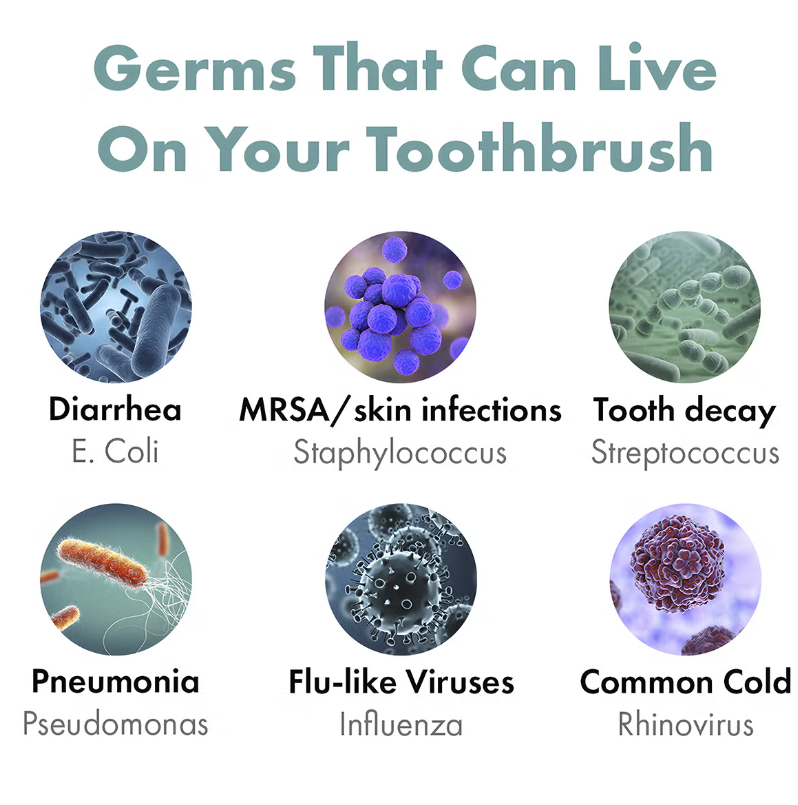
I would also avoid buying Bril because of the promise of preventing medical problems. The product’s own website makes broad health-oriented claims, but the evidence reviewed here does not demonstrate that using Bril prevents gum disease, influenza, pneumonia, heart disease or other illnesses. The company’s own disclaimer says its efficacy and safety representations have not been evaluated by FDA.
The better reason to buy it is narrower: you want a convenient toothbrush-sanitizing gadget and prefer active UV treatment over a simple holder.

What I Like About Bril
The strongest case for Bril is not the dramatic health language used in some advertising.
It is the product’s simplicity.
A traditional toothbrush cup provides storage. Bril attempts to combine storage with UV treatment in a small rechargeable unit that can be attached to a wall or mirror. That is a sensible design problem to solve.
The short stated cycle also means the device isn’t asking the user to radically change a morning or evening routine.
There is also a legitimate practical distinction between a sanitizer and a basic toothbrush cover. A normal cover is passive; Bril attempts an active microbial-reduction step before enclosed storage.
What Concerns Me
The biggest concern is the gap between category-level science and product-level proof.
UV-C works as a disinfection technology. That is not in dispute. The harder question is whether a particular consumer product delivers an adequate UV dose across all of the bristles in a realistic bathroom environment.
Bril publishes the claimed results, but I did not find a Bril-specific independent laboratory report detailing factors such as:
- UV wavelength
- UV dose
- irradiance
- test organism counts
- exposure protocol
- independent laboratory identity
- before-and-after colony counts
That missing information makes the “99.9%” figure impossible for me to independently validate.
The second concern is marketing language around health. The product page and supplied advertorial go beyond toothbrush cleanliness into broader disease and health claims. Those should not be treated as established outcomes.
Bril Price and Value
As of the research date, the current official shop page lists:
| Quantity | Published price |
|---|---|
| 1 Bril | $34.99 |
| 3 Brils | $23.33 each |
| 5 Brils | $19.99 each |
| 8 Brils | $17.50 each |
The official page says U.S. orders of three or more receive free shipping.
There is a pricing inconsistency worth highlighting: another current-facing page on the official site still says Bril starts at $29.99, while the current shop page lists the single-unit price at $34.99.
For that reason, the safest editorial wording is:
Bril is currently listed at $34.99 for one unit on the official shop page, although the broader site also displays a $29.99 starting-price reference. Verify the live checkout total before purchasing.
That is more accurate than presenting $29.99 as a guaranteed current price.
Shipping
The official shop page says Bril orders are generally shipped within 24–48 hours, with average U.S. delivery of 3–7 business days.
Those are the company’s stated delivery estimates, not a guarantee.
Bril Return Policy
The official return policy states that U.S. customers have a 30-day return window after shipment, provided the product is returned in original packaging and without signs of wear or tear. Taxes and shipping are non-refundable. The company says U.S. customers receive a free return label after requesting an RMA.
There is an important practical point here: the return policy gives a different physical return address in Carol Stream, Illinois, while the site’s main footer gives a Birmingham, Alabama address. That does not automatically indicate a problem, but buyers should follow the company’s RMA instructions rather than mailing a return to whichever address appears first on the website.
What About the Bril Warranty?
This is one area where I would not repeat the third-party review’s claim as verified fact.
GadgetExplainer says Bril includes a one-year warranty.
However, I did not find a corresponding one-year warranty term in the current official shop or returns pages. Because the manufacturer’s own current public documentation is the better source, I would publish:
“A third-party review reports a one-year warranty, but I could not independently verify a current warranty policy on Bril’s official site.”
That distinction protects the buyer from relying on a benefit that may have changed.
Is Bril Legit?
There is enough evidence to establish that Bril is a real commercial brand and identifiable consumer product.
The official site names SlingShop Products Inc., provides a business address and support email, sells the product directly, publishes purchase and refund terms, and identifies Bril as its trademark. A Canadian government trademark database independently identifies SlingShop Products Inc. as the current owner of the BRIL mark for a consumer ultraviolet oral-hygiene sanitizer.
That is stronger evidence of an identifiable business than simply finding an anonymous landing page.
At the same time, “legitimate company” and “proven product performance” are different questions.
I would therefore separate the conclusions:
Brand identity: Supported by public records.
Product availability: Supported by an active official storefront.
Return policy: Publicly documented.
Bril-specific 99.9% performance: Not independently verified from the public evidence I found.
Bril-specific clinical health benefits: Not established.
FDA clearance: Not independently verified.
The last point matters because the ADA recommends that consumers interested in toothbrush sanitizer devices look for an FDA-cleared product. I found FDA records for other ultraviolet toothbrush-sanitizing devices, but I did not find a Bril-specific clearance record through the sources searched for this review.
What Do Consumers Say About Bril?
Third-party customer feedback is mixed and should be treated separately from scientific evidence.
At the time of research, Trustpilot displayed 42 reviews for getbril.com and a 1.6 TrustScore. Recent negative reviews include reports concerning charging, magnetic mounting, delivery and customer service, while older reviews include positive experiences with the product.
These reports are relevant because reliability is part of the buying decision.
They are not, however, a representative product-failure study. There is no basis for taking the percentage of negative Trustpilot reviews and treating it as Bril’s actual defect rate.
The sensible conclusion is simply that there are enough consumer complaints to make warranty, return and support terms worth checking carefully before purchasing.
How to Use Bril
The seller’s instructions are straightforward:
- Rinse your toothbrush thoroughly after brushing.
- Remove excess water from the brush head.
- Place the toothbrush head into Bril.
- Close the lid.
- Allow the UV-C cycle to run.
- Remove the toothbrush when you are ready to brush again.
Bril says the cycle takes about three minutes and that the light activates when the unit is closed.
The most important practical point is not to treat the UV cycle as a substitute for rinsing. UV light is not a physical cleaning process. Toothpaste residue, debris and other material still need to be removed from the toothbrush.
Important Safety Considerations
Bril says the UV-C light only activates when the case is closed, which is a useful design feature because direct UV-C exposure can be hazardous to skin and eyes.
The FDA has separately warned consumers about some UV-C consumer products, especially UV wands, that exposed users to unsafe levels of radiation. That warning was about products tested by the FDA and should not be taken as evidence that Bril is unsafe; it does demonstrate why enclosed UV devices should have appropriate safety controls and clear instructions.
For Bril, I would simply avoid opening the device during an active cycle and follow the manufacturer’s instructions.
Who Should Consider Bril?
Bril is most relevant to buyers who:
- specifically want UV-C toothbrush sanitation;
- prefer a compact device over a larger countertop sanitizer;
- travel frequently;
- want a dedicated enclosed toothbrush holder;
- dislike toothbrush cups and bathroom-counter clutter;
- are willing to pay for convenience rather than relying only on standard toothbrush-care practices.
Who Should Probably Skip It?
You may not need Bril if:
- you are mainly looking for inexpensive toothbrush storage;
- you already let your toothbrush air-dry correctly;
- you are expecting proven medical benefits;
- you are uncomfortable with the current pricing/shipping inconsistencies;
- your toothbrush has unusual dimensions and compatibility is uncertain;
- you do not want another rechargeable device to maintain.
Where to Buy Bril
The affiliate offer supplied for this article leads through a WellWellWell promotional page rather than directly to a conventional product-information page.
That means buyers should pay particular attention to the final checkout page for the actual unit price, shipping cost, delivery estimate and return terms.
[Check the current Bril offer and availability]
Do not rely on an old sale price quoted elsewhere on the internet. Bril’s own pages currently show different prices and shipping information, so the checkout total is the figure that matters.
Frequently Asked Questions About Bril
Is Bril worth buying?
It can be worthwhile for people who specifically want a small, rechargeable UV toothbrush sanitizer and covered storage system. The value proposition is weaker for shoppers who are satisfied with standard toothbrush care or who require independently verified Bril-specific performance.
How does Bril work?
The company says Bril uses UV-C light inside a closed case to sanitize the toothbrush head in about three minutes. The brush is then kept inside the case between uses.
How much does Bril cost?
The current official shop page lists one unit at $34.99, although another official page still advertises a $29.99 starting price. Verify the live checkout amount before ordering.
Is Bril legit?
There is evidence supporting the existence of the Bril brand and its connection to SlingShop Products Inc., including an active trademark record and an official storefront. Product-performance claims should still be evaluated separately from brand legitimacy.
Does Bril treat gingivitis?
There is not enough evidence to say that Bril treats gingivitis. A toothbrush sanitizer should not be presented as a substitute for appropriate dental care.
Where can I buy Bril?
The most transparent purchasing route is the official Bril website, where the current price, bundle options, shipping information and return policy are published.
How does Bril work?
Bril places your toothbrush head inside a closed case and uses UV-C light during an approximately three-minute cycle. The manufacturer says the UV-C light activates when the lid is closed.
Does Bril really kill 99.9% of germs?
That is a manufacturer claim. Independent studies show that some UV toothbrush sanitizers can reduce microbial contamination, but I did not find independent Bril-specific evidence establishing the advertised 99.9% figure.
Is Bril FDA approved?
Do not interpret the site’s “FDA Registered” language as FDA approval or clearance. FDA explicitly says registration and listing do not denote approval, clearance or authorization.
How long does Bril’s battery last?
Bril says the rechargeable battery can last approximately 30 days on a charge under normal use. Actual battery performance can vary with usage and device condition.
Does Bril work with electric toothbrushes?
The manufacturer says it works with electric toothbrushes as well as standard and children’s toothbrushes. Buyers with unusually large brush heads should still verify fit.
Does Bril replace normal toothbrush care?
No. You should still rinse your toothbrush after use, allow appropriate drying, replace the toothbrush or head regularly and maintain normal oral hygiene.
Can Bril prevent gum disease, flu or pneumonia?
There is not enough evidence to make that conclusion. Bril’s marketing makes broad health claims, but its own site states that its efficacy and safety representations have not been evaluated by the FDA.
What is Bril’s return policy?
The official policy describes a 30-day return period for U.S. purchases subject to conditions, including original packaging and lack of wear. Taxes and shipping charges are non-refundable.
What is Bril’s current price?
The official pages currently show $29.99 for one unit on an offer page and $34.99 on the shop page. Bundle pricing is also offered. Check the final checkout total because prices and promotions can change.
Is Bril worth buying?
It can make sense for someone who specifically wants a compact UV-C toothbrush sanitizer and enclosed storage. It is less compelling for someone who simply needs basic toothbrush storage or expects proven medical benefits from the product.
Final Verdict
Bril is an interesting oral-care gadget built around a legitimate technology category: UV-based toothbrush sanitation.
The strongest part of its proposition is convenience. The compact case combines toothbrush storage with a short UV-C cycle, rechargeable operation and magnetic mounting. Those features can make sense for people who want an active sanitation step without a large countertop machine.
The evidence deserves more caution than the advertising suggests. Research supports the ability of UV treatment to reduce microbial contamination on toothbrushes, but a 2026 systematic review found very low certainty across the available evidence, and I did not find independent testing establishing Bril’s specific 99.9% claim.
There are also practical reasons to slow down before ordering: the official site currently shows inconsistent single-unit pricing and shipping information, and third-party customer feedback contains complaints about reliability and support.
Bottom line: Bril is best viewed as a convenience-focused UV-C toothbrush sanitizer, not a medically proven replacement for ordinary toothbrush care or professional dental treatment. For the right buyer, that distinction may still make it a useful gadget-but the purchase should be based on its convenience and features, not on exaggerated interpretations of the 99.9% claim.