The cycle of shaving, waxing, and dealing with painful ingrown hairs can feel like a never-ending chore. While professional laser clinics offer a permanent alternative, the thousands of dollars in upfront costs and the hassle of scheduling multiple appointments make it an impractical choice for many. At-home intense pulsed light devices promise clinical-level results from the comfort of your bathroom, but the market is flooded with conflicting claims, extreme price variations, and confusing safety specifications.
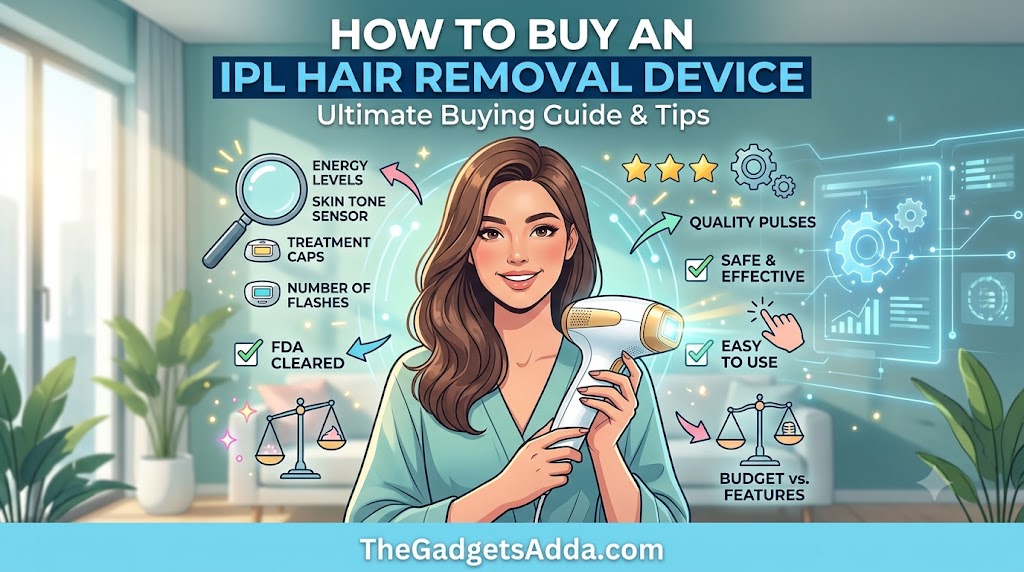
Investing in the wrong machine can lead to skin irritation, ineffective treatments, or worse, accidental burns. Choosing the right setup requires looking past marketing buzzwords and evaluating hard technical parameters like energy density, flash longevity, and skin-safety features. This guide walks through the essential criteria to analyze so you can choose a device tailored to your specific physiology, budget, and long-term grooming goals.
What is an IPL Hair Removal Device?
An IPL (Intense Pulsed Light) hair removal device is an over-the-counter aesthetic tool designed to reduce unwanted body hair using broad-spectrum light emissions. Unlike traditional mono-wavelength laser systems used in medical clinics, these consumer devices emit a wide range of light wavelengths—typically falling between 500 and 1,200 nanometers.
This light energy targets pigment variations within the skin surface. When buying an IPL hair removal device, you are essentially looking for an engineered handheld flashlamp that applies light to large areas of skin rapidly, systematically forcing targeted hairs into a prolonged resting phase.
Why Buying the Right At-Home IPL Device Matters
Selecting the appropriate device directly dictates your safety and the success of your treatments. At-home light therapy relies on a narrow biological margin: delivering enough thermal energy to disable hair production without causing blistered skin or hyperpigmentation.
A poorly designed or uncalibrated machine might deliver insufficient energy, wasting months of your time with zero noticeable hair reduction. Conversely, an overly aggressive, low-quality import lacking proper integrated sensors poses severe risks to your skin structure. Finding an optimal balance between safety certificates, power output, and physical design ensures you protect your skin while achieving smooth, hair-free results.
How At-Home IPL Devices Work
The operational foundation of IPL technology rests on a principle called selective photothermelosis. This process involves utilizing specific light wavelengths to heat and destroy a designated target without damaging the surrounding tissue.
- Light Absorption: The device emits a rapid, bright flash of broad-spectrum light.
- Melanin Targeting: The dark pigment (melanin) in the hair shaft absorbs this light energy.
- Thermal Conversion: Once absorbed, the light converts into intense heat energy.
- Follicle Disabling: The heat travels down the hair shaft to the root, damaging the germinative cells responsible for hair growth.
- Growth Suppression: This thermal shock forces the hair follicle out of its active growth phase (anagen) and shifts it into the resting phase (telogen), causing the hair to shed naturally over the following weeks.
Because hair grows in distinct asynchronous cycles, a single treatment session will only disable the portion of hairs currently in their active growth phase. This biological reality is why consistent, repeated sessions over several months are required to catch every follicle during its vulnerable growth window.
Benefits of Owning an At-Home IPL Device
Investing in an at-home system offers distinct advantages over both traditional temporary hair removal and professional clinical treatments.
- Long-Term Hair Reduction: Unlike shaving or epilating, which only manage hair at or just below the skin surface, IPL delivers multi-month hair clearance by treating the root cause.
- Substantial Long-Term Financial Savings: While a premium consumer device represents an upfront investment of $250 to $500, it eliminates the recurring costs of razors, waxing appointments, or professional laser packages that easily run into thousands of dollars.
- Unmatched Privacy and Convenience: You can execute full-body treatment regimens at any hour within your own home, entirely eliminating travel times, rigid appointment windows, and clinical vulnerabilities.
- Elimination of Inflammatory Ingrown Hairs: Because IPL systematically thins out hair diameter and slows regrowth down to a halt, it prevents the aggressive follicle curling that causes painful razor bumps and ingrown breakouts.
Limitations and Risks to Consider
While IPL is highly effective for a large demographic, it is not a universal panacea for hair removal. Understanding its baseline boundaries prevents unexpected safety issues or disappointing outcomes.
The Contrast Requirement
IPL requires a distinct color contrast between the melanin in your hair and the melanin in your skin. The light energy cannot differentiate between the pigment in dark skin and the pigment in dark hair. If applied to rich, dark skin tones, the device will mistakenly target the skin surface, causing painful blistering, severe burns, or long-term pigment loss.
Hair Color Restrictions
Conversely, if your hair lacks sufficient melanin-such as light blonde, red, grey, or white hair—the flash cannot target the shaft. The light simply reflects off or passes through without generating the thermal energy required to alter the follicle.
Anatomical Exclusions
At-home IPL units should never be operated anywhere near the eye sockets due to the danger of permanent ocular damage from stray light flashes. Men should avoid using these consumer devices on thick facial hair or beards; the exceptionally high follicle density in male facial hair concentrates too much heat, increasing the risk of uneven patchiness and skin burns. Finally, you must never flash over tattoos, dark moles, freckles, or permanent makeup, as these dense concentrations of pigment can absorb dangerous levels of heat instantly.
Types of At-Home IPL Devices
When shopping for an IPL machine, you will encounter two main structural designs. Each comes with clear tradeoffs regarding operational handling and longevity.
| Device Feature | Corded IPL Devices | Cordless IPL Devices |
| Power Supply | Continuous wall outlet connection | Rechargeable internal Lithium-ion battery |
| Energy Consistency | Flashes maintain identical power from start to finish | Power delivery can degrade as the battery charge drops |
| Session Longevity | Unlimited; no time constraints during full-body treatments | Limited to 20-40 minutes before requiring a recharge |
| Maneuverability | Restricted by the physical cord length and outlet location | Complete physical freedom to angle the device anywhere |
| Lifespan Concern | Will operate until the flash bulb burns out entirely | Limited by the breakdown of internal battery chemistry |
Core Technical Features to Evaluate
To cut through deceptive marketing spin, look directly at the technical specification sheet of any device you are considering. Focus your comparison on these foundational performance variables.
Fluence (Energy Density)
Fluence measures the amount of optical energy delivered per square centimeter of skin surface, expressed as $J/cm^2$ (Joules per square centimeter). This metric directly determines treatment efficacy. High-end, medical-grade consumer devices generally pump out between $3.0\text{ }J/cm^2$ and $6.0\text{ }J/cm^2$. Budget or lower-tier units often hover below $2.5\text{ }J/cm^2$. If the energy density is too low, you will merely stun the hair follicle temporarily rather than achieving long-term reduction.
Flash Lifespan and Bulb Longevity
Every IPL device contains a bulb with a fixed physical lifespan. Look for units that guarantee a minimum of 300,000 to 400,000 flashes. This volume is more than enough to handle full-body treatments for well over 15 to 20 years, effectively removing any need to purchase replacement bulbs. Avoid devices with low flash counts that force you to buy ongoing cartridge replacements.
Integrated Skin Tone Sensors
Premium devices feature active, automated skin-reading sensors that scan your skin tone dozens of times per second. If the sensor detects a skin zone that is too dark for safe treatment, it automatically locks out the flash mechanism to prevent a burn. Advanced systems also use this data to dynamically scale the flash intensity up or down, ensuring you always get the maximum safe energy delivery for your specific tone.
Treatment Window Size and Attachments
The size of the flash window changes how fast you can complete a treatment session:
- Large Windows ($4\text{ }cm^2$ or wider): Ideal for covering major surface areas like legs, chests, and backs quickly.
- Precision Windows ($2\text{ }cm^2$ or smaller): Vital for safely treating small, contoured zones like the upper lip, chin, underarms, or bikini line without leaking light into the air.
Contact and Cooling Systems
Look for devices that utilize sapphire ice-cooling glass or integrated active cooling vents. These mechanisms chill the top layer of skin immediately before and during the light pulse, counteracting the thermal sting of the flash and making high-energy settings much more comfortable.
Common Mistakes to Avoid When Buying
Many shoppers end up with buyer’s remorse due to avoidable oversight during the research phase.
- Buying for Non-Compatible Skin or Hair: Always consult the official brand skin-tone grid before buying. If you have deep dark skin or very light hair, buying a standard IPL device is a complete waste of capital and a medical hazard.
- Prioritizing Low Prices Over Safety Clearances: Cheap, unbranded electronics found on discount marketplaces often skip critical optical filtering. Without proper filters, dangerous ultraviolet (UV) light can leak onto your skin, causing accelerated cellular aging and long-term damage.
- Confusing True Laser with IPL: Do not fall for listings that label an IPL device as an “At-Home Laser.” True home lasers (like diode systems) use a focused, single wavelength. They are highly precise but feature very small treatment windows compared to the broad coverage of IPL.
- Ignoring FDA Clearance: In the United States, look for devices that are explicitly FDA-Cleared (classified under 510(k) medical device notifications). This designation verifies that the regulatory body has vetted the tool for safety and operational truth-in-advertising.
Step-by-Step Guide to Evaluating an IPL Device
To systematically vet any candidate device before purchasing, follow this evaluation sequence:
1.Verify Physiological Compatibility:Baseline Check.
Locate your skin tone on the Fitzpatrick Scale and check your target hair color. Compare these directly against the manufacturer’s official compatibility matrix to ensure you are not at risk for burns or zero-efficacy results.
2.Confirm FDA Clearance and Certifications:Regulatory Validation.
Search the regulatory text on the box or product page. Look for an official FDA 510(k) clearance number if you are in the US, or CE markings if you are shopping from Europe. Avoid unvetted imports lacking clear tracking information.
3.Calculate the Lifetime Value of the Flash Count:Cost Analysis.
Divide the retail price by the total number of rated flashes. A quality modern device should deliver hundreds of thousands of flashes, meaning your cost per flash should be a tiny fraction of a cent, with no ongoing cartridge fees required.
4.Analyze the Real Fluence Rating:Power Inspection.
Dig into the technical specifications to check the energy output per square centimeter. Aim for a device that offers adjustable intensity steps peaking between 4.0 and 6.0 Joules per square centimeter ($J/cm^2$) to ensure real follicle destruction.
5.Review the Included Attachment Heads:Ergonomic Check.
Confirm that the device includes a large window head for speedy leg and torso clearing, alongside dedicated small, curved precision attachments designed to safely seal against face and bikini curves.
Best Practices for Safe and Effective At-Home Treatment
Once you purchase a certified device, optimizing your preparation and execution routines will help maximize your hair clearance while preventing skin irritation.
- Shave the Target Area First: You must cleanly shave the treatment area before every session. Do not wax, tweeze, or epilate. The hair shaft must remain intact below the surface of your skin so the light energy can find it and travel down to the root. Leaving long hair above the skin surface will only cause the hair to burn externally, causing painful skin singeing and damaging your device window.
- Execute a Mandatory 24-Hour Patch Test: Before embarking on a full-body session, select a small test patch on your target zone. Flash it once using the lowest recommended setting, then step it up one level and flash an adjacent spot. Wait a full 24 hours to monitor for delayed redness, swelling, or pigment changes before treating the entire area.
- Keep Your Skin Clean and Dry: Remove all lotions, deodorants, self-tanners, and cosmetics before turning on your device. Leftover skin products can alter light absorption, block the window, or cause chemical contact reactions under intense light.
- Avoid Significant Sun Exposure: Do not use IPL if you have an active sunburn or a fresh tan from outdoor exposure or tanning beds. Tanned skin contains highly active surface melanin, which increases the likelihood of suffering a severe light burn. Always shield treated skin with a broad-spectrum SPF 30+ sunscreen between sessions.
Expert Purchasing Tips
Keep these industry-specific insights in mind as you make your final selection:
Look for “Glide” or “Stamp” Dual Modes: If you want to finish your treatments efficiently, choose an IPL unit that offers a continuous glide mode. This feature automatically triggers a flash at set intervals as you slide the window across your skin, allowing you to treat large areas like your legs in minutes.
Additionally, look closely at the warranty policies. Reputable personal care brands stand by their optical systems by providing an explicit two-year manufacturing warranty along with a multi-day money-back satisfaction window. This lets you return the device if your skin experiences unexpected sensitivity during early patch testing.
Real-World Buyer Scenarios
To help contextualize these technical specifications, review these common buyer profiles to see how different parameters align with specific individual needs.
Scenario A: The Full-Body, Light-Skin Buyer
- User Profile: Pale skin tone, coarse dark leg and underarm hair. Wants to clear legs, bikini line, and underarms efficiently.
- Optimal Pick: A corded, high-fluence device ($5\text{ }J/cm^2$ to $6\text{ }J/cm^2$) featuring a wide treatment window along with an automated, continuous glide mode. Since full-body clearance sessions take longer, a plug-in corded model ensures the unit maintains maximum power delivery without running out of battery mid-session.
Scenario B: The Medium-Tan, Sensitive Buyer
- User Profile: Golden or olive skin tone that tans easily; highly prone to skin irritation and pain.
- Optimal Pick: An IPL machine with an integrated sapphire cooling window and an advanced, continuous smart skin tone sensor. The sensor automatically dials down the energy setting to prevent surface skin burns on tan zones, while the cooling element counteracts discomfort during treatment.
Key Takeaways
- Contrast is Fundamental: At-home IPL works best on light skin paired with dark hair. It is generally ineffective on red, blonde, or grey hair, and unsafe for naturally deep, dark skin tones.
- Prioritize Fluence over Marketing Hype: Look for a device that delivers an energy density between $3.0\text{ }J/cm^2$ and $6.0\text{ }J/cm^2$ to ensure real, long-term hair reduction.
- Insist on Safety Clearances: Never purchase an unbranded device that lacks official FDA clearance or certified integrated UV filters.
- Calculate Flash Volume Value: Pick a model providing at least 300,000 flashes to avoid hidden ongoing costs for replacement cartridges.
- Proper Prep is Crucial: Always cleanly shave the area right before flashing; never wax or pluck hair between sessions, as the follicle root must remain intact for the treatment to work.
Frequently Asked Questions
What is the main difference between IPL and laser hair removal?
Laser hair removal uses a single, highly focused wavelength of light optimized to target a precise depth. IPL utilizes a wide spectrum of filtered light wavelengths that scatter across a broader area. This makes IPL highly efficient for covering large skin areas at home, though it typically requires more frequent maintenance sessions than a clinical laser.
Does at-home IPL hair removal hurt?
Most users describe the sensation as a quick, warm snap, similar to a rubber band flicking against the skin. Devices equipped with built-in sapphire contact cooling mechanisms significantly reduce this heat sensation, making the process highly comfortable even on sensitive zones like the underarms.
How often should I use my IPL device?
Most clinical protocols recommend treating the target area once a week for the first 4 to 12 weeks to capture every hair follicle during its active growth phase. After this initial startup window, you drop down to maintenance touch-ups once every one to three months as needed.
Can I use an IPL device on my face?
Yes, but only below the cheekbones (such as the upper lip, jawline, and chin). Never use an IPL device near the eyes, eyebrows, or forehead, as stray light flashes pose a serious risk of ocular damage.
Why can’t I use IPL over tattoos or dark freckles?
Tattoos, dark moles, and dense freckles contain very high concentrations of dark pigment. If you flash over them, they will absorb excessive amounts of light energy instantly, which can lead to severe skin blistering, burns, or permanent scarring.
Is at-home IPL hair removal permanent?
IPL results in long-term, permanent hair reduction, meaning it significantly thins out hair growth and slows it down to a near-halt. However, minor hormonal fluctuations can occasionally activate dormant follicles over time, requiring quick maintenance touch-ups every few months.
How long does it take to see noticeable results?
Most users notice a clear thinning of hair and slower regrowth patterns after 3 to 4 weeks of consistent weekly sessions. Complete, smooth hair clearance typically takes between 8 and 12 weeks of structured use.
Can men use at-home IPL devices?
Men can safely use IPL on their chest, back, arms, and legs. However, they should avoid using it on thick facial hair or beards, as the dense structure of male facial hair can trap excessive heat, leading to uneven patchiness or localized skin burns.
Should I pluck or wax my hair between IPL sessions?
No. You must avoid plucking, waxing, or epilating between sessions. These methods pull the hair root out entirely. The hair root must remain intact beneath the skin surface for the IPL light energy to target it during your next scheduled flash. Shaving is the only recommended hair removal method between treatments.
What happens if I use IPL more than once a week?
Using your device multiple times a week will not speed up your results or improve hair reduction. Hair follicles only respond to light therapy when they enter their specific growth phase, so flashing them more frequently simply wastes your device’s flash count and increases your risk of skin irritation.
Is it safe to use IPL while pregnant or breastfeeding?
Manufacturers universally recommend avoiding IPL treatments during pregnancy or while breastfeeding. This precaution is primarily due to a lack of clinical safety testing on pregnant individuals, combined with natural hormonal shifts that can make skin significantly more sensitive to light and prone to hyperpigmentation.