
If you’ve ever struggled to slice a tomato only to have it squish under a dull blade, you already know the frustration of bad knives. Maybe you’re staring at a wall of knife sets online or in a store, confused by the jargon-forged vs. stamped, German vs. Japanese, high-carbon vs. stainless-and wondering which one is actually worth your money.
You’re not alone. Most people buy a knife set once or twice in their lifetime, and the stakes are higher than they seem. A good set makes cooking faster, safer, and genuinely more enjoyable. A bad set-or worse, the wrong set-leaves you with drawers full of blades you never use and a chef’s knife that can’t hold an edge.
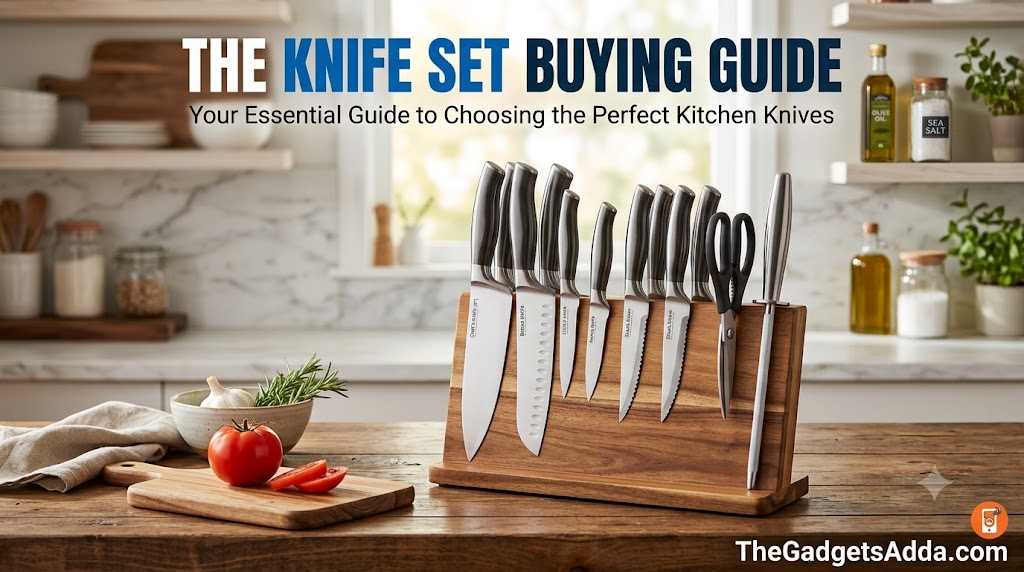
This guide cuts through the noise. After digging into metallurgy, handle construction, and real-world kitchen performance, I’ll walk you through exactly what matters when buying a knife set, what doesn’t, and how to match a set to the way you actually cook.
What Is a Knife Set?
A knife set is a curated collection of kitchen knives-typically three to twenty-plus pieces-sold together, often with a storage block, kitchen shears, and a honing steel. The core idea is convenience: you get multiple blades for different tasks in one purchase, usually at a lower combined cost than buying each knife individually.
Most sets include a chef’s knife, a paring knife, and a bread knife as the non-negotiable baseline. From there, sets expand with utility knives, santoku knives, boning knives, slicing knives, steak knives, and occasionally specialty blades like cleavers or nakiri knives.
The storage component varies too-traditional wooden blocks, in-drawer trays, magnetic strips, or countertop stands. Some sets include a honing steel for edge maintenance and kitchen shears for poultry, herbs, and packaging.
Why a Quality Knife Set Matters
A sharp, well-balanced knife isn’t just about convenience-it’s about safety. Dull knives slip. When a blade fails to bite into food, it slides across the surface, and that’s when accidents happen. A quality knife set reduces that risk by giving you tools that cut predictably and cleanly.
Beyond safety, efficiency compounds. A good chef’s knife can reduce prep time by half compared to a dull or poorly balanced blade. You spend less effort, less frustration, and more time actually cooking. Over years of daily use, that adds up to hours saved and meals that come together more smoothly.
There’s also a financial angle. A well-chosen set-properly maintained-can last decades. The cost per use becomes negligible. Conversely, cheap sets often dull quickly, rust, or break, forcing you to replace them every few years. Buying quality once beats buying mediocre repeatedly.
How Knife Sets Work: Matching Tools to Tasks
Knife sets aren’t random assortments. Each blade is designed for specific motions and ingredients, and understanding these distinctions helps you choose a set that aligns with your cooking.
The Core Knives
Chef’s Knife (8-10 inches): The workhorse. Its curved blade allows a rocking motion for chopping, dicing, and mincing. If you own one knife, this is it. Most home cooks do fine with an 8-inch blade; larger hands or heavier prep may favor 10 inches.
Paring Knife (3-4 inches): Precision work-peeling apples, coring strawberries, trimming shallots, or making decorative cuts. Small and nimble, it handles what a chef’s knife can’t.
Bread Knife (8-10 inches, serrated): The serrated edge saws through crusty loaves without crushing soft interiors. It also excels at slicing tomatoes, citrus, and other delicate produce with tough skins.
Utility Knife (4-7 inches): A middle ground between chef’s and paring knives. Useful for smaller tasks that don’t warrant a full chef’s knife but are too large for a parer-think slicing sandwiches, cheese, or medium vegetables.
Santoku Knife (5-7 inches): The Japanese cousin of the chef’s knife. Straighter edge, lighter weight, and a sheep’s-foot tip. Excels at push-cutting vegetables and fish. Some cooks prefer it over a chef’s knife for its maneuverability.
Specialized Knives
Boning Knife: Thin, flexible blade for separating meat from bone. Essential if you break down whole chickens or fish regularly.
Slicing/Carving Knife: Long, narrow blade for cutting roasts, ham, and turkey into even slices.
Cleaver: Heavy, rectangular blade for chopping through bones and dense squash. Overkill for most home kitchens but invaluable for specific cuisines.
Steak Knives: Serrated or straight-edge table knives for serving meat. Often included in larger sets.
Types of Knife Sets: Finding Your Fit
Knife sets aren’t one-size-fits-all. They range from bare-bones starter kits to museum-worthy collections. Here’s how they break down.
3-5 Piece Starter Sets
These include the essentials: chef’s knife, paring knife, and bread knife, sometimes with a utility knife or santoku. Ideal for beginners, small kitchens, or anyone who wants quality without clutter. Storage is often a slim block or in-drawer tray.
Best for: New cooks, apartment dwellers, minimalists.
7-10 Piece Core Sets
The sweet spot for most home cooks. You get the three essentials plus utility, santoku or carving knife, shears, honing steel, and sometimes steak knives. The block is substantial but not overwhelming.
Best for: Regular home cooks who want versatility without duplicates.
12–20+ Piece Complete Sets
Expansive collections with every knife imaginable-multiple steak knives, boning knives, cleavers, and specialty blades. Often visually impressive with large wooden blocks. The catch: most home cooks use only 3-4 knives regularly, leaving the rest as expensive decoration.
Best for: Enthusiasts, entertainers who host frequently, or those who simply want a complete matched set.
Open Stock vs. Sets
Some experts argue buying individual knives (open stock) is smarter than sets. You invest in exactly what you use and skip the filler. The trade-off: higher upfront cost and no storage block. For many cooks, a small core set supplemented with individual specialty knives offers the best balance.
Blade Materials: What You’re Actually Paying For
The steel in your blades determines sharpness, edge retention, rust resistance, and ease of sharpening. Here’s the breakdown.
Stainless Steel
The most common kitchen knife material. It resists rust and stains, requires minimal maintenance, and is affordable. However, many basic stainless steels are soft-they dull faster and don’t take as keen an edge as carbon steels.
Pros: Low maintenance, rust-resistant, affordable.
Cons: Dulls faster, harder to sharpen to a razor edge.
High-Carbon Stainless Steel
The sweet spot. High carbon content (0.5% or higher) delivers carbon-steel sharpness, while chromium (at least 13%) provides rust resistance. This is the professional standard for good reason-it holds an edge, resists corrosion, and sharpens reasonably well.
Pros: Excellent edge retention, good rust resistance, balanced performance.
Cons: Pricier than basic stainless.
Carbon Steel
Gets incredibly sharp and holds that edge longer than almost anything. But it rusts and stains easily—you must dry it immediately after washing. Favored by professionals who don’t mind the upkeep.
Pros: Unbeatable sharpness, easy to sharpen.
Cons: High maintenance, rust-prone.
Damascus Steel
Not a steel type but a layering technique-multiple steel types forged together to create a distinctive wavy pattern. Often uses VG-10 core steel, a Japanese “super steel” with vanadium and cobalt for exceptional edge retention (58–60 HRC Rockwell hardness). Beautiful and high-performing, but expensive.
Pros: Stunning appearance, excellent edge retention.
Cons: Premium pricing, requires care.
Ceramic
Lightweight and extremely hard-stays sharp for years. But brittle; drops or twists can chip or shatter the blade.
Pros: Lightweight, long-lasting sharpness.
Cons: Fragile, difficult to sharpen, limited use cases.
Forged vs. Stamped: How the Blade Is Made
The manufacturing process matters as much as the material.
Forged Blades
Heated and hammered into shape from a single billet of steel. The process aligns the steel’s grain structure, creating a denser, stronger blade with a thicker spine and better balance. Forged knives typically have a bolster-the thick band between blade and handle-which adds heft and balance.
Pros: Superior durability, balance, and edge retention.
Cons: More expensive.
Stamped Blades
Cut from a flat sheet of steel, then ground and sharpened. Lighter and thinner, with no bolster. Modern stamped knives can be excellent-especially from reputable brands with good heat treatment-but they generally don’t match forged knives in longevity or balance.
Pros: Lighter, more affordable.
Cons: Less durable, less balanced.
Heat Treatment
Even the best steel is useless without proper heat treatment. The blade is heated to a precise temperature and quenched (cooled rapidly) to lock in hardness. Oil quenching, used by premium manufacturers, yields 1-2 points higher Rockwell hardness than air cooling, translating to better edge retention. This is a detail most shoppers overlook but professionals obsess over.
Handle Design and Ergonomics
The blade gets the glory, but the handle determines how a knife feels in your hand.
Materials
Wood: Classic, warm, and comfortable. Requires occasional oiling to prevent cracking. Absorbs moisture, so hand-washing is mandatory.
Pakkawood: Resin-infused wood-durable, moisture-resistant, and low-maintenance. A popular premium choice.
Stainless Steel: Sleek and hygienic. Can be slippery when wet unless textured.
Synthetic (ABS, POM, polypropylene): Durable, dishwasher-safe (though not recommended), and affordable. Often found on budget sets.
Full Tang vs. Partial Tang
Full tang means the steel runs the entire length of the handle, visible on the sides. This provides superior balance, strength, and durability. Partial tang extends only partway-lighter but less robust. Full tang is a hallmark of quality.
Ergonomics
A knife should feel like an extension of your hand. The handle should be long enough to accommodate your grip, with a shape that prevents fatigue during extended prep. If possible, hold the knife before buying—balance and comfort are subjective.
What to Look for in a Knife Set
When evaluating sets, consider these factors systematically.
1. Blade Steel Quality
Look for high-carbon stainless steel (e.g., X50CrMoV15, 1.4116, VG-10). Avoid vague “stainless steel” without specification-it usually means softer, lower-grade alloy.
2. Construction Method
Forged > stamped. If stamped, look for quality heat treatment and a reputable brand.
3. Full Tang
Check if the steel runs through the handle. Visible on the sides or detectable by weight distribution.
4. Handle Comfort
Synthetic or natural? Wooden handles need care; synthetics are lower maintenance. Ensure the grip feels secure and natural.
5. Included Knives
Does the set include the knives you’ll actually use? Avoid sets padded with duplicates or blades you’ll never touch.
6. Storage
Wooden blocks are classic but take counter space. In-drawer blocks save space. Magnetic strips offer flexibility and accessibility.
7. Honing Steel
Almost every set includes one. It realigns the blade edge between sharpenings—essential for maintenance.
8. Kitchen Shears
Useful for snipping herbs, cutting poultry, and opening packages. A valuable inclusion.
Knife Set Budget Tiers: What to Expect
Under $100: Entry-Level
Stamped blades, basic stainless steel, synthetic handles. Decent for occasional cooking but won’t hold an edge long. Some budget sets from Cuisinart and Farberware offer surprising value for the price. Expect to replace within 3-5 years with regular use.
$100-$250: Mid-Range
The sweet spot for most home cooks. High-carbon stainless steel, forged or high-quality stamped construction, better handles. Brands like Henckels, Wüsthof Gourmet, and Misen dominate this tier. Knives here can last a decade or more with proper care.
$250–$500: Premium
Fully forged, premium steel (often German or Japanese), full tang, exceptional balance. Wüsthof Classic, Zwilling Pro, and Shun live here. These are buy-it-for-life purchases-heirloom quality if maintained.
$500+: Luxury
Damascus layering, VG-10 or powder-metallurgy steels, artisanal craftsmanship. Stunning aesthetics and performance. For serious enthusiasts and professionals.
Common Mistakes When Buying a Knife Set
Mistake 1: Buying Too Many Knives
Most home cooks use 3-4 knives regularly. A 20-piece set with duplicate steak knives and obscure specialty blades is mostly decorative. Focus on quality over quantity.
Mistake 2: Ignoring the Chef’s Knife
The chef’s knife is the most-used blade in any kitchen. If the set’s chef’s knife doesn’t feel right, the whole set is a waste. Prioritize this knife above all others.
Mistake 3: Falling for “Dishwasher-Safe” Claims
Even “dishwasher-safe” knives dull faster from banging against other utensils and harsh detergents. Hand-wash all quality knives. Period.
Mistake 4: Overlooking the Honing Steel
A honing steel doesn’t sharpen-it realigns the edge. Many buyers ignore it, then wonder why their knives dull quickly. Use it weekly.
Mistake 5: Buying Based on Looks Alone
Damascus patterns are gorgeous, but a beautiful knife that doesn’t fit your hand is useless. Test the feel before you buy.
Step-by-Step Guide: Choosing Your Ideal Knife Set
Step 1: Assess Your Cooking Habits
How often do you cook? What do you cook? A daily home cook needs different knives than someone who cooks twice a week.
Step 2: Identify Your Must-Have Knives
At minimum: chef’s knife, paring knife, bread knife. Add utility, santoku, or boning if you use them.
Step 3: Set a Realistic Budget
Balance quality and affordability. $150-$250 gets you a solid set that will last.
Step 4: Choose Your Steel
High-carbon stainless is the safest bet for most home cooks.
Step 5: Pick Forged or Stamped
Forged if budget allows; stamped from a reputable brand if not.
Step 6: Test the Handle
If possible, hold the knife. Comfort is subjective and non-negotiable.
Step 7: Consider Storage
Counter space? Drawer space? Wall space? Choose a block, in-drawer tray, or magnetic strip accordingly.
Step 8: Read Reviews from Trusted Sources
Serious Eats, Wirecutter, and CNN Underscored do rigorous testing. Prioritize their recommendations.
Step 9: Buy from a Reputable Retailer
Ensure return policies and warranties are clear.
Knife Maintenance: Protecting Your Investment
A good knife set is an investment. Maintenance determines how long it lasts.
Cleaning
Hand-wash with warm, soapy water immediately after use. Dry thoroughly before storing. Never leave knives in the sink or soak them.
Honing
Use the honing steel weekly-or before each use if you’re particular. Hold the steel vertically, draw the blade down at a 15-20 degree angle, alternating sides. This realigns the microscopic edge.
Sharpening
Honing realigns; sharpening removes metal to create a new edge. Home cooks should sharpen every 3–6 months, depending on use. Options include whetstones (best results, steep learning curve), electric sharpeners (convenient, less precise), or professional services.
Storage
Store knives to protect the edges. Wooden blocks, in-drawer trays, or magnetic strips all work. Avoid loose drawers where blades knock against each other.
Expert Tips for Knife Set Buyers
- Invest in the chef’s knife first. If you’re on a tight budget, buy a great chef’s knife and add others later.
- Don’t fear carbon steel. It requires more care but rewards with superior sharpness.
- Weight matters. Heavier knives feel more substantial and require less pressure; lighter knives reduce fatigue. Personal preference rules.
- Rockwell hardness (HRC) between 54-60 is ideal. Below 54 dulls quickly; above 60 is brittle.
- Check the return policy. Knives are personal-what works for one hand may not work for yours.
Frequently Asked Questions
What knives should a beginner buy?
A chef’s knife (8-inch), a paring knife, and a serrated bread knife. That’s the minimum viable set for most home cooking.
Is a knife set worth it compared to buying individual knives?
Yes, if you want a matched set and storage in one purchase. But buying individual knives (open stock) lets you cherry-pick exactly what you need. Many experts prefer open stock for quality.
How much should I spend on a good knife set?
$150-$250 gets you a solid mid-range set that will last years. Under $100 is entry-level; over $250 is premium.
What is the best steel for kitchen knives?
High-carbon stainless steel offers the best balance of sharpness, edge retention, and rust resistance for most home cooks.
Forged or stamped-which is better?
Forged is generally superior-better balance, durability, and edge retention. But high-quality stamped knives from reputable brands can still perform well.
Can I put my knives in the dishwasher?
Technically yes for some, but don’t. Dishwashers dull blades, damage handles, and cause rust. Hand-wash all quality knives.
What’s the difference between a chef’s knife and a santoku?
Chef’s knives have a curved blade for rocking motion; santoku knives are straighter, better for push-cutting. Both are versatile; choose based on your cutting style.
Key Takeaways
- Start with the essentials: chef’s knife, paring knife, bread knife.
- Prioritize high-carbon stainless steel for the best balance of performance and maintenance.
- Forged > stamped, but quality stamped knives can still be good.
- Full tang indicates better balance and durability.
- Hand-wash only-dishwashers ruin knives.
- Hone weekly, sharpen every 3-6 months.
- Budget $150–$250 for a set that will last.
- Avoid bloated sets with knives you’ll never use.
- Test the chef’s knife-if it doesn’t feel right, the set isn’t right.
Final Thoughts
Choosing a knife set doesn’t have to be complicated. Focus on the essentials: good steel, comfortable handles, and knives you’ll actually use. Skip the filler, prioritize the chef’s knife, and remember that maintenance matters as much as the initial purchase.
A quality knife set is one of the few kitchen investments that genuinely transforms how you cook. Take your time, do your research, and buy once.