
A small motion light can solve a surprisingly annoying problem: adding illumination somewhere that is poorly suited to permanent wiring.
That is the idea behind Lumenology. The Lumenology Portable Motion Light is a compact, battery-powered LED light designed to turn on when motion is detected in darkness. Instead of requiring electrical wiring, it uses three AA batteries and can be positioned with a flexible tripod or magnetic mounting system.

But there is an important distinction between a convenient supplemental light and a full outdoor security-lighting system. At 148 lumens, Lumenology is nowhere near the output of many larger floodlights, and it has no smart-home platform, rechargeable battery, camera, or permanent hardwired installation.
So this review looks at Lumenology as what it actually is: a portable motion-activated utility light.
Quick verdict
Best suited for: closets, garages, sheds, stairs, porches, vehicles, temporary outdoor lighting, and areas where flexible placement matters more than maximum brightness.
Less suited for: illuminating large driveways, replacing a high-output security floodlight, smart-home integration, or installations exposed to severe weather.

Bottom line: The verified Lumenology Portable is a real product from an identifiable US consumer-electronics company, with published specifications, a manual, retailer distribution and a one-year limited warranty. Its biggest selling point is mounting flexibility. Its biggest compromises are modest 148-lumen output, non-rechargeable AA power, limited weather protection, and the fact that the manufacturer’s own documentation contains a few conflicting specifications.
What Is Lumenology?
Lumenology is a portable LED motion-sensing light sold under the Lumenology brand, which is part of Limitless Innovations. The company lists Lumenology among its consumer brands.
The portable model uses one high-luminance white LED and a passive infrared motion sensor. It can be attached using its flexible tripod or a magnetic mounting arrangement. The manufacturer lists the unit at approximately 3.5 × 3.75 × 4.25 inches and 6 ounces.

That makes Lumenology more of a portable supplemental lighting tool than a conventional permanently installed security fixture.
The distinction matters because the product’s biggest advantage isn’t raw output. It is the ability to put light in a place where running electrical cable would be inconvenient.
How Does Lumenology Work?
The portable Lumenology uses a passive infrared (PIR) motion sensor.
In simple terms, the sensor looks for changes in infrared radiation associated with moving people or objects. The manufacturer says the sensor can detect movement up to 13 feet away, with a 100-degree detection field. The light can also be adjusted through a 180-degree range for positioning.
There is also a light sensor. In automatic mode, the product is intended to activate in dark conditions rather than switching on every time motion happens during the day. The light then shuts off automatically after the programmed period.
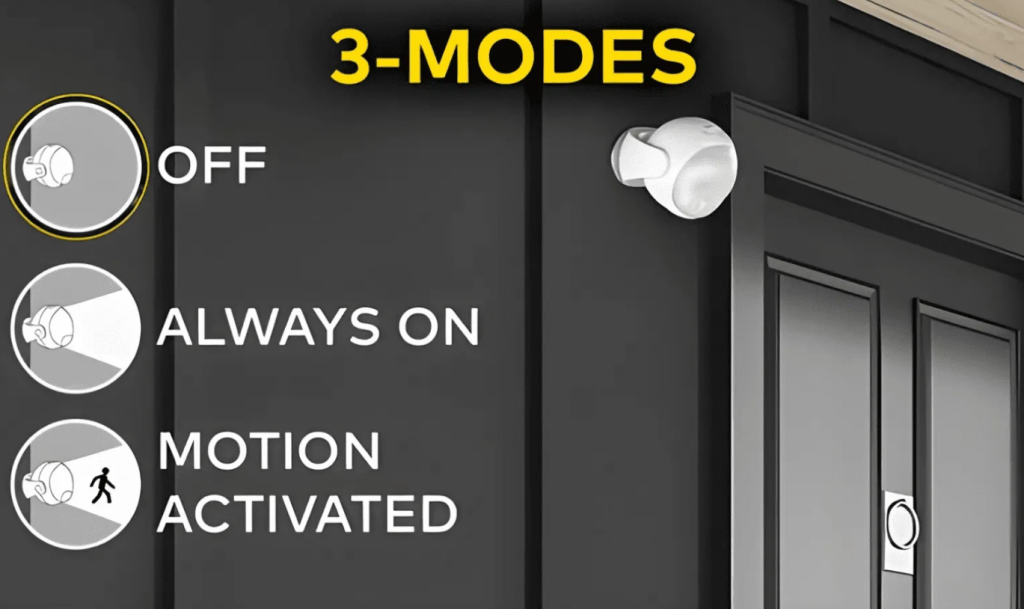
The controls are deliberately simple:
- Auto: activates from motion in dark conditions and turns off automatically.
- Off: disables the light.
- On: keeps the light illuminated until switched off or returned to automatic mode.
The manufacturer’s manual describes the automatic illumination period as approximately 30 seconds.
What does Lumenology actually do?
The most useful way to think about the product is as wireless supplemental lighting.
It can provide temporary or localized illumination without requiring an electrician. The mounting design is particularly important: the flexible tripod can stand on a surface or wrap around suitable objects such as poles and fences, while the magnetic base can attach to magnetic surfaces or an included metal plate.
That makes it different from a conventional wall-mounted floodlight.
For example, a homeowner might want light inside a dark garage, under a workbench, near stairs, on a shed, beside a fence, or near a vehicle. A fixed electrical fixture can be excessive for those locations. Lumenology’s portability addresses that specific problem.
It does not, however, turn a dark property into a brightly illuminated security zone. The 148-lumen output is modest compared with larger security floodlights, including the company’s own 1,000-lumen Dual model.
Lumenology Features That Actually Matter
1. 148-Lumen LED
The most important number buyers should understand is 148 lumens. That’s enough for targeted visibility around a doorway, staircase, closet, garage entrance or similar small area.
It should not be confused with the kind of high-output floodlight used to illuminate a large driveway or backyard.
Current Home Depot listings show much higher-output battery and solar security lights at similar or moderately higher prices, including 500-, 900-, 1,400- and even higher-lumen products.
So Lumenology’s value comes from portability and installation flexibility, not maximum illumination.
2. Flexible Tripod Mount
The flexible tripod is one of the product’s more interesting design choices.
It can be wrapped around or positioned on objects such as poles, rails and branches, which can be useful when you cannot or do not want to make permanent holes.
This is particularly relevant for renters and temporary setups.
3. Magnetic Attachment
The light can also attach to magnetic surfaces, and the package includes a magnetic plate for non-magnetic surfaces.
This opens up use cases such as:
- Garage areas
- Metal shelving
- Vehicles
- Lockers
- Workshop areas
- Temporary project lighting
The magnetic option is arguably more important than the headline “wireless” claim because it changes how quickly the light can be repositioned.
4. Motion Detection
The manufacturer specifies a 13-foot detectable range and 100-degree field of view.
That’s enough for many doorway and walkway applications, but buyers should position the unit around the direction of approach rather than assuming it will detect movement equally well from every angle.
5. IP43 Water Resistance
Lumenology is rated IP43 according to the manufacturer. The product documentation describes it as water resistant and suitable for outdoor use.
However, I would not interpret that as “install it anywhere outside and forget about it.”
IP43 is a relatively modest level of environmental protection compared with products specifically designed for more exposed outdoor applications. The warranty documentation also contains exclusions related to liquid, rain, humidity and other forms of misuse.
For a sheltered porch or protected entryway, the specification makes more sense than for a location receiving direct, prolonged exposure to harsh weather.
6. 5700K Color Temperature
The manufacturer lists the LED at 5700K, which produces a cool white appearance.
That’s useful for visibility-oriented tasks, although buyers who prefer warm decorative lighting may find it quite cool compared with a typical 2700K–3000K outdoor fixture.
Lumenology Benefits
The product’s practical benefits are mostly about convenience.
No Electrical Wiring
There is no need to run a power cable to the light. This is useful for locations where adding an outlet or wired fixture isn’t worth the effort.
Easy to Relocate
The tripod and magnetic options make the light considerably easier to move than a conventional wall-mounted fixture.
Automatic Lighting
The motion sensor means you don’t have to find a switch when approaching a dark area.
Useful During Temporary Projects
The always-on mode makes it useful for temporary tasks such as working in a garage, repairing a vehicle, setting up outdoors or walking around an area at night.
No Monthly Subscription
There is no published cellular, Wi-Fi or monitoring subscription associated with this portable model. It’s essentially a self-contained battery-powered light.

Lumenology Drawbacks You Should Know
This is where the buying decision becomes clearer.
It Isn’t Very Bright by Security-Floodlight Standards
148 lumens is the fundamental limitation.
A buyer wanting to illuminate an entire backyard should look elsewhere. Lumenology is better viewed as localized illumination.
It Isn’t Rechargeable
The portable model requires three AA batteries, which are not included. The manufacturer explicitly says the light is not rechargeable.
That means there is an ongoing consumable cost, even though there is no subscription.
Brightness Cannot Be Adjusted
The manufacturer says the brightness cannot be changed.
For a simple motion light, this isn’t a major flaw, but it reduces flexibility compared with products offering multiple brightness levels.
Battery Life Depends on Usage
The manufacturer lists approximately 1,000 activations and approximately 7 hours in continuous mode.
Those figures shouldn’t be interpreted as a guaranteed calendar lifespan because real battery life depends on activation frequency, temperature and battery condition.
The manufacturer also recommends an operating range of approximately 23°F to 95°F, explaining that battery chemistry affects operation in colder conditions.
Not a Replacement for Serious Security Lighting
A motion light can improve visibility, but Lumenology is not a camera, alarm or professionally installed security system.
Its own sales material frames the motion light as providing security and deterrence, but there isn’t sufficient independent evidence to conclude that a single 148-lumen unit meaningfully prevents crime.
Treat those security-related statements as manufacturer positioning, not independently established performance results.
Who Should Consider Lumenology?
Lumenology makes the most sense for someone who says:
“I need light here, but I don’t want to install electrical wiring.”
That’s a strong fit for:
Renters: The temporary/non-invasive mounting options are particularly useful.
Garage owners: A strategically positioned unit can illuminate a dark entrance or stair area.
Homeowners with awkward locations: Fences, posts and other surfaces can be difficult to wire.
Campers and travelers: The manufacturer specifically markets it for portable use, and the lightweight form factor makes that practical.
People who want several small lights: Multiple strategically positioned 148-lumen lights can make more sense than expecting one unit to illuminate an entire property.
Who Should Probably Skip It?
Lumenology isn’t an obvious fit when:
You need large-area illumination.
You want a rechargeable USB light rather than replaceable AA batteries.
You need adjustable brightness.
You live somewhere that routinely exposes outdoor equipment to severe weather and expect a higher level of environmental protection.
You want a permanent, high-output security floodlight.
You don’t want to periodically replace batteries.
Lumenology design and mounting
The strongest practical feature is the mounting system.
The flexible tripod isn’t simply a conventional stand. The manual shows it can be adjusted so the light stands on level ground or wraps around an object such as a pole or fence. The manufacturer also provides a magnetic plate, screw and anchor for more permanent mounting.
That versatility is valuable where a permanent fixture would be inconvenient.
The magnet also creates an interesting use case for vehicles, lockers, metal shelving and other magnetic surfaces. On non-magnetic surfaces, the supplied mounting plate can be screwed into place.
There is, however, a trade-off: a portable mounting system is inherently easier to move or remove than a hardwired security light.

Brightness: 148 lumens is the number that matters
Marketing language can make small lights sound dramatically brighter than they are.
The verified specification here is 148 lumens. That is enough for useful close-range illumination, but buyers should not confuse it with a high-powered security floodlight. The company’s Dual Lumenology model, for example, is listed at 1,000 lumens.
There is also no user-adjustable brightness. The manufacturer explicitly says the brightness cannot be changed.
That makes the buying decision relatively simple: you either want its fixed output or you don’t.
Beam distance versus motion-detection distance
One easily overlooked point is that the light’s beam distance and motion-sensor range are not the same thing.
The manufacturer’s technical information lists a 62-foot beam distance, but the motion detector is specified at 13 feet. In other words, the light may project illumination farther than the sensor can reliably detect movement.
That distinction matters if you’re deciding how far away from a walkway, gate or doorway to place it.
Battery life and power
Lumenology runs on three AA alkaline batteries, which are not included. The manufacturer’s published estimate is approximately 1,000 activations in motion mode or approximately 7 hours in always-on mode.
The advantage is convenience: there is no charging cable and no requirement to remove the light to recharge it.
The disadvantage is that this is an older-style battery architecture compared with modern rechargeable outdoor lights.
The company says the device is not rechargeable, although the documentation is built around replaceable batteries rather than a proprietary battery pack.
For occasional motion-triggered use, replaceable batteries can be perfectly practical. For continuous illumination, battery replacement becomes a much bigger consideration.
Cold-weather limitation
This is one of the more useful details buried in the manufacturer’s documentation.
The company recommends an operating temperature range of 23°F to 95°F and explains that the range is influenced by alkaline-battery performance in cold conditions.
So a buyer in a cold-weather region should not treat the published battery-life figure as a guaranteed year-round number.
This isn’t unique to Lumenology; battery chemistry affects many battery-powered outdoor products. Still, it is relevant because the light is marketed for outdoor use.
Is Lumenology waterproof?
No.
The Portable model carries an IP43 rating. The manual specifically explains that IP43 protects against water spray at less than 60 degrees from vertical and explicitly warns users not to submerge the product.
That means it should be treated as water-resistant rather than waterproof.
There is another important nuance: the manufacturer’s warranty excludes damage associated with liquid, water, rain, extreme humidity and similar conditions. So the IP43 rating should not be interpreted as a promise that rain-related damage is automatically covered by warranty.
For exposed outdoor installations, positioning the light under some shelter is more conservative than mounting it where it receives prolonged direct weather.
What’s included?
The manufacturer lists the following:
- Lumenology Portable Motion Light
- Flexible tripod
- Magnetic plate
- Screw
- Anchor
- User manual
Batteries are not included.
That last point is easy to miss when comparing the total purchase cost with rechargeable alternatives.
Lumenology Pros and Cons
Lumenology Pros
Flexible mounting. The tripod and magnetic system are the product’s most meaningful differentiators.
Simple operation. There is no app, account or network setup required.
Compact design. The current manufacturer specification lists the product at 6 ounces and roughly 3.5 × 3.75 × 4.25 inches.
Useful for awkward spaces. Garages, closets, sheds, stairs, fences and other locations can benefit from localized motion lighting without electrical work.
Published warranty and documentation. The company provides a manual and a one-year limited warranty.

Lumenology Cons
Only 148 lumens. It isn’t a substitute for high-output floodlighting.
Not rechargeable. Buyers need three AA batteries.
No brightness control. The manufacturer confirms there is only one brightness level.
IP43 is limited weather protection. It isn’t a waterproof outdoor light.
Documentation inconsistencies. The current website contains discrepancies regarding shutoff duration, adjustment range and dimensions.
Not smart. There is no verified smart-home or security-camera integration for this portable model.
What I like
The best part of Lumenology isn’t the marketing phrase “professional lighting.” It is the combination of portability, motion detection and flexible mounting.
That combination solves a very specific problem well.
A homeowner may not want to drill through a wall, run cable or install an electrical box simply to illuminate a closet, shed or awkward section of a yard. A battery-operated light with multiple mounting options can be much more practical.
The product also has a useful always-on mode, so it isn’t limited to motion-triggered use.
What concerns me
My biggest concern isn’t that the product is anonymous or unverifiable. Quite the opposite: the manufacturer, model number, manual, warranty and retailer listings are all identifiable.
The bigger issue is value relative to the competition.
At the manufacturer’s current $39.99 price, buyers are entering a market where several alternatives offer either more brightness, a lower price, solar power, or a smart-home ecosystem.
The second concern is documentation quality. A serious product review shouldn’t ignore that the current site contains conflicting information. The manual provides the stronger source for several specifications, but buyers should still verify the final product details at checkout.
Lumenology vs Alternatives
The right comparison isn’t “which light is universally better?” It is “which design solves my problem?”
| Product | Main approach | Brightness | Power | Best use case | Main trade-off |
|---|---|---|---|---|---|
| Lumenology Portable | Motion + flexible tripod/magnet | 148 lm | 3×AA | Flexible indoor/outdoor supplemental lighting | Lower output |
| Mr. Beams MB980 | Motion ceiling light | 100 lm | 4×C | Closets, sheds, storage areas | Less flexible mounting |
| Home Zone Security Solar Down Light | Solar + motion | 200 lm | Solar/rechargeable | Fixed outdoor locations with sunlight | Depends on solar exposure |
The Mr. Beams MB980 is currently listed at $19.99 at Home Depot and provides 100 lumens, 20-ft motion activation and 30-second automatic shutoff. It is a simpler ceiling-style product rather than a flexible tripod/magnetic portable light.
The Home Zone Security solar model currently appears at approximately $17.99 on Newegg and provides 200 lumens on motion activation, but its solar panel and fixed wall-mount approach make it a different proposition.
For Lumenology, the meaningful differentiator is therefore not raw lumens. It is the combination of portability, magnetic mounting and flexible tripod positioning.
Is Lumenology Worth the Money?
That depends heavily on what you’re buying it to do.
At the manufacturer’s currently listed $39.99, you’re paying for a compact, movable lighting system rather than simply buying the cheapest motion-activated LED available.
If your priority is:
“I need a light I can put almost anywhere without wiring.”
Then Lumenology’s design makes practical sense.
If your priority is:
“I need to illuminate a large outdoor area as brightly as possible.”
The 148-lumen output becomes a significant limitation, and higher-output alternatives deserve consideration.
There is also a price-validation issue worth mentioning. Home Depot currently has separate listings and category pages showing different prices for the same Lumenology model, including $39.99 on the product page and $26.99 in a current category result. That means buyers should check the live checkout price rather than relying on an old promotional figure.

Lumenology Price and Buying Considerations
The manufacturer’s product page currently shows the Lumenology Portable LED Motion Light at $39.99, with shipping calculated at checkout.
The company also advertises free ground shipping on qualifying US orders of $29.99 or more during its applicable promotion, although Alaska and Hawaii may have exclusions.
Because promotional prices can move, the safest approach is to confirm:
- Product model
- Final price
- Shipping cost
- Color availability
- Return period
- Warranty terms
- Number of units included in any bundle
Do not assume a “50% off” or similar promotional message remains available after clicking through.
Lumenology Return Policy and Warranty
Limitless Innovations states that its standard return policy provides a 30-day money-back period from delivery. Items must be returned in original packaging and without damage, and the customer is responsible for return shipping. Shipping and handling are non-refundable.
The manufacturer’s limited warranty is one year from the original purchase date, subject to exclusions.
One important distinction: a money-back guarantee and a warranty are not the same thing.
The return policy is for deciding that you don’t want the product. The warranty is intended to address eligible manufacturing defects.
Is Lumenology Legit?
There is a straightforward basis for establishing that Lumenology is a real consumer product: it is listed by Limitless Innovations, the company identifies Lumenology as one of its brands, and the portable light is also listed by major US retailers including Home Depot.
That establishes the product’s existence and traceable manufacturer/retail presence.
It does not, by itself, prove every advertising claim made about its performance.
That distinction is important. The manufacturer’s page includes claims about brightness, long battery life, outdoor use and security benefits; some of those are specifications, while others are marketing interpretations.
Also, searches for “Lumenology” can surface Lumynology, which is a different company associated with IPL beauty products. Reviews of Lumynology should not be treated as reviews of this lighting product.
How to Use Lumenology
For automatic lighting:
- Install three AA batteries.
- Attach the flexible tripod or magnetic mounting system.
- Position the light toward the area you want illuminated.
- Put the mode switch into automatic mode.
- Make sure the installation area is dark enough for the light sensor to activate.
- Walk through the detection area and adjust the position if necessary.
The manufacturer’s manual indicates that the automatic mode activates only under dark conditions and stays illuminated for approximately 30 seconds unless motion is detected again.
For continuous lighting, use the ON setting.
Frequently Asked Questions About Lumenology
Can Lumenology be used outside?
Yes. The manufacturer rates the portable model IP43 water resistant. However, placement matters, and it shouldn’t be treated as a fully waterproof or submersible light.
What is the return policy?
The manufacturer states that returns are accepted within 30 days of delivery, subject to its conditions. Return shipping is generally paid by the customer.
Can Lumenology replace a wired floodlight?
For a small, targeted area, it may provide adequate supplemental light. It should not be considered a direct replacement for a high-output floodlight intended to illuminate a large yard or driveway.
Is Lumenology a security system?
No. It is a motion-activated light. It does not provide cameras, recording, alarms or professional monitoring.
What is Lumenology?
Lumenology is a lighting brand from Limitless Innovations. The product reviewed here is the Lumenology Portable LED Battery Powered Wireless Motion Light (LMLOGY-SMSL-001), a compact 148-lumen motion-activated light designed for localized indoor and outdoor illumination.
How does Lumenology work?
The portable model uses a passive infrared (PIR) motion sensor. In AUTO mode, it detects movement in darker conditions and switches the LED on, then turns it off after approximately 30 seconds when no additional motion is detected.
How bright is the Lumenology Portable light?
The manufacturer rates the Portable model at 148 lumens. This makes it more appropriate for closets, garages, sheds, stairs and other smaller areas than for lighting a large driveway or entire backyard.
What batteries does Lumenology use?
The Portable model requires three AA alkaline batteries. The batteries are not included with the product. The manufacturer’s documentation estimates approximately 1,000 motion activations or about seven hours of continuous operation, although actual battery life can vary.
Is Lumenology waterproof?
Lumenology’s Portable model has an IP43 rating, which provides limited protection against water spray. It should not be submerged, and the manufacturer does not describe it as waterproof. Buyers should therefore use additional care when installing it in exposed outdoor locations.
How do you mount the Lumenology Portable light?
The light includes a flexible tripod and a magnetic mounting option. The tripod can be used as a stand or wrapped around suitable objects such as poles and fences. A magnetic plate and mounting hardware are also provided for fixed placement.
Is Lumenology rechargeable?
No. The Portable model uses replaceable AA alkaline batteries rather than a built-in rechargeable battery. That can be convenient when you need quick battery replacement, but it may be less convenient than a USB-rechargeable light for frequent use.
Is Lumenology worth buying?
It depends on the intended use. Lumenology is worth considering for buyers who specifically want a compact, battery-powered motion light with flexible mounting. It may not be the right choice for someone seeking high-output security lighting, rechargeable power, or smart-home connectivity.
Is Lumenology a security camera?
No. The Portable Lumenology model is a motion-activated light, not a camera or video-monitoring system. Its purpose is to provide illumination when motion is detected.
Where can you buy Lumenology?
The product is sold through the manufacturer’s Limitless Innovations website and has also been listed by major US retailers. Because availability and prices can change, buyers should verify the exact model, current price, shipping charges and return terms before ordering.
Final verdict
The evidence does not support portraying Lumenology as a revolutionary replacement for every form of professional or security lighting.
It does support describing it as a versatile, simple portable motion light from an identifiable consumer-electronics company.
The strongest reason to consider it is its mounting flexibility: the combination of tripod, magnet and removable positioning makes it useful in places where traditional lighting is inconvenient.
The largest drawbacks are equally clear: 148 lumens, three AA batteries, no rechargeable system, no brightness adjustment, limited IP43 weather protection, and no smart connectivity.
At $39.99 direct from the manufacturer, value depends heavily on whether you actually need that flexible mounting design. A lower-cost 200-lumen Mr Beams option exists, while Ring offers a similarly priced smart lighting product with substantially higher weather resistance and ecosystem integration.
One final point matters for this particular review: the manufacturer’s own pages contain specification discrepancies. That doesn’t establish that the product is defective, but it is a reason to rely on the published manual and verify the exact model and current terms before buying.
My conclusion: Lumenology is worth considering for buyers who specifically need a compact, battery-powered motion light with flexible mounting. It is not the right tool for buyers who actually need a high-output security floodlight, smart lighting, or a rechargeable outdoor system.