Pulsetto Review: You’ve had those days-the ones where stress piles on, sleep feels like a distant memory, and your nervous system seems stuck in overdrive. Whether it’s work pressure, family demands, or simply the relentless pace of modern life, many people find themselves searching for tools to help them reset. Enter Pulsetto, a wearable device that claims to tap into your body’s built-in relaxation system through vagus nerve stimulation.

This review examines the Pulsetto vagus nerve stimulator based on available specifications, user experiences, and comparisons with competing devices. We’ll look at how it works, what it claims to do, what the evidence actually supports, and-most importantly-whether it makes sense for your specific situation. By the end, you’ll have a clear picture of whether Pulsetto is worth your consideration or if you’d be better served by an alternative approach.

Pulsetto – Quick Verdict
Best for:
- Individuals new to vagus nerve stimulation who want a lower-cost entry point
- People seeking a hands-free device they can use while relaxing or working
- Those looking for a stress-management tool to complement existing wellness routines
- Users who want app-guided programs with multiple wellness targets
Not ideal for:
- People with heart conditions or a history of arrhythmias
- Those who want a device with strong, independent clinical research backing
- Users seeking the strongest possible therapeutic effects
- Anyone who dislikes ongoing costs like conductive gel or app subscriptions
Biggest strength:
Affordable entry point compared to competitors like Truvaga ($499) and Nurosym ($825), with a comfortable hands-free design that integrates into daily routines
Biggest drawback:
Limited independent scientific validation for its specific operating parameters; most available research comes from researchers with ties to the company

Overall verdict:
Pulsetto offers a more affordable pathway into vagus nerve stimulation than many competitors, with decent reported outcomes for stress and sleep. However, the device delivers milder effects compared to some alternatives, and the ongoing costs for gel and potential premium app subscriptions add up over time. For many first-time users, it represents a reasonable starting point-but it’s not a magic bullet, and it’s absolutely not suitable for everyone.
Product Snapshot
What Is Pulsetto?
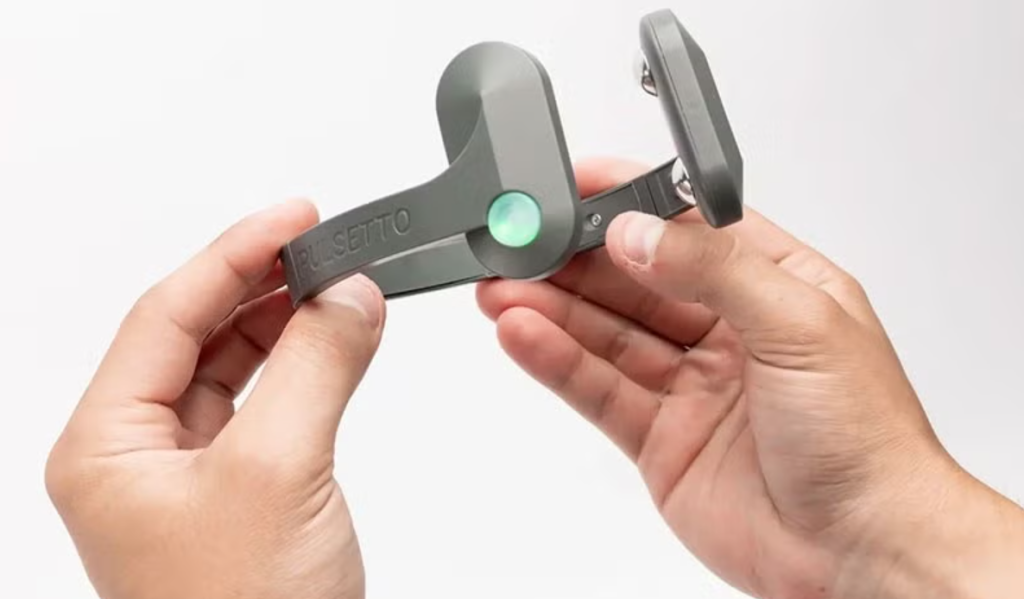
Pulsetto is a non-invasive, wearable vagus nerve stimulation device designed to support stress management, sleep quality, and nervous system regulation. It’s a U-shaped neckband that rests on your shoulders with electrode pads positioned on either side of your neck.
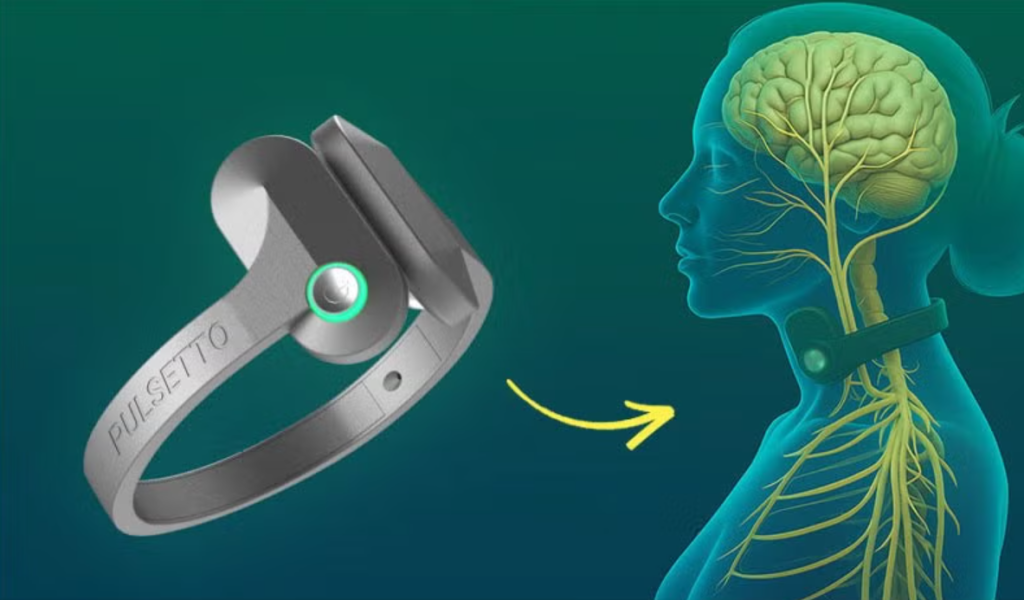
The device delivers gentle electrical pulses through the skin to stimulate the vagus nerve-a major nerve pathway connecting your brain to vital organs throughout your body. By activating this nerve, Pulsetto aims to shift your nervous system from a “fight-or-flight” state to a more relaxed “rest-and-digest” mode.
Pulsetto was developed by a HealthTech startup based in Lithuania. The company has received investment from Kilo Health and positions its device as a scientifically-backed tool for everyday wellness.
The device is intended for healthy individuals seeking to manage everyday stress, improve sleep, and enhance overall well-being. It is not a medical device and is not FDA-cleared for treating specific conditions-a distinction worth keeping in mind.
How Does Pulsetto Work?
The Technology
Pulsetto uses transcutaneous cervical vagus nerve stimulation (tVNS) -which simply means it stimulates the vagus nerve through the skin of your neck.
The device emits high-frequency electrical waveforms at a clinically studied frequency. According to product information, it operates with an electrical output ranging from 12 to 46 volts, making it more powerful than some competing devices.
The Mechanism
The vagus nerve is the longest cranial nerve, running from your brainstem through your neck and into your chest and abdomen. It’s a two-way communication superhighway between your brain and your organs, regulating heart rate, digestion, breathing, and the stress response.
When Pulsetto sends electrical pulses to the vagus nerve via the neck, it triggers signals that travel to the brain. These signals activate the parasympathetic nervous system-the branch of your nervous system responsible for rest, digestion, and recovery. This can theoretically help counterbalance the effects of chronic stress and promote a calmer state.
What the Evidence Says
Claim: Pulsetto reduces stress, improves sleep, and supports nervous system health.
Evidence: The device uses an operating frequency similar to an FDA-cleared vagus nerve stimulator. However, there is currently no independent, peer-reviewed research specifically validating Pulsetto’s exact operating parameters. The only research that specifically favors Pulsetto comes from thesis candidates who received funding from the company.
Editorial interpretation: The mechanism behind tVNS is generally supported by scientific research, and Pulsetto appears to operate within a reasonable therapeutic range. However, the lack of independent studies for this specific device means you’re relying primarily on the manufacturer’s claims and user testimonials rather than robust clinical evidence.
Key Features
1. Hands-Free Neckband Design
What it is: A U-shaped device that sits around your neck, leaving your hands free during sessions.
Why it matters: You can use it while working, reading, meditating, or even lying in bed. This makes it easier to incorporate into daily routines compared to handheld devices.
Who benefits: Anyone who wants to multitask during sessions or simply relax without holding a device.
Limitations: The device may be too large for some necks. Users report it can feel strange to have something around your neck, and finding the optimal placement may take some trial and error.
2. Companion App with Multiple Programs
What it is: A mobile app (iOS and Android) that controls the device, offers guided sessions, and tracks wellness insights.
Why it matters: The app provides structure and guidance, which can be helpful for beginners. Programs target specific goals like Stress, Sleep, Anxiety, Burnout, and Pain.
Who benefits: Users who prefer guided experiences and want to track their progress over time.
Limitations: The free app offers only five basic programs. Premium subscription ($139/year) unlocks additional features including inflammation, gut health, and head pain programs, as well as guided breathing, affirmations, and a stress resilience score. Some users find the app pushes the premium subscription aggressively. Others report connectivity issues and a poor app experience.

3. Adjustable Intensity and Session Length
What it is: Users can adjust the intensity of stimulation (12–46 volts) and session duration (4–10 minutes).
Why it matters: Personalization allows you to find settings that work for your comfort level.
Who benefits: Everyone, as tolerance and sensitivity vary significantly between individuals.
Limitations: The recommended usage is 2–3 times daily for at least 4 minutes per session. More than 8 hours daily can damage the vagus nerve-so this is definitely not an all-day device.
4. Battery Life
What it is: The FIT model offers a 12-day battery life, reportedly 20% longer than the Lite version.
Why it matters: Less frequent charging means more convenience and consistency in your routine.
Who benefits: Regular users who don’t want to worry about daily charging.
Limitations: Battery life claims are manufacturer-reported; real-world performance may vary.
5. App Integration with Wearables
What it is: The Pulsetto app integrates with Apple Health, Garmin, Whoop, Oura, and other wearables.
Why it matters: You can track your wellness data alongside other health metrics.
Who benefits: Users already invested in wearable health tracking.
Limitations: Integration quality may vary by platform.
Practical Experience – What the Available Evidence Suggests
Since we have not personally tested this device, the following is based on available tester reports, user reviews, and product information.
Setup and First Impressions
The onboarding process appears straightforward. Users press the power button, slip on the neckband, and connect to the app via Bluetooth. The box includes the stimulator, a charging cable, electrode gel, and a user manual.
What to expect: The device is lightweight and sturdy. However, the need to apply conductive gel to the pulse points before every session can be messy. Some users find this inconvenient and note that finding the best placement for good skin contact takes practice.
During Use
The stimulation itself feels like a tingling, prickly sensation-described as sharp and reminiscent of a TENS device. At higher intensity levels, it can be intense but not painful.
Sessions are short: the recommended minimum is 4 minutes, with some users opting for 10–20 minutes during bedtime routines.
What to expect: The device sits comfortably once positioned correctly. However, some users report that the neckband can antagonize neck muscles, causing neck and jaw pain.
After Effects
Multiple testers report positive outcomes:
- One Healthline tester used Pulsetto daily for 35 days and reported feeling less reactive to stress and more emotionally regulated
- The same tester noted improved sleep quality, including a first sleep score in the 90s after using the device
- Other users report feeling more relaxed and sleeping better
However, experiences vary significantly:
- Some users report no effect
- Others report increased anxiety after use
- One user reported experiencing heart palpitations and arrhythmias following use (more on this in the safety section)
What Stands Out
Positive: The hands-free design is genuinely convenient. The short session length (4 minutes) makes it easy to maintain consistency. Multiple program options in the app provide variety.
Concerning: The mixed user experiences suggest outcomes are highly individual. The lack of independent research means you’re essentially experimenting to see if it works for you.
Main Benefits
1. Lower Cost of Entry
At $215–$296, Pulsetto is significantly more affordable than competitors like Truvaga ($499) or Nurosym ($825). This makes it a more accessible option for those curious about vagus nerve stimulation but hesitant to invest heavily.
2. Hands-Free Convenience
The neckband design leaves your hands free, allowing you to use the device while reading, working, or relaxing. This is a meaningful advantage over handheld alternatives.
3. Short Sessions
Four-minute sessions make it easier to maintain a consistent routine compared to devices requiring 30–60 minutes daily.

4. Multiple Program Options
The app offers programs for stress, sleep, anxiety, burnout, and pain, with premium options for more specific targets. This variety allows users to address different needs.
5. HSA/FSA Eligible
The device is eligible for purchase with Health Savings Account and Flexible Spending Account funds, which can reduce the effective cost.
Drawbacks & Limitations
1. Limited Independent Scientific Validation
This is the most significant concern. Currently, there is no independent, peer-reviewed research validating Pulsetto’s specific operating parameters. The available research comes from thesis candidates who received funding from Pulsetto. This doesn’t mean the device doesn’t work-but it does mean you’re relying heavily on manufacturer claims.
2. Weaker Therapeutic Effects Compared to Competitors
According to testers who compared Pulsetto to Truvaga, the benefits with Pulsetto were milder. If you’re seeking the strongest possible effects, you may need to consider more expensive alternatives.
3. Ongoing Costs
Pulsetto requires conductive gel for every session. A 3-month supply costs approximately $40.79. You can use non-branded ultrasound gel, but it’s still a recurring expense.
The premium app subscription costs $139/year and is promoted frequently within the app. While not required, some users feel the free version is limited.
4. Mixed User Experiences
Customer feedback is highly variable. While some users report significant benefits, others report no effects or even negative side effects like increased anxiety or neck pain.
5. Customer Support Concerns
Reports suggest customer support may be challenging to reach. Some users report AI-powered customer service with limited recourse when issues arise. Shipping delays are reportedly common.
6. App Issues
Some users report frequent connectivity problems and a frustrating app experience. Since the device requires the app to function, this is a significant limitation.
7. Not Suitable for Everyone
The device is not recommended for people with heart conditions. One user reported experiencing heart palpitations and arrhythmias after use, despite having no known heart disease. This is a serious safety consideration.
Pros & Cons
Pros
- Lower upfront cost compared to major competitors ($215-$296)
- Hands-free neckband design
- Short 4-minute sessions
- Decent battery life (up to 12 days)
- Multiple app programs for different wellness goals
- HSA/FSA eligible
- 30-day money-back guarantee and 2-year warranty
Cons
- No independent, peer-reviewed research validating its specific parameters
- Weaker therapeutic effects compared to leading competitors
- Requires conductive gel for every session (ongoing cost)
- Premium app subscription ($139/year) for full features
- Mixed user experiences-works well for some, not for others
- Customer support reportedly limited
- Shipping delays are common
- App connectivity issues reported
- Not suitable for people with heart conditions
- May be too large for some necks
Who Should Buy Pulsetto?
1. First-time users curious about vagus nerve stimulation
Why: Pulsetto offers a lower-cost entry point than many competitors, making it a reasonable starting point if you want to explore whether tVNS works for you without a $500+ commitment.
2. People who value hands-free convenience
Why: If you want to use a device while working, reading, or relaxing without holding anything, the neckband design is a genuine advantage.
3. Those looking for a stress-management tool to complement existing routines
Why: Pulsetto can be integrated into nightly wind-down routines or used during breaks to help shift the nervous system into a calmer state.
4. People willing to accept modest improvements at a lower price
Why: As Innerbody’s review notes, Pulsetto represents “an opportunity to achieve more modest improvements at a lower price”. If you’re not seeking maximum therapeutic effect, this trade-off may make sense.

Who Should NOT Buy Pulsetto?
1. People with heart conditions or a history of arrhythmias
Why: The manufacturer advises against use by people with heart disease. One user reported serious heart palpitations and arrhythmias following use despite having no known heart disease. Do not use this device if you have any heart condition, and consult a healthcare professional before use if you have any concerns.
2. People seeking the strongest possible therapeutic effects
Why: Testers report that Pulsetto’s effects are milder compared to Truvaga. If you want maximum impact and can afford the higher price, consider alternatives.
3. People who dislike ongoing costs
Why: Between conductive gel and the optional premium app subscription, Pulsetto has recurring costs that add up over time.
4. People who want robust scientific validation
Why: The lack of independent research for Pulsetto’s specific parameters may be a deal-breaker if you require strong clinical evidence before purchasing.
5. People who prefer simple, app-free devices
Why: Pulsetto requires the app to function. If you want a standalone device without app dependency, look elsewhere.
Pulsetto vs Alternatives
Comparison Table
Which One Makes Sense for You?
Choose Pulsetto if: You’re new to vagus nerve stimulation, want a hands-free device, and are comfortable with modest effects at a lower price.
Choose Truvaga if: You want the strongest possible effects and are willing to pay a premium for a device with stronger clinical backing.
Choose Nurosym/Nuropod if: You want a mess-free, no-subscription device and are willing to make a larger upfront investment for long-term simplicity.
Choose Apollo Neuro if: You prefer vibration-based stimulation (rather than electrical) and want a wrist-worn device. Note that Apollo doesn’t directly stimulate the vagus nerve in the same way.
Value for Money
Is Pulsetto worth the price? The answer depends on your expectations and circumstances.
What you’re getting: A hands-free tVNS device with app-guided programs, decent battery life, and a 2-year warranty, all at a significantly lower price than many competitors.
What you’re not getting: Strong independent scientific validation, maximum therapeutic effect, or a mess-free experience with no ongoing costs.
Long-term cost considerations:
- Device: $215–$296
- Gel: ~$41 per 3 months ($163/year)
- Premium app (optional): $139/year
- Total first-year cost (with premium and gel): ~$517-$598
Compare this to Truvaga at $499 with minimal ongoing costs, or Nurosym at $825 with no ongoing costs. Depending on how long you use the device, Pulsetto may or may not be the most cost-effective option.
Verdict: Pulsetto offers reasonable value for first-time users who want to explore tVNS without a major upfront investment. However, the ongoing costs mean it’s not necessarily cheaper in the long run.
Note: Check the current price before purchasing, as pricing and promotions can change.
Is Pulsetto Legit?
Company Information
Pulsetto is a legitimate company based in Lithuania with a US office in Westerville, Ohio. The company has received investment from Kilo Health and maintains an official website with product information and customer support.
Product Documentation
The device comes with a user manual, warranty information, and access to a companion app.
Warranty and Returns
Regulatory Status
The device is not FDA-cleared for treating specific medical conditions. It is sold as a wellness device for stress and sleep support.
Independent Reputation
Independent reviews from sources like Innerbody and Healthline provide balanced assessments. However, customer feedback on platforms like Reddit is mixed, with some users reporting positive experiences and others expressing frustration with customer support or product effectiveness.
Safety Concerns
An FDA adverse event report documents one user who experienced heart palpitations and arrhythmias after using Pulsetto. The manufacturer states that people with heart disease should not use the device.
Bottom Line
Pulsetto is a legitimate product from a real company. However, the lack of independent research and the safety concerns mean you should approach it with appropriate caution. It is not a medical device, and it is not suitable for everyone.
Customer Reviews & Complaints
Based on available customer feedback from multiple sources. Individual experiences vary and do not establish scientific proof of effectiveness.
Positive Recurring Themes
- Improved sleep: Multiple users report sleeping better after using Pulsetto
- Stress reduction: Users describe feeling more relaxed and less reactive to stress
- Convenience: The hands-free design and short sessions make it easy to use consistently
- Comfortable design: Many users find the neckband comfortable once properly positioned
Negative Recurring Themes
- Mixed effectiveness: Some users report no noticeable effects
- Neck pain or discomfort: Some users experience neck or jaw pain
- Messy gel application: Applying gel before every session is inconvenient and messy
- App issues: Connectivity problems, poor user experience, and aggressive promotion of premium subscription
- Customer support frustrations: Reports of AI-powered support with limited human assistance
- Shipping delays: Delays are reportedly common
- Difficulty with returns: Some users report challenges with the return process
Important Caveat
Customer reviews are individual experiences and do not necessarily establish product performance scientifically. They are useful for understanding the range of possible outcomes but should not be treated as definitive evidence.
Buying Guide: Before You Purchase Pulsetto
Before buying Pulsetto, consider the following checklist:
- □ Do you have any heart conditions? If yes, do not use this device. Consult a healthcare professional before use if you have any concerns.
- □ Are you comfortable with ongoing costs? Factor in the cost of conductive gel (~$41 per 3 months) and the optional premium app subscription ($139/year).
- □ Are you willing to use the app? The device requires the Pulsetto app to function.
- □ Do you have realistic expectations? The effects are reported to be milder than some competitors, and results vary significantly between individuals.
- □ Have you read the return policy? The 30-day money-back guarantee means you can test the device, but be aware that some users report difficulties with returns.
- □ Can you tolerate a tingling sensation? The stimulation feels like a TENS device and may be uncomfortable at higher intensities.
- □ Are you prepared for potential shipping delays? Delays are reportedly common.
- □ Have you considered alternatives? Compare Pulsetto with Truvaga, Nurosym, and Apollo Neuro to ensure you’re choosing the right device for your needs.
Frequently Asked Questions About Pulsetto
What is Pulsetto?
Pulsetto is a non-invasive, wearable vagus nerve stimulation device designed to support stress management, sleep quality, and nervous system regulation. It’s a neckband that delivers gentle electrical pulses to stimulate the vagus nerve.
How does Pulsetto work?
Pulsetto uses transcutaneous cervical vagus nerve stimulation (tVNS) to send electrical pulses through the skin of your neck to the vagus nerve. This activates the parasympathetic nervous system, helping shift your body from a “fight-or-flight” to a “rest-and-digest” state.
Is Pulsetto legit?
Yes, Pulsetto is a legitimate product from a registered company based in Lithuania with a US office. However, the device is not FDA-cleared for treating medical conditions, and independent research on its specific parameters is limited.
Is Pulsetto worth it?
It depends on your expectations. Pulsetto offers a lower-cost entry point to vagus nerve stimulation with decent reported outcomes for stress and sleep. However, effects are reportedly milder than some competitors, and ongoing costs add up. It’s a reasonable choice for first-time users but not for those seeking maximum effect or strong clinical validation.
Does Pulsetto really work?
How much does Pulsetto cost?
What are the disadvantages of Pulsetto?
Are there better alternatives to Pulsetto?
Is Pulsetto suitable for beginners?
How to Purchase Pulsetto
You can purchase Pulsetto through the following channels:
Official Website: The primary purchasing channel is the official Pulsetto website (pulsetto.tech). Purchasing directly from the manufacturer typically includes free shipping on the device, a 30-day money-back guarantee, and a 2-year warranty.
Amazon: Pulsetto is also available through the company’s Amazon storefront. The device price may be slightly lower on Amazon, but shipping costs may negate the difference unless you have a Prime membership. Note that gel and app subscriptions are typically not available through Amazon.
What to Consider When Ordering:
- Shipping delays are reportedly common when ordering directly
- The device ships for free, but gel does not
- You receive a 30-day trial of the premium app with device purchase
- Consider the total cost including gel and any optional premium subscription
Final Verdict
Is Pulsetto worth considering?
Yes-but with important caveats. Pulsetto offers a more affordable pathway into vagus nerve stimulation than many competitors, with a comfortable hands-free design and short sessions that make it easy to incorporate into daily routines.
Who is it best for?
First-time users curious about tVNS who want to explore whether it works for them without a major upfront investment. People who value hands-free convenience and short sessions will appreciate the design.
Who should choose an alternative?
People with heart conditions should not use this device. Those seeking the strongest possible therapeutic effects may be better served by Truvaga. Anyone who dislikes ongoing costs or wants robust scientific validation should look elsewhere.
Biggest advantage:
The lower price point makes Pulsetto accessible to a wider audience, allowing more people to explore vagus nerve stimulation as a wellness tool.
Biggest drawback:
The lack of independent research and mixed user experiences mean you’re essentially experimenting to see if it works for you. The ongoing costs and potential safety concerns also warrant careful consideration.
Bottom line:
Pulsetto is a reasonable entry point into vagus nerve stimulation, offering modest benefits at a moderate price. It’s not a miracle device, and it’s not for everyone. If you have realistic expectations, no contraindications, and are comfortable with the trade-offs, it may be worth a try-backed by the 30-day money-back guarantee.