SnoreStop Review: Snoring disrupts the sleep of an estimated 90 million American adults-and their bed partners. If you’ve landed here, chances are you or someone sleeping next to you is tired of the nightly noise and searching for a solution that doesn’t involve bulky mouthpieces, uncomfortable chin straps, or expensive CPAP machines.

SnoreStop is a homeopathic anti-snoring oral spray that has been on the market since 1995. Developed by a naturopathic physician, it promises to reduce or eliminate snoring with just a few sprays before bed-no devices, no fitting, no cleaning.
This review examines the available evidence behind SnoreStop: its ingredients, clinical claims, real-world user experiences, pricing, and whether it’s a legitimate option worth considering. By the end, you’ll have the information you need to decide if this spray makes sense for your situation-or if you’d be better served by an alternative.

SnoreStop – Quick Verdict
Best for:
- People who snore due to throat inflammation, mucus buildup, or mild airway obstruction (non-apneic snoring)
- Those who have tried mouthpieces or devices but found them too uncomfortable to use consistently
- Light-to-moderate snorers looking for a low-commitment, device-free solution
- Bed partners of snorers who want a quick, non-invasive option to try
Not ideal for:
- Individuals with diagnosed sleep apnea (this product does not treat sleep apnea)
- Heavy snorers or those with severe obstruction who may need a more substantial intervention
- People who prefer FDA-approved medical devices or prescription treatments
- Those with compromised immune systems (due to FDA warnings about the nasal spray version-see details below)
Biggest strength:
Device-free convenience and ease of use-just a few sprays before bed, no cleaning, no fitting, no discomfort.
Biggest drawback:
As a homeopathic product, its mechanism of action is not scientifically established in the conventional medical sense, and results vary significantly between users.

Overall verdict:
SnoreStop is one of the more established over-the-counter snoring remedies, with over 30 years on the market and a published clinical study. For people with mild, non-apneic snoring who want a simple, device-free option, it’s worth trying-especially with the 30-day money-back guarantee that reduces financial risk. However, it’s not a cure-all, and those with sleep apnea or severe snoring should consult a healthcare professional first.
Product Snapshot
What Is SnoreStop?
SnoreStop is a homeopathic, over-the-counter anti-snoring oral spray developed by naturopathic physician Dr. Kenneth Rifkin in 1995. It is designed to temporarily reduce or eliminate the symptoms of common, non-apneic snoring-snoring not caused by obstructive sleep apnea.
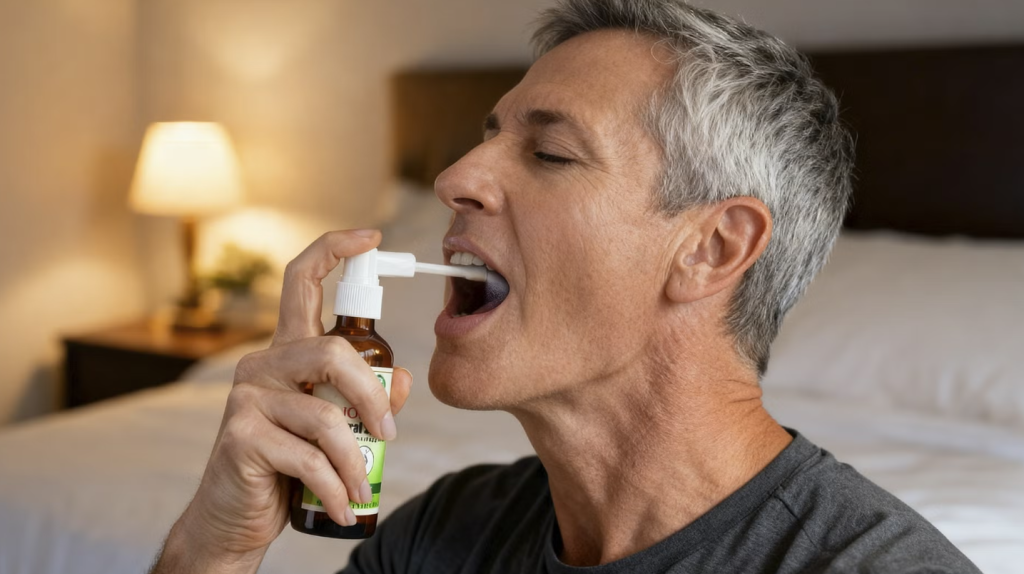
The product comes in a small 59 ml bottle that delivers approximately 400 sprays. You spray it directly into the back of your mouth and throat before bed, where the active ingredients are intended to reduce swollen tissues and clear mucus that can narrow the upper airway during sleep.
Unlike anti-snoring mouthguards, chin straps, or CPAP machines, SnoreStop requires no fitting, wearing, or cleaning. This device-free approach is its primary selling point and has made it appealing to people who have abandoned other solutions because they were uncomfortable or time-consuming.
The brand reports having served over three million customers since its launch.
How Does SnoreStop Work?
According to the manufacturer, SnoreStop works in two primary ways:
- Targeting throat inflammation and mucus buildup – the ingredients are intended to reduce swelling in the throat tissues and clear excess mucus that can obstruct airflow during sleep.
- Reducing tissue vibration – by addressing the swollen tissue, the spray aims to minimize the vibration that produces the snoring sound.
The Homeopathic Mechanism
SnoreStop is classified as a homeopathic product. Homeopathy is a system of alternative medicine based on the principle of “like cures like”-using highly diluted substances that, in larger amounts, would produce symptoms similar to those being treated.
The active ingredients in SnoreStop are listed in HPUS potencies (e.g., 10X, 20X, 30X), which means they have been diluted to extremely low concentrations. This is a critical point: in homeopathy, the therapeutic effect is attributed to the dilution process itself, not to the pharmacological action of the original substances.
Manufacturer Claims vs. Evidence
Important distinction: Homeopathic products are not evaluated by the FDA for safety or efficacy in the same way as conventional drugs. The claims are based on traditional homeopathic practice and the published study.
Key Features
Device-Free Application
What it is: A simple oral spray-no mouthpieces, straps, machines, or fittings required.
Why it matters: Many people abandon anti-snoring devices because they’re uncomfortable, difficult to clean, or interfere with sleep. A spray eliminates these barriers entirely.
Who benefits: Anyone who has tried and failed with mechanical devices, or who wants the lowest possible barrier to entry.
Limitations: It requires remembering to use it every night, and the spray may not be as potent for severe snoring as a physical device that mechanically opens the airway.
Homeopathic Formula
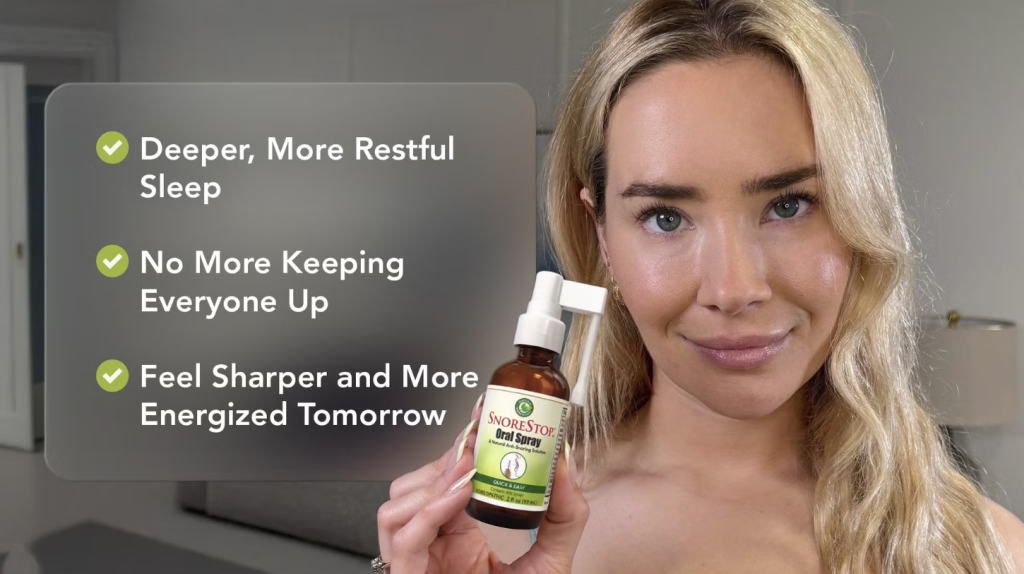
What it is: A blend of plant-based and mineral ingredients in homeopathic dilutions, including Nux vomica, Belladonna, Hydrastis canadensis, Kali bichromicum, and others.
Why it matters: The formula is natural and non-addictive, with no known drug interactions.
Who benefits: People who prefer natural remedies over synthetic drugs or who are concerned about side effects from prescription medications.
Limitations: The homeopathic dilution means the active ingredients are present in extremely small amounts. The mechanism of action is not established in conventional medicine.
Alcohol-Based Carrier
What it is: The inactive ingredients include 15% USP alcohol, purified water, glycerin, and potassium sorbate.
Why it matters: The alcohol helps preserve the product and may aid in absorption.
Who benefits: Most users won’t notice the alcohol content, but it’s worth noting for those who avoid alcohol for religious, health, or personal reasons.
Limitations: The alcohol content may cause a slight burning sensation for some users.
30-Day Money-Back Guarantee
What it is: A satisfaction guarantee that allows you to return the product within 30 days if you’re not satisfied.
Why it matters: This significantly reduces the financial risk of trying the product.
Who benefits: First-time users who are uncertain whether the product will work for them.
Limitations: Return policies can have specific requirements (e.g., returning the bottle, paying shipping). Always check the current terms on the official website.
What the Available Evidence Suggests
Based on the available product information, published studies, and user reports-not personal testing.
Setup and Ease of Use
The product requires no setup whatsoever. You simply spray it into the back of your throat before bed. This is arguably its greatest strength: there’s no learning curve, no fitting, no cleaning, and no maintenance.
Performance Expectations
According to the manufacturer’s cited study, 79.5% of users in a clinical trial reported noticeable improvement within the first five nights. The placebo group showed a 45.5% improvement rate, suggesting that while the product does better than placebo, the placebo effect is also significant-which is common for snoring remedies.
Most users report some improvement rather than complete elimination of snoring. The product is described as reducing snoring “significantly” or “noticeably” rather than curing it entirely.
Who Would Appreciate It
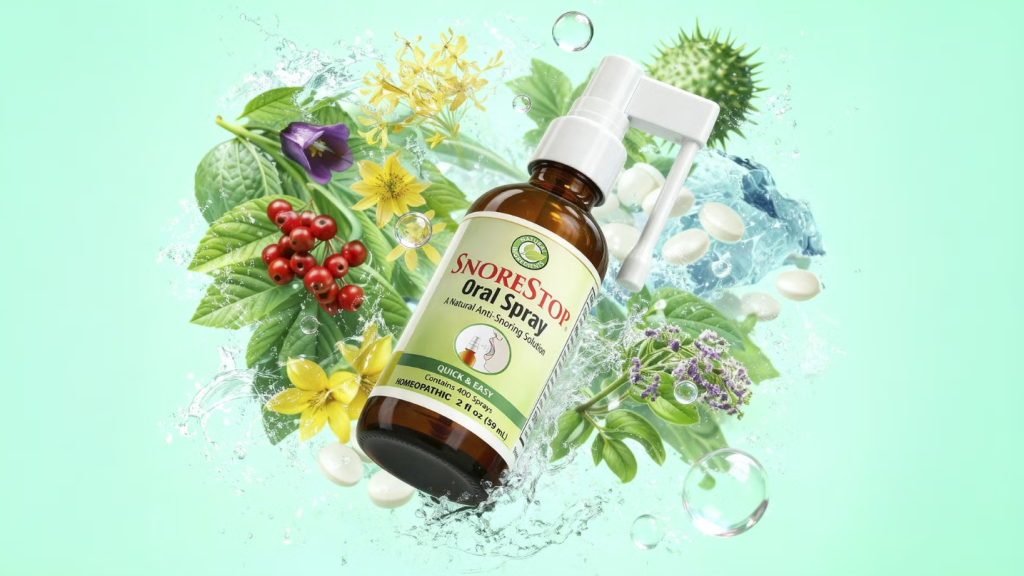
Based on the evidence, SnoreStop is most likely to benefit:
- People with mild-to-moderate snoring related to throat inflammation or mucus
- Those who have tried mouthpieces and found them intolerable
- Bed partners looking for a quick, low-commitment solution to try
- People who want a natural, non-addictive option
Main Benefits
1. No Devices, No Discomfort
Feature: Spray format vs. mouthpieces or machines
Practical advantage: No jaw pain, no drooling, no cleaning, no fitting. Just spray and sleep.
Relevant user: Anyone who has abandoned a mouthpiece because it was uncomfortable.
2. Quick and Easy to Use
Feature: 2–3 sprays before bed, takes seconds
Practical advantage: Fits easily into any bedtime routine. No special skills or preparation required.
Relevant user: Busy people who don’t want to add another complicated step to their night.
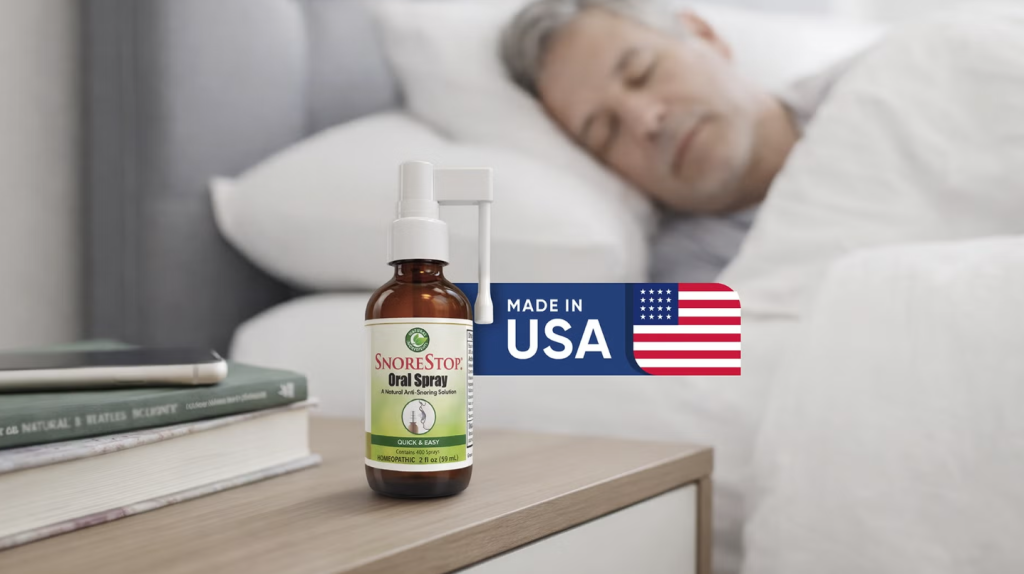
3. Established Track Record
Feature: On the market since 1995, over 3 million customers
Practical advantage: The product has been available for decades, suggesting it has a loyal user base and isn’t a fly-by-night operation.
Relevant user: People who prefer established products with a long history.
4. Money-Back Guarantee
Feature: 30-day satisfaction guarantee
Practical advantage: Lowers the financial risk of trying the product.
Relevant user: Cautious shoppers who want to test before fully committing.
5. Natural, Non-Addictive Formula
Feature: Homeopathic ingredients, no known drug interactions
Practical advantage: Can be used alongside other medications without concern.
Relevant user: People taking multiple medications who are cautious about interactions.
Drawbacks & Limitations
1. Homeopathic Classification
SnoreStop is a homeopathic product, which means its efficacy is not established by conventional medical standards in the same way as FDA-approved drugs. The FDA does not evaluate homeopathic products for safety or efficacy in the same rigorous manner as pharmaceuticals.
Who it affects: People who prefer evidence-based medicine may be uncomfortable with the homeopathic approach.
2. Variable Results
User experiences vary significantly. Some report dramatic improvement, while others see little to no change. The 79.5% improvement rate from the clinical study is promising, but it also means roughly one in five users did not experience noticeable improvement.
Who it affects: People with severe snoring or specific underlying conditions may not respond.
3. FDA Warning for Nasal Spray Version
Important: The FDA issued a warning in September 2024 advising consumers not to use SnoreStop Nasal Spray due to potential microbial contamination that could lead to infection, particularly in immune-compromised individuals.
Crucial distinction: This warning applies specifically to the nasal spray version, not the oral throat spray that is the subject of this review. However, it’s worth being aware of as both products come from the same manufacturer (Green Pharmaceuticals Inc.).
Who it affects: Anyone considering any SnoreStop product should be aware of this warning and verify they are purchasing the oral spray, not the nasal spray.
4. Not for Sleep Apnea
SnoreStop explicitly states it does not treat sleep apnea. If you have been diagnosed with sleep apnea or suspect you may have it, this product is not an appropriate treatment.
Who it affects: People with undiagnosed or diagnosed sleep apnea should consult a physician rather than relying on this product.
5. Cost
At approximately $59.99 for a single bottle, SnoreStop is not inexpensive. While it’s cheaper than custom-fitted mouthguards (which can cost $1,500-$2,500), it’s more expensive than some over-the-counter alternatives.
Who it affects: Budget-conscious shoppers may find the price point a barrier.
Pros & Cons
Pros
- Device-free-no mouthpieces, straps, or machines to wear or clean
- Quick and easy to use-just a few sprays before bed
- Established brand with over 30 years on the market
- Published clinical study showing 79.5% improvement rate
- 30-day money-back guarantee reduces financial risk
- Natural, homeopathic formula with no known drug interactions

Cons
- Homeopathic classification means efficacy is not established by conventional FDA standards
- Results vary significantly between users
- Does not treat sleep apnea-not suitable for everyone
- FDA warning exists for the nasal spray version (though not the oral spray reviewed here)
- Relatively expensive compared to some over-the-counter alternatives
Who Should Buy SnoreStop?
1. People with Mild-to-Moderate Non-Apneic Snoring
Why: The product is specifically formulated for common, non-apneic snoring-snoring not caused by obstructive sleep apnea. If you snore due to throat inflammation, mucus buildup, or mild airway narrowing, this is the target audience.
2. People Who Have Failed with Mouthpieces or Devices
Why: Many people find anti-snoring mouthpieces uncomfortable, painful, or difficult to maintain. A spray eliminates all of these issues.
3. Bed Partners of Snorers
Why: If you’re the one being kept awake, you may be looking for a simple solution your partner will actually use. The low barrier to entry makes SnoreStop more likely to be used consistently than a device that requires fitting or causes discomfort.
4. People Who Prefer Natural Remedies
Why: The homeopathic, plant-based formula appeals to those who prefer natural approaches over synthetic drugs or invasive devices.
Who Should Not Buy SnoreStop?
1. People with Diagnosed Sleep Apnea
Why: SnoreStop explicitly does not treat sleep apnea. If you have been diagnosed with sleep apnea, you need a proper medical treatment plan, not an over-the-counter spray.
2. People with Severe Snoring
Why: If your snoring is extremely loud or accompanied by gasping, choking, or pauses in breathing, these may be signs of sleep apnea. You should consult a physician rather than self-treating with an OTC product.
3. People Who Prefer FDA-Approved Medical Devices
Why: SnoreStop is a homeopathic product, not an FDA-approved medical device in the conventional sense. If you prefer treatments with rigorous FDA evaluation, this may not be for you.
4. People with Compromised Immune Systems
Why: While the FDA warning applies specifically to the nasal spray version, individuals with compromised immune systems should exercise caution with any product from the same manufacturer and consult a physician before use.
5. Budget-Conscious Shoppers Seeking a Cheap Fix
Why: At ~$60 per bottle, SnoreStop is not a low-cost solution. If you’re looking for the cheapest possible option, other products may be more suitable.
SnoreStop vs. Alternatives
Alternative Comparison: Which One Makes Sense for You?
- SnoreStop Spray makes sense if you want the simplest possible solution with no devices, no discomfort, and a money-back guarantee. It’s ideal for mild snorers who haven’t been diagnosed with sleep apnea.
- Anti-Snoring Mouthpiece makes sense if you need a physical device to hold your jaw forward and open your airway. These can be more effective for some people but come with comfort trade-offs.
- Nasal Strips make sense if your snoring is primarily caused by nasal congestion. They’re cheap and easy but only address one specific cause of snoring.
- CPAP Machine makes sense if you have diagnosed sleep apnea. It’s the gold standard treatment but requires a prescription, significant expense, and ongoing maintenance.
Value for Money
Is SnoreStop worth the price?
At approximately $59.99 for one bottle (with discounts for multi-bottle purchases and a 15% subscribe-and-save option), SnoreStop sits in the mid-range for over-the-counter snoring remedies.
What you’re paying for:
- A device-free, low-friction solution
- A product with a 30-year track record
- A published clinical study backing the formula
- A 30-day money-back guarantee
What you’re not paying for:
- FDA approval as a medical device
- Guaranteed results for every user
- A cure for sleep apnea
Long-term value: A single bottle provides approximately 400 sprays. If you use 2-3 sprays per night, a bottle lasts roughly 4-6 months. This works out to about $10-$15 per month-comparable to many subscription-based wellness products and significantly cheaper than custom mouthguards or CPAP equipment.
Bottom line: The value proposition depends entirely on whether it works for you. The 30-day guarantee mitigates the financial risk, making it a reasonable product to try if you fit the target profile.
Note: Check the current price before purchasing, as pricing and promotions can change.
Is SnoreStop Legit?
Yes, SnoreStop is a legitimate product from an established company. Here’s the transparency assessment:
Caveats:
- The company is not BBB accredited (though this is not uncommon and doesn’t indicate illegitimacy).
- The FDA warning about the nasal spray version is a legitimate concern-though it applies specifically to the nasal spray, not the oral spray reviewed here.
Distinction: “I could not verify the specific clinical study details independently” is not the same as “the study does not exist.” The study is cited in multiple sources, but accessing the full text would require checking the journal Sleep and Breathing (Vol. 3, No. 2, 1999).
Customer Reviews & Complaints
Based on aggregated feedback from various sources-not personal testing.
Positive Recurring Themes
- Ease of use: Users consistently praise the simplicity of the spray format.
- Quick results: Many users report improvement within the first few nights.
- No discomfort: Unlike mouthpieces, users don’t experience jaw pain or drooling.
- Effective for many: A significant portion of users report noticeable snoring reduction.
Negative Recurring Themes
- Variable effectiveness: Not everyone sees results.
- Taste: Some users dislike the taste or find the alcohol content noticeable.
- Price: Some users find it expensive for what it is.
- Not a cure: Users with more severe snoring may not get sufficient relief.
Important Caveat
Customer reviews are individual experiences and do not necessarily establish product performance scientifically. Results vary based on individual anatomy, snoring severity, and consistency of use.
Buying Guide
Before buying SnoreStop, consider these factors:
Frequently Asked Questions
What is SnoreStop?
How does SnoreStop work?
Is SnoreStop legit?
Yes, SnoreStop is a legitimate product from Green Pharmaceuticals Inc., a company founded in 1995. However, it is a homeopathic product, which means its efficacy is not established by conventional FDA standards in the same way as pharmaceuticals.
Is SnoreStop worth it?
It depends on your situation. For people with mild, non-apneic snoring who want a device-free solution, it’s worth trying-especially with the 30-day money-back guarantee. For people with sleep apnea or severe snoring, it’s not appropriate.
Does SnoreStop really work?
According to a published clinical study, 79.5% of users reported noticeable improvement within the first five nights. However, results vary, and not everyone experiences the same level of benefit.
How much does SnoreStop cost?
A single bottle is approximately $59.99, with discounts for multi-bottle purchases (2 bottles ~$89.98, 3 bottles ~$119.97) and a 15% subscribe-and-save option.
Where can I buy SnoreStop?
What are the disadvantages of SnoreStop?
Key disadvantages include: homeopathic classification (not FDA-approved for efficacy), variable results between users, does not treat sleep apnea, relatively expensive compared to some alternatives, and an FDA warning exists for the nasal spray version from the same manufacturer.
Are there better alternatives to SnoreStop?
Alternatives include anti-snoring mouthpieces (more effective for some but less comfortable), nasal strips (cheaper but only for nasal snoring), and CPAP machines (gold standard for sleep apnea but expensive and requires a prescription). The best choice depends on your specific situation.
Is SnoreStop suitable for beginners?
Yes, SnoreStop is very beginner-friendly. There’s no setup, no fitting, and no learning curve-just spray and sleep.
Is there an FDA warning for SnoreStop?
Yes, but it applies specifically to the SnoreStop Nasal Spray version, not the oral throat spray reviewed here. The FDA warned consumers not to use the nasal spray due to potential microbial contamination that could lead to infection.
Can I use SnoreStop if I have sleep apnea?
No. SnoreStop explicitly states it does not treat sleep apnea. If you have sleep apnea, consult a physician for appropriate treatment.
Final Verdict
SnoreStop is a legitimate, established product that has helped many people with mild-to-moderate non-apneic snoring. Its primary strength is its simplicity: no devices, no discomfort, no cleaning-just a few sprays before bed.
The published clinical study showing a 79.5% improvement rate is encouraging, though the study is over 25 years old and results vary significantly between users. The 30-day money-back guarantee reduces the financial risk of trying it.
Who it’s best for: People with mild snoring who want a device-free solution and have not been diagnosed with sleep apnea.
Who should choose an alternative: People with sleep apnea, severe snoring, or those who prefer FDA-approved medical devices.
Biggest advantage: Device-free convenience that eliminates the discomfort and hassle of mouthpieces.
Biggest drawback: As a homeopathic product, its mechanism is not scientifically established in conventional medicine, and it doesn’t work for everyone.
Bottom line: If you fit the target profile and are willing to spend ~$60 to try a device-free solution with a money-back guarantee, SnoreStop is worth considering. If you have sleep apnea or severe snoring, consult a healthcare professional instead.