
StopWatt Energy Saver Review: High electricity bills have pushed millions of US homeowners and renters to seek immediate relief. Promoted heavily across social media, native advertisements, and affiliate landing pages, the Stopwatt Energy Saver promises a simple fix: plug a small device into an ordinary wall outlet, stabilize your home’s electrical current, and watch your monthly utility bill drop by 30% to 50%.
If that sounds too good to be true, it is because residential power distribution does not work that way. While Stopwatt is a physical device that lights up when plugged into a wall, its core marketing promise-reducing the kilowatt-hours ($kWh$) on your residential electric bill-contradicts the basic laws of electrical engineering and how US utility companies bill for energy.
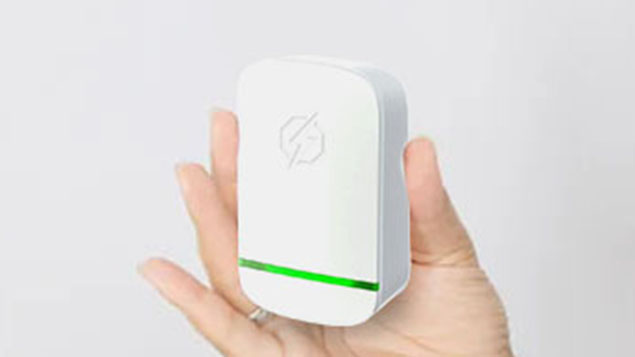
Bottom line: StopWatt is a real plug-in electrical product marketed as a power-factor-correction energy saver, but I could not verify evidence showing that it delivers the dramatic residential electricity-bill reductions promoted by some of its sales material. More importantly, independent NIST analysis of this type of residential power-factor-correction device says such devices do not reduce a typical household electricity bill. I would therefore not buy StopWatt expecting a large reduction in your monthly electric bill.

Quick verdict
Best for:
- Readers who want to understand what a residential power-factor device actually does.
- Consumers willing to investigate the electrical theory rather than rely on advertising.
- Buyers who have verified the seller, price and refund terms and understand that savings are not guaranteed.
Not ideal for:
- Anyone expecting 40%, 50% or 90% reductions in electricity bills.
- Consumers looking for a proven way to reduce household kWh consumption.
- Buyers who are relying on celebrity, Shark Tank or “secret technology” claims.
- Anyone who wants independently demonstrated savings before spending money.
My conclusion: StopWatt should be viewed as an unproven residential energy-saving purchase, not as a demonstrated solution for lowering a typical U.S. home’s electric bill.
What is StopWatt?
StopWatt is a compact plug-in electrical device marketed as an energy-saving product.
The current StopWatt store describes it as a passive capacitor-based power-factor-correction device designed for household electrical circuits. The advertised versions have an indicator light and are intended to remain plugged into a wall outlet.

The important distinction is that power-factor correction is a legitimate electrical-engineering concept. The question is not whether power factor exists. It does.
The question is whether a small consumer plug-in device can materially reduce the real electrical energy recorded by a normal U.S. residential utility meter.
That is where the evidence becomes much less favorable.

What does StopWatt claim to do?
The supplied StopWatt sales page makes several major claims.
Among them are claims that StopWatt can:
- reduce household electricity costs;
- reduce energy waste;
- stabilize electricity;
- protect or extend appliance life;
- improve appliance efficiency;
- reduce the effects of electrical “noise”;
- produce very large savings, including a claim of up to 90%.
The same sales page also uses a story involving Nikola Tesla and presents the product as technology that electricity companies supposedly do not want consumers to know about.
Those statements should be treated as marketing claims, not established facts.
The page itself contains a disclaimer stating that StopWatt’s effectiveness claims have not been verified and that the company cannot guarantee a specific monetary saving.
That disclaimer is particularly important because it conflicts with the much stronger impression created by the surrounding marketing.
How does StopWatt work?
According to the current StopWatt store, the device uses a capacitor-based power-factor-correction approach.
In simple terms, some electrical loads-particularly motors-draw both useful electrical power and reactive power. A capacitor can supply some of the reactive component locally, changing the relationship between current and voltage.
This can reduce the current flowing through portions of an electrical system.
That part is real electrical engineering.
But lower current does not automatically mean lower electricity consumption.
This is the critical point that many energy-saving advertisements blur.
Power factor is not the same thing as household energy consumption
Your electricity bill is generally driven by the real energy you consume, measured in kilowatt-hours (kWh), along with the rate structure and other charges.
NIST specifically examined residential capacitor-type power-factor-correction devices and explained that reducing current while increasing power factor does not produce the expected reduction in a typical household electricity bill.
In other words, a device can change an electrical measurement such as current or power factor without producing a corresponding reduction in the kWh that the homeowner pays for.
That makes a claim such as “plug it in and dramatically slow your electric meter” something that requires unusually strong evidence.
I did not find that level of independent evidence for StopWatt.
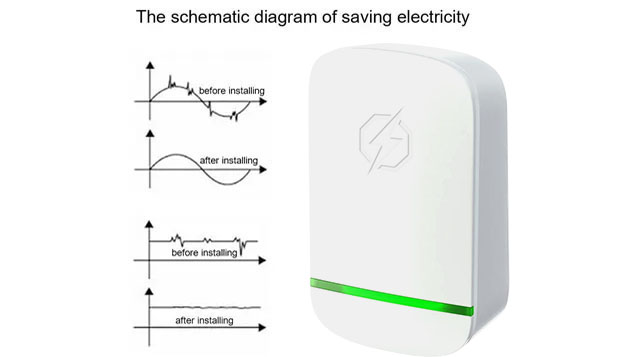
What does StopWatt actually do?
The most defensible description is narrower than the advertising:
StopWatt is marketed as a plug-in power-factor-correction device.
That is very different from saying:
“StopWatt substantially reduces your home’s electricity consumption.”
I could not independently verify the second statement.
This distinction is the most important thing a potential buyer should understand.
A legitimate electrical principle can be used in marketing to create an impression of a much larger benefit than the evidence actually demonstrates.
StopWatt features: what they mean for buyers
| Feature | What the seller says | What I could verify |
|---|---|---|
| Plug-in design | No electrician required | Seller states this |
| Capacitor-based design | Power-factor correction | Seller states this |
| LED indicator | Shows the unit is powered | Seller states this |
| No app | Passive operation | Seller states this |
| No moving parts | Passive device | Seller states this |
| Residential use | Intended for homes | Seller states this |
| Multiple-unit bundles | More units for larger homes | Seller promotes this |
| Electricity savings | Major bill reductions | Not independently established |
| Appliance-life extension | Claimed benefit | Not independently established |
| 90% bill reduction | Appears in supplied marketing | Not supported by the evidence reviewed |
The last three rows matter more than the first six because they determine whether the product is actually worth your money.
My research methodology
I did not personally install or test StopWatt.
Instead, I compared the seller’s technical explanation with independent electrical-engineering information and U.S. consumer-protection guidance.
The strongest independent technical evidence I found was NIST’s explanation of residential power-factor-correction devices.
I also examined current consumer feedback, pricing, seller claims, refund information and the supplied StopWatt promotional material.
This approach has a limitation: without controlled testing of the exact StopWatt hardware, I cannot say what every internal component does or does not do.
But the absence of a hands-on test does not mean that the advertising claims should be accepted without evidence.
Pros & Cons of StopWatt Energy Saver
Pros of StopWatt Energy Saver
Simple installation
The product is designed to plug into a wall outlet rather than requiring a major electrical installation.
The underlying electrical concept is real
Power-factor correction is not fictional. It has legitimate applications, particularly in industrial electrical systems.
No complicated software
The product is marketed as a passive device with no app or ongoing subscription.
A refund policy is advertised by one current StopWatt store
The self-described official store currently advertises a 60-day money-back guarantee.
That is preferable to purchasing a product with no stated return mechanism.
However, the guarantee applies to that particular seller, so buyers should verify the exact domain and terms before paying.

Cons of StopWatt Energy Saver
The main savings claim is not independently demonstrated
This is the biggest problem.
The marketing implies substantial reductions in electricity costs, while the independent technical evidence I found does not support the idea that a typical household should expect dramatic savings from a plug-in power-factor-correction device.
The supplied sales page makes extraordinary claims
The supplied page claims savings of up to 90%, invokes Nikola Tesla and presents a narrative about utility companies trying to suppress the technology.
Those claims are not accompanied by the kind of independent testing that would justify treating them as established facts.
No display showing actual energy savings
The current product information says the device has an indicator light but does not provide a built-in kWh display showing how much electricity it has actually saved.
That makes it difficult for a consumer to distinguish a genuine effect from ordinary month-to-month changes in electricity consumption.
Pricing varies between storefronts
I found materially different current prices depending on the StopWatt storefront.
That is a reason to check the seller, final checkout amount and refund terms carefully.
Consumer feedback is heavily negative
Trustpilot currently shows a 1.3/5 score for stopwatt.com based on 74 reviews, with 95% of the displayed reviews rated one star.
Trustpilot reviews are not laboratory evidence and can contain inaccurate individual claims, so I would not use them to prove that the device cannot work.
But the pattern is still relevant when assessing purchasing risk.
What concerns me most
The problem is not simply that StopWatt has negative reviews.
The deeper issue is the gap between the size of the advertised benefit and the evidence supporting it.
A claim that a small plug-in device can reduce a household’s electricity bill by a large percentage should be supported by controlled measurements of real energy consumption.
Ideally, that would include:
- Identical homes or controlled circuits.
- Baseline kWh measurements.
- Measurements with the device installed.
- Controlled appliance loads.
- Different load conditions.
- Multiple homes.
- Independent laboratory or engineering oversight.
- Raw data that another researcher could examine.
I did not find that level of evidence for StopWatt.
That is why I would not treat customer anecdotes or dramatic advertising as sufficient proof.
What I like
There are a few things worth acknowledging.
First, the product is built around a genuine electrical concept rather than an imaginary scientific principle.
Second, the current seller’s description is more restrained than the supplied promotional page in some respects. The current store explicitly says that StopWatt is not a meter-altering device and does not promise a fixed savings percentage.
Third, the existence of a money-back guarantee on the current self-described official store gives a consumer at least some contractual protection if the terms are honored.
Those points make it more useful to analyze StopWatt as an electrical product than simply dismissing the entire category without explanation.
What I don’t like
The biggest issue is the promotional disconnect.
Consumers seeing claims about enormous savings can easily conclude that the product has been independently proven to reduce household electricity consumption.
The evidence I found does not justify that conclusion.
I am also uncomfortable with sales material that uses scarcity, dramatic anti-utility narratives, celebrity/TV associations or very large savings claims without equally prominent independent evidence.
The Federal Trade Commission has repeatedly emphasized that energy-saving claims need scientific substantiation. That is a useful standard for evaluating any product in this category.
StopWatt price and value
Pricing appears to change by seller.
The current self-described official StopWatt store lists:
- 1 device: $44.10
- 2 devices: $88.20
- 3 devices: $105.84
- Free shipping is advertised.
- A 60-day money-back guarantee is advertised.
Another StopWatt storefront currently lists the product at $59.
Therefore, I would not publish a single “StopWatt costs $X” statement without a date and seller reference.
Is the price reasonable?
That depends on whether the device produces measurable savings.
If a product costing $44 eventually produces no meaningful reduction in your kWh consumption, even a relatively inexpensive purchase is poor value.
If a product were independently demonstrated to produce measurable savings, the calculation would be different.
The evidence available to me does not establish that benefit.
How much could you realistically save?
I would not use the advertised 40%, 50% or 90% figures as a budgeting assumption.
A better way to think about the purchase is:
If you cannot independently demonstrate a meaningful reduction in kWh, the device has not demonstrated that it is saving you money.
Electricity bills fluctuate because of:
- weather;
- air-conditioning use;
- heating;
- water heating;
- appliance usage;
- household occupancy;
- electricity rates;
- billing periods;
- time-of-use pricing.
A bill being $30 lower one month does not prove that StopWatt caused the difference.
For a proper comparison, consumers should examine kWh usage, preferably against the same month in a previous year, rather than comparing only dollar totals.
Who should consider StopWatt?
I would put this product in the “only if you understand the uncertainty” category.
A technically curious homeowner who wants to experiment with power-factor correction and understands that residential bill savings are unproven may decide that a relatively low purchase price is worth the experiment.
But that is very different from recommending it as a proven energy-saving investment.
Who should skip it?
I would skip StopWatt if:
- your primary goal is a guaranteed reduction in electricity costs;
- you are expecting a large percentage reduction;
- you are buying because an advertisement says utilities are hiding the technology;
- you are relying on a celebrity or Shark Tank claim;
- you cannot comfortably afford to lose the purchase price;
- you have not checked the seller’s identity and refund terms;
- you have more conventional energy-efficiency opportunities available.
For most homeowners, those conventional opportunities are likely to deserve attention first.
StopWatt vs. better-established alternatives
| Option | Primary purpose | Evidence/value for typical homeowner |
|---|---|---|
| StopWatt | Power-factor correction | Residential bill savings not convincingly established |
| ENERGY STAR smart thermostat | Reduce unnecessary heating/cooling | Established energy-efficiency approach |
| LED lighting | Reduce lighting electricity use | Direct reduction in wattage |
| Home energy audit | Identify major sources of consumption | Personalized approach |
| Efficient HVAC | Reduce major household energy load | Potentially substantial, depending on system |
| Plug-in energy monitor | Measure appliance consumption | Helps identify where electricity is actually going |
| Weatherization/insulation | Reduce heating/cooling demand | Addresses building energy losses directly |
ENERGY STAR notes that heating and cooling account for more household energy use than any other appliance category and recommends smart thermostats and efficient equipment as practical energy-saving approaches.
That makes a thermostat or HVAC efficiency upgrade fundamentally different from StopWatt: those measures attempt to reduce the amount of energy your household actually uses, rather than primarily changing an electrical parameter.
Is StopWatt legit?
There are two different questions here.
Does a StopWatt product exist?
Yes. I found active StopWatt sales channels and product information.
Does that prove the advertised savings?
No.
A real product can still have exaggerated or poorly supported performance claims.
That distinction is essential.
I also found no evidence in my research that StopWatt appeared on Shark Tank. The current self-described official StopWatt store explicitly denies such an association.
So if an advertisement tells you that a Shark Tank investor endorsed StopWatt, I would not rely on that statement unless the seller can provide verifiable evidence.
My legitimacy assessment
I would describe StopWatt as:
A real product with insufficient independent evidence to justify its major residential energy-savings claims.
That is more precise than automatically calling the product a scam.
StopWatt and consumer reviews
Current online feedback is mixed but strongly negative overall.
Trustpilot’s current stopwatt.com profile shows 74 reviews and a 1.3/5 TrustScore, with 95% of the displayed reviews rated one star.
Complaints include:
- no noticeable reduction in electricity bills;
- dissatisfaction with value;
- ordering/checkout complaints;
- refund concerns;
- skepticism about advertising claims.
There are also positive consumer reports. For example, at least one reviewer claimed a dramatic reduction in a Texas electricity bill after installing multiple units.
That is interesting but not sufficient to establish causation.
Anecdotal before-and-after bills are especially difficult to interpret because electricity consumption varies substantially with weather and household use.
Therefore, I would not select either the positive or negative anecdotes as proof.
What about StopWatt Consumer Reports?
I could not find a Consumer Reports test or rating for StopWatt in my research.
If you see a page titled something like “StopWatt Consumer Reports Review,” check whether it is actually published by Consumer Reports or merely uses the phrase as a keyword.
Those are not the same thing.
What about the Tesla claim?
The supplied sales page says StopWatt’s technology was originally created by Nikola Tesla.
I found no credible evidence establishing that StopWatt itself was a Tesla-developed technology.
Tesla’s historical work in electricity does not establish that a modern consumer product is based on his invention.
This is another example where a historically famous name can make a marketing story sound more authoritative than the available evidence warrants.
How to buy StopWatt safely
If you decide to purchase despite the uncertainty, check these things before submitting payment:
- Confirm the exact website domain.
- Confirm the seller’s legal/business identity.
- Read the refund policy.
- Check whether the guarantee covers the purchase price or also return shipping.
- Confirm the final cart total.
- Look for unwanted add-ons or additional products.
- Save screenshots of the product page and checkout.
- Save the order confirmation and receipt.
- Pay using a method that provides appropriate transaction protections.
- Do not buy multiple units solely because an advertisement says a larger home requires them.
Most importantly, don’t assume that a discount timer or “limited supply” message means the offer is genuinely about to expire.
How to use StopWatt
According to the current seller’s instructions, the device is intended to be plugged directly into a grounded wall outlet rather than an extension cord or power strip.
The seller describes placement near an electrical panel or major motor-driven loads and recommends different numbers of devices according to home size.
Those are seller instructions, not independently validated evidence that the recommended placement or number of units produces meaningful savings.
If the device becomes unusually hot, damaged or otherwise abnormal, discontinue use rather than treating the problem as part of normal operation.
And do not open or modify an electrical device unless you have the appropriate technical expertise.
A better way to test whether it works
If you already own StopWatt and want to determine whether it is actually helping, don’t rely on the dollar amount of one electric bill.
Use a controlled comparison.
Step 1: Record your kWh
Record your electricity consumption for a reasonable baseline period.
Step 2: Compare similar conditions
Weather and HVAC use should be as similar as possible.
Step 3: Record the device’s installation date
Keep a simple log.
Step 4: Compare kWh rather than dollars
Rates can change independently of consumption.
Step 5: Avoid changing several things simultaneously
If you install new LEDs, change thermostat settings and install StopWatt at the same time, you won’t know what caused the difference.
Step 6: Repeat
One month is not enough to establish a reliable energy-saving effect.
This approach is much more useful than simply looking at whether the next bill happened to be lower.
FAQ’S About StopWatt Energy Saver
Is StopWatt worth it?
I don’t consider the evidence strong enough to recommend it as a conventional electricity-saving investment. The product exists, but its major residential savings claims are not independently demonstrated.
How does StopWatt work?
It is marketed as a capacitor-based power-factor-correction device. Power-factor correction is a legitimate electrical technique, but NIST explains why that does not normally translate into lower electricity bills for typical residential customers.
How much does StopWatt cost?
Pricing varies by storefront. The current self-described official store lists $44.10 for one unit, $88.20 for two and $105.84 for three. Another storefront lists $59. Verify the exact seller and checkout price before purchasing.
Is StopWatt legit?
A physical StopWatt product is being sold online, but that does not establish that its advertised savings are real. I would describe its major energy-saving claims as insufficiently supported rather than treating the existence of the product as proof of effectiveness.
Was StopWatt on Shark Tank?
I found no verifiable evidence of a Shark Tank appearance. The current self-described official StopWatt store specifically says it has no Shark Tank or celebrity endorsement.
Are StopWatt savings guaranteed?
No. The current seller explicitly states that it does not promise a specific savings percentage and instead advertises a 60-day money-back guarantee.
Is there a Consumer Reports review of StopWatt?
I could not find a Consumer Reports test or rating for StopWatt during this research.
What are better alternatives for lowering an electric bill?
Start by identifying your largest energy loads. Heating and cooling are particularly important. ENERGY STAR recommends approaches such as efficient HVAC equipment and smart thermostats, while a home energy audit can identify problems specific to your property.
Does Stopwatt really work to lower my power bill?
No. Stopwatt will not reduce your monthly residential electric bill. US electric utilities bill residential customers solely for real power in kilowatt-hours ($kWh$). The capacitor inside Stopwatt interacts with reactive power, which is neither recorded nor billed on residential utility meters.
Can Stopwatt damage my home appliances?
Under normal conditions, an intact film capacitor will not harm appliances. However, low-quality electrical components without certified thermal protection or proper Nationally Recognized Testing Laboratory (NRTL) listings present potential failure risks if exposed to severe line surges.
How many Stopwatts do I need for my house?
Promotional websites recommend one unit per 500 to 800 square feet, often encouraging homeowners to buy three or more units. However, because the devices do not lower kilowatt-hour consumption, purchasing multiple units simply compounds the upfront financial loss.
Is Stopwatt approved by UL or ETL?
Most Stopwatt units and their direct white-label variants do not display verified UL (Underwriters Laboratories) or ETL listing marks. Always look for legitimate NRTL certifications on any electrical device intended to remain plugged into a 120V wall outlet continuously.
What happens if I leave it plugged in all the time?
The green LED will remain lit, and the internal components will draw a continuous fraction of a watt (0.1W to 0.5W) of real power. Over the course of a year, the device will consume a small amount of electricity rather than saving any.
Why are there so many positive reviews online?
Many websites reviewing Stopwatt are affiliate marketing blogs that earn a commission for every sale generated through their referral links. These promotional reviews routinely repeat manufacturer marketing claims without testing the product against utility metering standards.
Final verdict: Is StopWatt worth it?
For most U.S. homeowners, I would not recommend buying StopWatt specifically as a way to reduce the household electricity bill.
The reason is not that power-factor correction is fake. It isn’t.
The problem is that the available independent evidence does not support the dramatic residential savings implied by StopWatt’s advertising.
NIST’s analysis of capacitor-type residential power-factor-correction devices is particularly important because it addresses the exact underlying concept: changing current and power factor does not necessarily reduce the real energy measured for a typical household bill.
The supplied StopWatt sales material goes much further, promoting savings as high as 90%, but I found no independent evidence capable of supporting that magnitude of savings.
Biggest advantage
Simple plug-in installation and a legitimate underlying electrical concept.
Biggest drawback
The central claim that it can materially reduce a typical homeowner’s electricity bill is not convincingly demonstrated.
Who should buy?
Only a consumer who understands the uncertainty, verifies the seller and return terms, and treats the purchase as an experiment rather than a guaranteed money-saving solution.
Who should avoid it?
Anyone looking for a proven way to reduce electricity consumption.
What should you verify before ordering?
Check the exact seller, final price, return policy, refund conditions and any add-ons at checkout.
And do not rely on Shark Tank, celebrity, Tesla or dramatic savings claims as evidence of performance.
For most households, I would put the money toward measures that directly reduce electricity consumption-especially HVAC efficiency, thermostat management, insulation/weatherization, efficient appliances and identifying large electrical loads.