
Winter Jacket Buying Guide: You know that feeling when you step outside on a frigid morning and the cold cuts straight through your jacket like it isn’t even there? The wind finds every gap, your fingers go numb within minutes, and by the time you reach your destination, you’re shivering so hard you can barely unlock the door.
That’s not just uncomfortable – it’s avoidable.
Most people buy winter jackets based on how they look on the rack or what’s on sale, then spend the entire season regretting it. The problem isn’t that warm jackets don’t exist. It’s that the sheer number of options – down vs. synthetic, parka vs. puffer, waterproof vs. water-resistant, 600 fill vs. 800 fill – makes it nearly impossible to know what you actually need.
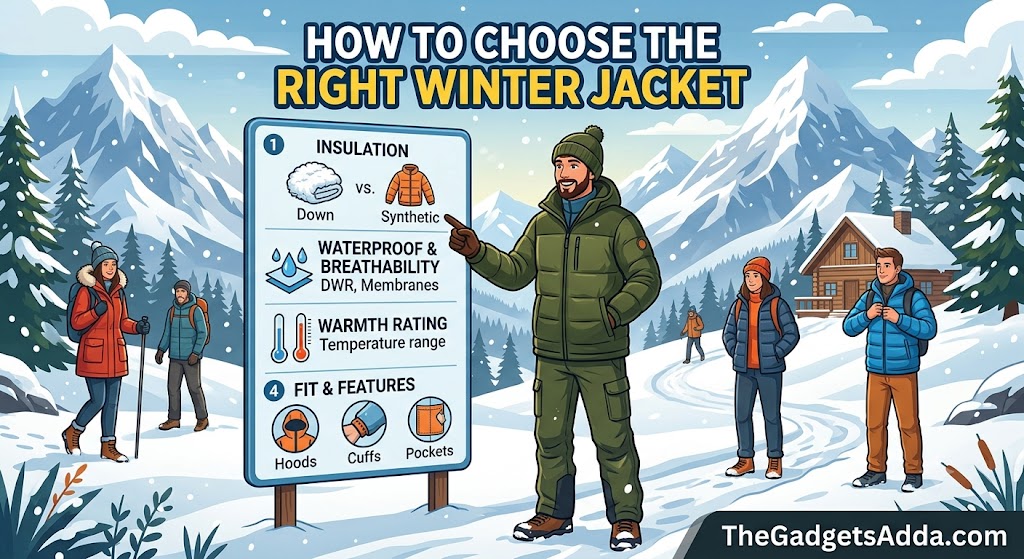
I’ve spent years researching and testing winter outerwear across different climates, from the damp, bone-chilling winters of the Pacific Northwest to the dry, punishing cold of the Upper Midwest. I’ve worn jackets that failed spectacularly and jackets that performed so well they became the only thing I reached for all season.
This guide cuts through the marketing nonsense. By the time you finish reading, you’ll understand exactly what makes a winter jacket warm, what features matter for your specific situation, and how to avoid the common mistakes that leave people cold and frustrated.
What Makes a Winter Jacket Warm?
Before you can choose the right jacket, you need to understand how jackets actually work.
Jackets keep you warm by trapping a layer of warm air close to your body and preventing that heat from escaping. The insulation inside the jacket creates tiny air pockets that trap body heat. The more effectively a jacket traps air, the warmer you stay.
Three main factors determine how well a jacket does this:
- The type and quality of insulation – what’s inside the jacket
- The shell material and weatherproofing – what keeps wind and moisture out
- The fit – how well the jacket seals warm air in and cold air out
Get any one of these wrong, and the whole system falls apart. A jacket with incredible insulation won’t keep you warm if the shell lets wind slice through it. A perfectly weatherproof shell won’t help if the fit is so loose that warm air escapes and cold air pools inside. And the best fit in the world can’t compensate for insulation that loses its loft when it gets damp.
Insulation Types: Down vs. Synthetic
This is the single most important decision you’ll make. Your choice of insulation determines how warm the jacket is, how heavy it feels, how well it packs down, and how it performs when things get wet.
Down Insulation
Down is the soft, fluffy under-feathers from ducks or geese. It’s nature’s best insulator, and for good reason.
Why down is exceptional: Down delivers maximum warmth with minimal bulk. It has an incredibly high warmth-to-weight ratio, meaning you get more warmth per ounce than any synthetic alternative. It compresses easily for packing and springs back to full loft when unpacked. And it lasts for years – a high-quality down jacket can outlast several synthetic jackets.
The catch: Down loses its insulating properties when it gets wet. Once down becomes saturated, the clusters clump together and lose the air pockets that trap heat. It then takes a very long time to dry – sometimes days without a tumble dryer.
Fill power explained: Down quality is measured by “fill power,” a number typically ranging from 400 to 900. This number represents the volume in cubic inches that one ounce of down occupies. Higher fill power means the down traps more air per gram, providing greater warmth for less weight.
Here’s what different fill power ranges mean in practice:
| Fill Power | Warmth Level | Best For |
|---|---|---|
| 400-550 | Entry-level | Casual use, mild winters |
| 550-700 | Good | Everyday winter wear |
| 700-800 | Excellent | Cold winters, outdoor activities |
| 800-900+ | Premium | Extreme cold, ultralight packing |
But fill power isn’t the whole story. A jacket with 500 fill power and more down weight can be warmer than a jacket with 800 fill power and very little down. Warmth comes from the combination of fill quality (fill power) and the amount of insulation (fill weight).
Down-to-feather ratio: Most down jackets use a blend of down clusters and feathers. A ratio of 80% down to 20% feathers offers an optimal balance between warmth and cost. Higher down percentages (90/10 or 95/5) are warmer and lighter but more expensive.
Ethical considerations: Not all down is sourced ethically. Look for jackets with certifications like the Responsible Down Standard (RDS) or Traceable Down, which ensure birds aren’t force-fed or live-plucked.
Synthetic Insulation
Synthetic insulation is made from polyester fibers designed to mimic down’s heat-trapping properties.
Why synthetic makes sense: The biggest advantage is wet-weather performance. Synthetic insulation retains much of its insulating capability even when wet, and it dries much faster than down. It’s also generally more affordable than down and easier to care for.
The trade-offs: Synthetic insulation has a lower warmth-to-weight ratio than down – it’s heavier and bulkier for the same level of warmth. It doesn’t pack down as small. And over time, synthetic fibers can compress and lose their loft with repeated use, gradually becoming less warm.
Synthetic warmth measurement: Unlike down, synthetic insulation isn’t measured by fill power. Instead, you’ll see numbers like 40g, 60g, or 100g, which represent the weight in grams of the insulation per square meter. Higher numbers mean more insulation and more warmth – but also more weight and bulk.
Brand-name synthetics: You’ll encounter proprietary synthetic insulations like PrimaLoft, Thinsulate, and Coreloft. These are all variations on the same polyester-fiber theme, with different fiber structures and performance characteristics. In practice, the specific brand matters less than the amount of insulation and the jacket’s overall construction.
Hybrid Insulation (The Best of Both)
Some jackets combine down and synthetic insulation strategically – down in the core body areas where maximum warmth is needed, and synthetic in areas prone to moisture like the shoulders, hood, and cuffs.
This approach gives you the warmth and packability of down where it matters most, with the wet-weather resilience of synthetic where you need it. It’s a smart compromise, especially for jackets designed for variable conditions.
Which Insulation Is Right for You?
Choose down if:
- You live in a cold but relatively dry climate
- You want the warmest possible jacket for the weight
- You need a jacket that packs down small for travel
- You’ll be using it primarily for casual wear or low-output activities
- You’re willing to pay more for premium warmth
Choose synthetic if:
- You live in a damp, wet, or humid winter climate
- You’ll be active enough to sweat (synthetic breathes better when damp)
- You need a jacket that performs in wet snow or freezing rain
- You want something more affordable
- You prefer a vegan option
Choose hybrid if:
- You face variable conditions and want one jacket that handles everything
- You want the warmth benefits of down with synthetic protection where it counts
Shell Fabrics and Weather Protection
The insulation keeps you warm, but the shell keeps you dry and protected from the elements. A great shell makes a good jacket excellent. A poor shell ruins even the best insulation.
Waterproof vs. Water-Resistant
These terms get thrown around loosely, but they mean very different things.
Water-resistant jackets have a durable water repellent (DWR) coating that causes water to bead up and roll off the surface. They can handle light snow and brief drizzle, but sustained moisture will eventually saturate the fabric and soak through.
Waterproof jackets use a membrane (like Gore-Tex) that physically blocks water from penetrating, regardless of how long you’re exposed. These jackets keep you dry in heavy snow, freezing rain, and slushy conditions.
If you live somewhere with wet winters or spend significant time outdoors in precipitation, waterproof is worth the investment. If your winters are dry and cold, water-resistant is usually sufficient.
Understanding Waterproof Membranes
Gore-Tex is the most famous waterproof-breathable membrane, and for good reason. It’s a microporous membrane that prevents water from entering while allowing water vapor (sweat) to escape.
The membrane is laminated to the outer fabric and often paired with a DWR treatment on the face fabric. When the face fabric “wets out” (becomes saturated), the jacket can still be waterproof, but breathability drops significantly.
Gore-Tex variants:
- Standard Gore-Tex: Good waterproofing and breathability for most uses
- Gore-Tex Pro: More durable, more breathable, and more waterproof – built for demanding conditions
- Gore-Tex Paclite: Lighter and more packable, sacrificing some durability
Other brands offer their own membranes – Columbia’s Omni-Tech, Carhartt’s Storm Defender, and countless proprietary systems. The specifics vary, but the principle is the same: a waterproof layer that allows moisture to escape.
Hardshell vs. Softshell
This distinction matters more for active winter use than casual wear, but it’s worth understanding.
Hardshell jackets are fully waterproof and windproof, designed to protect you from the worst weather. They use a woven outer fabric and a waterproof membrane. They’re less stretchy and can feel stiff, but they offer the highest level of weather protection.
Softshell jackets are water-resistant and highly breathable, with a softer, stretchier fabric. They’re more comfortable for active pursuits and provide some warmth on their own, but they’re not fully waterproof.
In a winter jacket buying context, most insulated winter coats function like hardshells – they have a protective outer shell with a DWR coating or membrane that sheds snow and wind.
Shell Durability
Shell fabrics are measured in denier (D), which indicates the thickness and durability of the yarn. Higher denier numbers mean tougher, more abrasion-resistant fabric.
- 20D-40D: Lightweight, packable, less durable
- 40D-70D: Good balance of durability and weight
- 70D+: Heavy-duty, highly durable, built for abuse
For everyday winter wear, 40D-70D is the sweet spot. Expedition-weight jackets might use 100D or higher for maximum durability in harsh conditions.
Fit and Sizing
You can buy the most expensive, technically advanced jacket on the market, and it won’t keep you warm if it doesn’t fit properly.
What Good Fit Looks Like
A properly fitting winter jacket should:
Allow room for layering – You should be able to fit a mid-layer (fleece or sweater) underneath without feeling restricted. Try the jacket on with the layers you’ll actually wear.
Have sleeves that cover your wrists – When your arms are at your sides, the cuffs should reach past your wrist bones. When you raise your arms, the sleeves shouldn’t ride up past your wrists.
Have shoulders wide enough to move – You should be able to cross your arms in front of you and hug yourself comfortably. If the shoulders feel tight, the jacket is too small.
Fit through the torso without being baggy – There should be enough room for layering, but not so much that cold air pools inside. A trim fit through the torso traps warm air more efficiently than an oversized one.
Have a hem that sits below the waist – For most jackets, the hem should fall just below the waist to prevent cold air from creeping up your back. Parkas extend to mid-thigh or longer for maximum coverage.
Length Matters
Jacket length affects warmth more than you might think:
- Hip-length: Covers your torso but leaves your lower back and hips exposed. Fine for mild winters or high-activity use.
- Thigh-length: Covers your hips and upper legs. Significantly warmer than hip-length for daily wear.
- Knee-length or longer: Maximum warmth and coverage. Parkas in this length keep your legs warm and block wind from reaching your core.
If you spend time standing still in the cold – waiting for buses, walking slowly, or just dealing with winter on foot – longer is warmer. If you’re active, shorter lengths offer better mobility.
Adjustable Features Matter
Look for:
- Adjustable cuffs – Velcro or elastic cuffs seal out drafts
- Drawcord hem – Lets you cinch the bottom of the jacket tight
- Adjustable hood – A hood that moves with your head and cinches tight around your face is essential in wind and snow
These features let you customize the fit on the fly and trap heat where you need it most.
Key Features to Look For
Beyond insulation and shell, specific features can make or break a winter jacket.
Hoods
A good hood is non-negotiable for serious winter wear. Look for:
- Adjustable drawstrings that let you cinch the hood tight
- A brim or structured peak to keep snow and rain off your face
- Fleece or soft lining for comfort against your face
- Helmet compatibility if you’ll be skiing or climbing
Pockets
Pockets aren’t just for carrying things – they’re also for keeping your hands warm.
- Fleece-lined hand pockets keep your fingers warm when you forget gloves
- Chest pockets protect your phone and wallet from the cold – electronics drain faster in low temperatures
- Zippered pockets keep items secure and block drafts
- Internal pockets are great for items you want to keep close
Zippers
Cheap zippers fail. In a winter jacket, zipper failure means you’re exposed to the elements.
Look for:
- YKK or other quality zipper brands
- Two-way zippers on longer coats – you can unzip from the bottom for mobility or ventilation while keeping your chest covered
- Storm flaps over the main zipper to block wind and moisture
- Draft tubes behind the zipper – an extra strip of insulation that prevents cold air from seeping through the zipper track
Cuffs and Hem Seals
Drafty cuffs and hems are one of the most common ways jackets fail to keep you warm.
- Knitted or elastic inner cuffs seal around your wrists
- Thumbhole cuffs keep sleeves in place and cover the gap between gloves and sleeves
- Drawcord or elastic hems let you cinch the bottom tight
Ventilation
If you’ll be active in your jacket, look for:
- Underarm zippers (pit zips) that let you dump heat when you’re working hard
- Back vents for additional airflow
A jacket that doesn’t breathe will leave you soaked in sweat, which then makes you cold when you stop moving.
Types of Winter Jackets
Not all winter jackets are created equal. Understanding the different categories helps you choose the right style for your needs.
Parkas
Parkas are long, heavily insulated coats designed for serious cold. They typically extend to mid-thigh or below and offer maximum coverage and warmth.
Best for: Extreme cold, standing around in winter weather, urban commuting in harsh climates
Examples: Canada Goose Expedition Parka, Fjallraven Nuuk Parka, Patagonia Stormshadow Parka
Puffers (Down or Synthetic Jackets)
Puffer jackets are characterized by their baffled construction – quilted panels that hold insulation in place. They range from lightweight packable layers to heavy winter coats.
Best for: Versatile winter wear, travel (packability), layering under shells
3-in-1 Jackets
These jackets have a waterproof shell and a removable insulated liner that can be worn together or separately.
Best for: People who want one jacket for multiple seasons or variable conditions
Shell Jackets
Shell jackets provide weather protection without insulation. They’re designed to be worn over insulating mid-layers.
Best for: Active winter sports, layering systems, wet conditions where you need waterproofing without overheating
Ski and Snowboard Jackets
These are specialized shells or insulated jackets with features like powder skirts, lift pass pockets, and helmet-compatible hoods.
Best for: Skiing, snowboarding, and other snow sports
How to Match a Jacket to Your Climate
The warmest jacket in the world is overkill for a mild winter, and a lightweight jacket that works in Seattle will leave you shivering in Minneapolis.
Mild Winters (Above 20°F / -6°C)
You don’t need an expedition parka. Look for:
- Light to medium insulation (synthetic or lower-fill down)
- Water-resistant shell (waterproof if you face wet snow or rain)
- Hip-length or thigh-length
- Budget-friendly options work well here
Cold Winters (0°F to 20°F / -18°C to -6°C)
This is the most common winter condition in the northern US. You need:
- Medium to heavy insulation
- Down with 550-750 fill power or equivalent synthetic
- Waterproof shell (especially if you deal with wet snow)
- Thigh-length coverage
- Adjustable hood and cuffs
Extreme Cold (Below 0°F / -18°C)
This is parka territory. You need:
- Heavy insulation (high-fill down or substantial synthetic)
- 700+ fill power down or heavy synthetic equivalent
- Fully waterproof, windproof shell
- Knee-length coverage
- Oversized, adjustable hood that fits over a hat or helmet
- Draft tubes, storm flaps, and all the sealing features
Wet Winters (Pacific Northwest, Northeast)
Damp cold is different from dry cold. You need:
- Synthetic insulation (or water-resistant down treatment)
- Waterproof shell – this is non-negotiable in wet conditions
- Good hood and sealing features
- Faster-drying materials
Transitional and Variable Climates
If your winters swing between cold and mild, consider:
- A 3-in-1 jacket for maximum versatility
- A medium-insulation jacket you can layer under
- Hybrid insulation for varied conditions
The Layering System
Your jacket is part of a system, not the whole solution. Understanding layering helps you stay comfortable across a wider range of conditions.
The Three-Layer System
Base Layer: Wicks moisture away from your skin. Choose merino wool or synthetic – never cotton, which holds moisture and makes you cold.
Mid Layer: Provides insulation. Fleece, lightweight down, or synthetic puffies work here.
Outer Layer: Protects from wind and precipitation. This is your winter jacket.
When to Layer
- Casual daily wear: Just the jacket over a shirt or sweater is usually fine
- Active pursuits: Base layer + mid layer + shell, with the ability to shed layers as you warm up
- Extreme cold: All three layers, with the jacket as the outer shell
Your winter jacket should fit over your mid-layer, not your base layer alone. Always test the fit with the layers you’ll actually wear.
Common Mistakes (And How to Avoid Them)
After years of testing and watching people buy winter jackets, I’ve seen the same mistakes over and over.
Mistake #1: Buying Based on Style Alone
The jacket that looks best on the rack might be the worst choice for your climate. Style matters, but warmth matters more. Look for a jacket that balances both – they exist, but you have to be intentional about finding them.
Mistake #2: Ignoring the Insulation Type for Your Climate
Buying down for a wet climate is a recipe for disappointment. Buying synthetic for a dry, extremely cold climate means carrying extra weight and bulk for less warmth. Match the insulation to your actual conditions.
Mistake #3: Not Testing Fit with Layers
A jacket that fits perfectly over a t-shirt will feel suffocating over a sweater. Always try on jackets with the layers you’ll actually wear underneath.
Mistake #4: Assuming “Water-Resistant” Means “Waterproof”
It doesn’t. Water-resistant jackets handle light snow. Waterproof jackets handle sustained precipitation. If you face wet winters, don’t settle for water-resistant.
Mistake #5: Overlooking the Hood
A jacket without a good hood is a jacket that leaves your head and neck exposed. In wind and cold, that’s a serious problem. Hoods that don’t adjust are almost as bad – they flap in the wind and let cold air in.
Mistake #6: Buying Too Much Jacket
The warmest parka on the market is miserable to wear in 25-degree weather. You’ll overheat, sweat, and then get cold. Buy for your actual winter, not the worst-case scenario you imagine.
Mistake #7: Ignoring Activity Level
A jacket that works for standing at a bus stop will be too warm for skiing. A jacket that works for skiing will be too cold for standing at a bus stop. Think about what you’ll actually be doing.
Mistake #8: Forgetting About Care
Down requires careful washing and drying. Synthetic is easier to care for. If you’re not willing to maintain down properly, synthetic is the smarter choice.
Expert Tips for Choosing Your Winter Jacket
Based on years of testing and real-world use, here are the tips that actually matter:
Tip 1: Prioritize the hood. A jacket with a great hood is worth more than a jacket with slightly better insulation and a bad hood. The hood is where you lose the most heat.
Tip 2: Check the zippers. Cheap zippers fail. If the zipper feels flimsy or sticks in the store, it’ll be worse in cold weather. YKK zippers are a reliable indicator of quality.
Tip 3: Feel the cuffs. Internal cuffs that seal around your wrists make a huge difference in warmth. If the cuffs are loose or unlined, cold air will find its way in.
Tip 4: Look for storm flaps and draft tubes. These small details block wind and moisture from getting through the zipper. They’re a sign of thoughtful design.
Tip 5: Consider packability if you travel. A jacket that packs down small is worth its weight in gold for travel. Down compresses better than synthetic.
Tip 6: Don’t be afraid to spend on quality. A good winter jacket can last a decade or more. The cost per use is incredibly low. Cheap jackets fail faster and cost more in the long run.
Tip 7: Try it on with gloves. Can you operate the zippers and pockets with gloves on? If not, you’ll be frustrated every time you need to get something out.
Tip 8: Think about your commute. If you drive, you don’t need a knee-length parka – it’ll be awkward in the car. If you walk or take public transit, longer is warmer.
Step-by-Step Guide to Buying Your Winter Jacket
Follow these steps in order, and you’ll end up with the right jacket.
Step 1: Define your use case. Where do you live? What do you do in winter? How active will you be? Answer these questions before you look at any jackets.
Step 2: Choose your insulation type. Down for dry cold, synthetic for wet cold, hybrid for variable conditions. This is your most important decision.
Step 3: Determine the insulation amount. For down, look at fill power and fill weight. For synthetic, look at the gram weight. Match the warmth to your winter temperatures.
Step 4: Select shell protection. Waterproof if you face precipitation, water-resistant if you don’t. Consider the membrane if you need maximum protection.
Step 5: Choose the length. Hip-length for mild winters or active use. Thigh-length or longer for serious cold.
Step 6: Evaluate key features. Hood quality, zippers, cuffs, pockets, and adjustments. These make the difference between a good jacket and a great one.
Step 7: Test the fit. Try it on with your typical layers. Move around. Raise your arms. Cross them in front of you. Make sure it fits.
Step 8: Set your budget. Quality winter jackets range from $200 to over $1,000. You can find good options at most price points, but the features and materials improve as you spend more.
Step 9: Buy from a reputable retailer. REI, Backcountry, and brand direct stores offer better service and return policies than discount retailers.
Jacket Care and Maintenance
A good winter jacket is an investment. Here’s how to make it last.
Washing
- Down jackets: Use a down-specific detergent. Wash on a gentle cycle. Dry on low heat with tennis balls to restore loft. Never use fabric softener – it coats the down and reduces its insulating ability.
- Synthetic jackets: Use regular detergent. Wash on a gentle cycle. Dry on low heat. Avoid high heat, which can damage synthetic fibers.
- Shells: Follow the manufacturer’s instructions. Reapply DWR treatment periodically to maintain water repellency.
Storage
- Store jackets uncompressed when not in use – hanging is best for most jackets
- Don’t store down jackets compressed for long periods; this damages the loft
- Avoid direct sunlight, which can degrade fabrics over time
DWR Maintenance
The DWR coating on your jacket’s shell will wear off over time. When water stops beading up on the surface, it’s time to reapply. Wash the jacket, then use a spray-on or wash-in DWR treatment according to the manufacturer’s instructions.
Key Takeaways
- Insulation is the most important decision – down for dry cold, synthetic for wet cold, hybrid for variable conditions
- Fill power measures down quality – higher numbers mean more warmth for less weight, but fill weight matters too
- Waterproof beats water-resistant if you face precipitation; water-resistant is fine for dry winters
- Fit matters as much as insulation – a jacket that fits poorly won’t keep you warm
- The hood is critical – a good adjustable hood makes a huge difference in cold and wind
- Match the jacket to your actual climate – don’t buy an expedition parka for a mild winter
- Test with your layers – a jacket that fits over a t-shirt won’t fit over a sweater
- Quality costs but lasts – a good winter jacket can last 10+ years
Frequently Asked Questions
What is the warmest type of winter jacket?
Is down or synthetic better for winter jackets?
What does fill power mean in a down jacket?
How should a winter jacket fit?
How much should I spend on a winter jacket?
Quality winter jackets range from $200 to over $1,000. You can find good options around $200-400. Higher prices generally mean better materials, more durable construction, and better warranty support. A $500 jacket that lasts 10 years costs $50 per year – cheaper than buying a new $200 jacket every two years.
What’s the difference between a parka and a puffer jacket?
Can I wear a winter jacket in the rain?
It depends on the jacket. Waterproof jackets with sealed seams can handle rain. Water-resistant jackets with DWR coatings handle light rain but will soak through in sustained precipitation. Check the jacket’s specifications before wearing it in wet conditions.
How do I wash a down jacket?
What is water-resistant down?
How long do winter jackets last?
Should I buy a 3-in-1 jacket?
How do I know if a jacket is warm enough?
Look at the insulation type, fill power (for down), and insulation weight (for synthetic). Consider your climate and how you’ll use the jacket. Unfortunately, there’s no universal temperature rating because factors like wind, humidity, activity level, and personal metabolism all affect how warm you feel.
What’s the best winter jacket brand?
Do I need a waterproof jacket for winter?
If you face wet snow, freezing rain, or slush, yes. If your winters are dry and cold, water-resistant is usually sufficient. Waterproof jackets cost more and can feel less breathable, but they’re essential in wet climates.
How do I choose between a jacket and a coat?
The terms are often used interchangeably. Generally, “coat” refers to longer, heavier outerwear, while “jacket” is shorter and lighter. For winter, focus on the features and warmth rather than the label.
Final Thoughts
After spending years testing winter jackets across different climates and conditions, I’ve learned that the perfect jacket doesn’t exist – but the right jacket for you absolutely does.
The key is understanding that warmth isn’t just about insulation. It’s about how insulation, shell protection, fit, and features work together as a system. A jacket with mediocre insulation but a great hood, sealed cuffs, and proper fit will often keep you warmer than a jacket with premium insulation and poor weather sealing.
The most expensive jacket isn’t always the best choice for your situation. I’ve seen people spend over a thousand dollars on an expedition parka designed for Antarctic conditions, only to sweat through it on their 20-minute commute in a city that rarely drops below 20 degrees. That’s not just wasted money – it’s an uncomfortable winter.
Conversely, I’ve seen people buy budget jackets that failed in their first real winter storm, then spend the rest of the season layering sweaters and shivering at bus stops. A jacket is not the place to cut corners if you live in a cold climate.
Here’s what I want you to take away from this guide:
Start with your climate and your actual winter routine. Let those two factors drive every other decision. If you live in a damp, wet winter, choose synthetic insulation and a waterproof shell. If you face dry, brutal cold, down insulation and windproof protection will serve you better. If you’re active, prioritize breathability and ventilation. If you’re standing still, prioritize coverage and sealing.
Try on jackets with your typical winter layers. Move around in them. Test the hood. Check the zippers. These small details make the difference between a jacket you reach for every day and one that hangs in your closet while you wear something else.
And remember – a quality winter jacket is an investment that pays dividends for years. A well-made jacket that fits properly and matches your climate will keep you warm, comfortable, and protected for a decade or more. The upfront cost is quickly forgotten when you step outside on a freezing morning and feel nothing but calm confidence. Winter is coming. Make sure you’re ready for it.