
Maintaining a pet’s coat at home often begins with a sense of optimization-saving time, reducing recurring salon costs, or sparing a sensitive animal the stress of a commercial environment. However, many owners quickly face unexpected challenges. A clipper pulling through dense fur instead of cutting it, a dog reacting aggressively to the high-pitched whine of a motor, or the sudden appearance of skin irritation can transform an intentional care routine into a stressful ordeal.
These challenges rarely stem from a lack of patience. Instead, they happen because of a mismatch between the mechanical tools used and the biological reality of the animal’s coat.
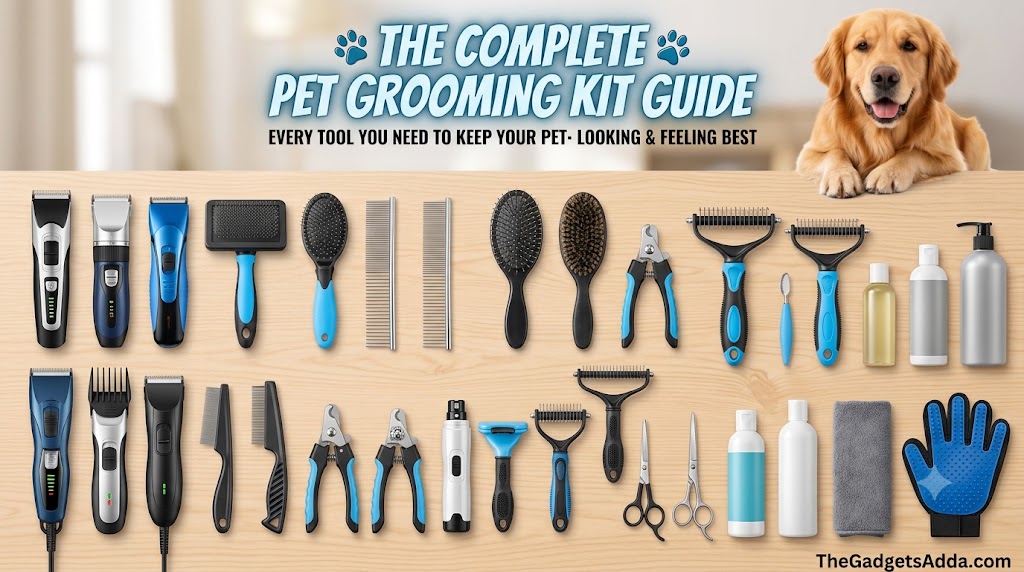
This guide examines the engineering, physics, and biology of modern pet grooming systems. Understanding these concepts allows you to select tools that protect your pet’s health, prevent physical injury, and maintain their coat effectively over time.
Defining the Modern Pet Grooming Kit
A pet grooming kit is a curated system of specialized mechanical, abrasive, and shearing tools engineered to manage the hygienic and physiological needs of domestic animals. Unlike human hair-cutting equipment, which handles low-density, uniform hair follicles, pet grooming kits are designed for high-density, multi-layered fur systems that vary widely in diameter, texture, and growth patterns.
A functional kit includes:
- Mechanical Shearing Units (Clippers): Motorized drives that slide a moving cutting blade across a fixed counter-blade to shear hair shafts cleanly.
- Follicular and Undercoat Deshedding Tools: Rakes, slickers, and pin brushes designed to remove dead, shed hair from the undercoat without damaging the surrounding skin or topcoat.
- Abrasive and Shearing Nail Matrix Tools: Guillotine or scissor clippers, paired with rotary abrasive grinders, designed to shorten the hard keratinized claw without disrupting the internal blood vessel network.
Why Precise Coat Maintenance Matters
Grooming is more than just an aesthetic choice. It is a critical aspect of an animal’s physical health. Neglecting a pet’s coat can lead to complex physiological complications that affect their overall well-being.
The Mechanics of Matting and Dermatitis
When shed undercoat hairs are not brushed out, they wrap around active hair shafts, trapping moisture, sebum, and environmental debris. This forms a dense, woven tangle known as a mat.
As mats tighten, they pull on the skin’s surface, restricting local blood flow and preventing air circulation. This lack of airflow creates an anaerobic environment ideal for opportunistic pathogens, leading to a condition called acute moist dermatitis, or hot spots.
In severe cases, tight mats can restrict limb movement or cut off blood supply to the skin, causing tissue necrosis that requires veterinary intervention.
Skeletal Realignment from Nail Overgrowth
A pet’s claws contain a vascular core called the quick, surrounded by a hard keratin shell. When nails grow too long and touch the floor, every step pushes the claw back up into the joint structure.
To avoid discomfort, the animal alters its posture, shifting its weight backward or sideways. Over time, this constant structural shift changes the force distribution across the digits, wrists, hocks, and spine. This acceleration of joint wear can lead to premature osteoarthritis, chronic joint laxity, and tendon strain.
How Home Grooming Systems Work
Understanding the mechanics of grooming tools helps you use them more effectively and safely.
Clipper Motor Mechanics: Rotary vs. Pivot vs. Magnetic
The performance of a grooming clipper depends heavily on its motor design. Each type handles resistance differently:
| Motor Type | Operating Principle | Strokes Per Minute (SPM) | Torque Profile | Ideal Use Case |
| Magnetic | Electromagnetic oscillation alternating with a spring return. | 7,200 to 12,000 | Low torque; relies on high speed to slice fine hairs. | Light trimming; fine, single-layered coats (e.g., Yorkies). |
| Pivot | Double-magnet system pulling the blade arm in both directions. | 3,000 to 3,600 | High torque; lower speed prevents blade heat buildup. | Thick, wet, or heavy coats; prone to matting. |
| Rotary | Direct current (DC) or alternating current (AC) motor spinning an eccentric drive chip. | 2,500 to 5,000 | Exceptionally high, consistent torque across variable speeds. | Bulk hair removal; dense double coats; professional use. |
The Histology of the Canine Acid Mantle
A common mistake in home grooming is using human hair products on pets. Human skin has an acidic pH, typically ranging from 4.5 to 5.5. Because of this, human shampoos are formulated to preserve this acidic barrier.
In contrast, canine skin is much closer to neutral or slightly alkaline, generally ranging from 6.2 to 7.5.
Using human shampoo on a dog strips away their natural acid mantle-the thin, protective layer of oils and amino acids on the skin. This disruption alters the skin’s pH, damages the moisture barrier, and makes the animal more vulnerable to bacterial, fungal, and parasitic infections.
Benefits and Limitations of Home Kits
Investing in a home grooming kit offers clear advantages, but it also has structural limitations that you should consider before starting.
Benefits
- Stress Reduction: Eliminating car rides, loud salon vacuums, and unfamiliar animals can lower cortisol levels in anxious or sensitive pets.
- Early Health Detection: Regularly handling your pet’s body allows you to spot issues like skin masses, external parasites, ear infections, or structural tenderness early on.
- Tailored Pace: Home grooming allows you to break sessions into shorter intervals, matching your pet’s stamina and comfort levels.
Limitations
- Mechanical Skill Curve: Safely handling high-RPM clippers around skin folds requires precise technique and practice.
- Inability to Treat Advanced Pathology: Severe, skin-tight matting cannot be safely removed with consumer tools. Attempting to cut these mats at home poses a high risk of tearing the skin, meaning these cases should be handled by a professional.
- Tool Maintenance Requirements: High-quality steel and ceramic components require regular cleaning, alignment, and lubrication to function properly.
Types of Grooming Kits Available
The market is generally divided into four categories of grooming systems, each designed for different skill levels and coat requirements.
1. Vacuum-Assisted Integrated Grooming Systems
These systems connect clippers, deshedding rakes, and slicker brushes directly to a central vacuum canister via a flexible hose. As the tool cuts or lifts dead hair, the suction immediately pulls the debris into a sealed collection chamber. This layout prevents loose fur from becoming airborne, keeping your workspace clean and reducing cleanup time.
2. Cordless Lithium-Ion Systems
Designed for maneuverability, these kits feature rechargeable batteries that eliminate the restriction of a power cord. They are highly effective for working around difficult areas like the underbelly, groin, and paws. However, users must monitor the battery level; as the charge drops, some models may lose torque, which can cause the blades to pull on the hair.
3. Heavy-Duty Professional AC Corded Systems
Built for durability, these systems run on direct wall power to deliver consistent, uncompromised torque. They use standardized detachable blades, making them the industry standard for dense, coarse, or severely overgrown double coats.
4. Special-Purpose Trimming Kits
These compact, low-noise units feature narrow blade heads (often between 0.25 and 1 inch wide). They are designed for precision work around sensitive areas, including paw pads, the sanitary zone, and facial details.
Key Features to Analyze Before Buying
When selecting a grooming kit, look closely at technical specifications rather than marketing claims.
Standardized Blade Sizing and Material Composition
Most professional-grade clippers accept A5 detachable blades. These blades use a standard numbering system where higher numbers indicate a shorter remaining coat:
- #10 Blade: Leaves 1/16 inch (1.5mm) of hair. This is the universal standard for safety, making it ideal for the stomach, sanitary areas, and face.
- #7FC (Finish Cut): Leaves 1/8 inch (3.2mm) of hair. Excellent for mats and creating a smooth finish on wire or curly coats.
- #4FC (Finish Cut): Leaves 3/8 inch (9.5mm) of hair. Provides a longer, plush look on drop or curly coats.
Blade materials also affect performance. High-carbon steel offers exceptional sharpness and durability but heats up quickly due to friction. Ceramic running blades stay significantly cooler than steel during long sessions, reducing the risk of accidental thermal burns on your pet’s skin.
Decibel Output and Vibration Mechanics
Animals are highly sensitive to high-frequency vibrations and loud noises. Standard human clippers can emit sound levels greater than 70 decibels (dB) and create intense vibrations.
For home pet grooming, look for units engineered to operate at less than 50 dB. Low-vibration armatures help minimize sensory overload, making it easier to keep your pet calm and cooperative.
Common Mistakes to Avoid
Avoiding these technical errors is essential for protecting your pet’s skin and coat.
Shaving a Double-Coated Breed
Breeds like Huskies, Golden Retrievers, German Shepherds, and Pomeranians have a complex, two-layered coat system. The soft undercoat provides thermal insulation, while the harsh topcoat protects against moisture, debris, and ultraviolet (UV) radiation.
Critical Safety Warning: Never shave a healthy double coat down to the skin unless advised by a veterinarian for medical reasons.
Shaving destroys the balance between these two layers. The undercoat often grows back faster than the topcoat, trapping heat and moisture against the skin. This can lead to issues like clipper alopecia (patchy regrowth), dynamic heat stroke, and an increased risk of sunburn.
Engaging the Nail Matrix Quick
The canine nail quick contains an intricate network of nerve endings and blood vessels. Cutting into this tissue causes immediate pain and bleeding.
To avoid this, use clippers with an adjustable safety guard, or opt for a rotary nail grinder. Grinders allow you to shorten the nail gradually, smoothing away layers of keratin safely and reducing the risk of a dynamic cut.
Step-by-Step Home Grooming Protocol
Follow this structured framework to ensure a safe, organized, and effective grooming session.
1.Pre-Bath Mechanical De-Matting:15 to 20 Minutes.
Begin with a dry coat. Use a stainless steel comb to locate tangles. Hold the base of the hair follicle to prevent pulling on the skin, and use a slicker brush to gently work through knots from the ends up to the skin. Remove all loose undercoat before introducing water; wetting unbrushed tangles causes them to tighten and set.
2.Hydro-Therapeutic Cleansing:10 to 15 Minutes.
Thoroughly wet the coat with lukewarm water. Apply a pH-balanced pet shampoo formulated for your animal’s specific skin needs. Massage the lather down to the skin surface, paying extra attention to the paws, underbelly, and sanitary zones. Rinse completely until the water runs clear; dried shampoo residue can cause severe chemical contact dermatitis.
3.Thermal Dehydration (Drying):15 to 30 Minutes.
Towel-dry the coat to remove excess water. Next, use a variable-speed pet dryer set to low or ambient heat. Avoid high-heat human hair dryers, which can easily burn sensitive pet skin. Keep the air stream moving continuously, blowing in the direction of hair growth until the coat is completely dry down to the follicle base.
4.Mechanical Shearing (Clipping):20 to 45 Minutes.
Ensure the coat is entirely clean and dry. Select your desired blade or guard attachment. Hold the clipper housing parallel to the skin surface to avoid gouging. Move the blade smoothly in the direction of hair growth, applying light, uniform pressure. Periodically check the blade’s temperature against your wrist to ensure it isn’t getting too hot.
5.Nail Trimming or Grinding:5 to 10 Minutes.
Isolate a single digit and stabilize the paw. If using clippers, trim below the quick at a 45-degree angle. If using a rotary grinder, apply the tool to the nail tip for 2 to 3 seconds at a time using medium speed. Look for a small greyish dot appearing in the center of the nail cut; this signal indicates you are approaching the quick and should stop.
Best Practices for a Safe Session
Implementing these industry-standard safety practices helps protect both you and your pet during grooming:
- Monitor Blade Temperatures Regularly: Friction between metal moving parts can cause clipper blades to heat up to over 115 degrees Fahrenheit within 15 minutes. Check the blade against your skin frequently. Use a canister of specialized blade coolant spray or swap in an alternate cool blade to prevent thermal burns.
- Stabilize Skin Folds: When working around areas like the flank, armpits, or hocks, use your non-dominant hand to pull the skin taut. Loose, wrinkled skin can easily slip into the gaps of a moving clipper blade, causing deep cuts.
- Keep Styptic Powder Ready: Always keep a container of styptic powder open and within reach before trimming nails. If you accidentally cut the quick, apply a small pinch of the powder directly to the bleeding site with firm pressure for 10 to 15 seconds to stop the bleeding quickly.
Advanced Expert Tips
Professional groomers rely on specific techniques to handle common challenges efficiently:
The Desensitization Protocol
If your pet exhibits signs of fear or anxiety around grooming equipment, introduce the tools gradually over several days. Start by placing the turned-off clipper near their food bowl.
Once they show no reaction, turn the unit on at a distance while offering high-value treats. Slowly move the vibrating casing closer to their body over multiple sessions, eventually touching the handle against their shoulder to introduce the sensation without cutting hair.
The Cornstarch De-Matting Technique
For stubborn, non-hazardous mats that are hard to separate, apply a small amount of pure cornstarch directly to the tangle. Work the powder into the fur with your fingers. The starch absorbs residual moisture and alters the coefficient of friction across the hair shafts, allowing the teeth of your steel comb to glide through and separate the mat more easily.
Matching Coat Types to Specific Tools
Different coat types require specific tools and care strategies. Use this matrix to guide your approach:
| Coat Architecture | Typical Breeds | Primary Mechanical Tool | Technique |
| Curly / Wool | Poodles, Bichons, Doodle Crosses | Long-pin slicker brush, A5 clipper with finish-cut blades (#4FC or #5FC) | Line brushing required; brush the hair upward away from the skin before clipping to ensure a uniform cut. |
| Double Coat | Huskies, Malamutes, Shepherds | Undercoat rake, stainless steel greyhound comb, high-velocity forced-air dryer | Blow out the loose undercoat with the dryer after bathing, then use the rake to lift out trapped fur. Avoid clipping. |
| Wire Coat | Schnauzers, Wirehaired Terriers | Stripping knives, slicker brush, #7FC blade for pet trims | Hand-stripping preserves the coarse texture of wire coats; clipping softens the wire hair over time. |
| Drop Coat | Maltese, Shih Tzus, Yorkies | Pin brush, steel comb, specialized thinning shears | Daily combing prevents matting. Use thinning shears to blend lines around the head and face naturally. |
Key Takeaways
- Motor Selection Matters: Choose your clipper motor based on your pet’s coat density. Use high-torque rotary or pivot motors for dense hair, and magnetic motors for fine, light coats.
- Protect the Skin’s pH: Never use human shampoo on pets. Stick to formulas designed for the neutral to slightly alkaline pH of animal skin to prevent irritation and infections.
- Dry Before Clipping: Always wash, brush, and thoroughly dry the coat before using clippers. Attempting to cut damp or dirty hair dulls blades quickly and leads to uneven results.
- Manage Tool Heat: Monitor blade temperatures constantly during use. Use coolant sprays or alternate blades to protect your pet from thermal skin burns.
Frequently Asked Questions
What should I do if my clipper blades stop cutting and pull the hair?
This usually means the blades are dull, lack lubrication, or have trapped fine hair between the cutting surfaces. Turn off the unit, remove the blade, clean out any debris with a small brush, apply two drops of specialized clipper oil along the rail, and reassemble. If the issue persists, the blade needs professional sharpening.
How often should I groom my pet at home?
Brushing and basic coat maintenance should be performed two to four times a week depending on length and density. Full clipping and bathing schedules typically run on a 4-to-8-week cycle, matching the natural growth rate of the hair.
Can I use human hair clippers on my dog or cat?
Avoid using human clippers on pets. Human hair clippers lack the motor torque and specific blade tooth spacing needed to handle dense pet coats. Using them can cause the motor to stall, overheat, or pull on the hair, creating an unsafe experience.
How do I safely clean and sanitize my grooming tools after use?
Remove hair from all blades and brushes using a stiff cleaning brush. Wipe the surfaces down with a dedicated disinfectant spray or clipper sanitizer. Dry the components completely to prevent rust, and apply a thin layer of clipper oil to all moving metal parts before storage.
What is the safest way to clip hair around a pet’s face and eyes?
Use a specialized compact detail trimmer or safety-tip thinning shears. Always point the tips of your shears away from the eyes, and keep your non-dominant hand positioned to gently steady the muzzle, preventing sudden movements.
Why does my pet get red bumps or razor burn after clipping?
Razor burn typically happens when a blade runs too hot, when too much downward pressure is applied to the skin, or when using a blade that is too short for a sensitive area. Keep the blade cool, use a light hand, and stick to a protective #10 blade around sensitive zones.
How can I trim my cat’s nails without them scratching or escaping?
Wrap the cat gently in a towel, leaving only one paw exposed at a time. Work in a quiet room free of distractions, apply gentle pressure to the paw pad to extend the claw, and use sharp, scissor-style cat clippers to clip just the clear tip of the nail.
My dog is terrified of the nail grinder. How can I fix this?
Use a gradual counter-conditioning approach. Touch the unpowered grinder to their paws while feeding high-value treats. Over time, turn the unit on nearby without making contact, gradually working up to touching the vibrating handle to their leg, and finally grinding a single nail per session with plenty of rewards.
What should I look for in a professional-grade slicker brush?
Look for a brush with stainless steel pins that have polished or rounded tips to prevent scratching the skin. The pad should offer a flexible cushion, and the handle should feature an ergonomic, non-slip grip to give you maximum control.
How do I remove a tick found during a grooming session?
Use fine-tipped tweezers or a specialized tick-removal tool. Grasp the tick as close to the skin’s surface as possible and pull upward with steady, even pressure. Avoid twisting or jerking, which can break off the mouthparts. Disinfect the bite site and wash your hands thoroughly.
At what age should I start grooming my new puppy or kitten?
Introduce basic grooming routines as early as 8 to 10 weeks old. Focus on gentle brushing, touching their paws, and letting them listen to the low hum of tools. Early exposure helps build positive associations and makes future sessions much easier.
What are the signs that a mat is too close to the skin to remove safely at home?
If you cannot insert a metal greyhound comb completely beneath the mat, or if moving the tangle visibly distorts or pulls the surrounding skin, it is too tight to remove safely at home. Attempting to cut or clip it can pull the skin into the blade, so these should be handled by a professional groomer or veterinarian.
Final Verdict
Taking care of your pet’s coat at home is a practical way to manage their long-term health and well-being. Success depends on choosing the right tools for your pet’s specific coat type and understanding how to use them safely. By investing in high-quality equipment, keeping up with regular maintenance, and focusing on your pet’s comfort, you can create a safe, stress-free grooming routine that supports their overall health and deepens your bond.