
Standing in a crowded transit terminal with a throbbing lower back, struggling to pull a traditional two-wheeled suitcase over historic European cobblestones, or watching gate agents pull bags from the boarding line because they exceed size limits by an inch reveals the flaws of poor luggage choices. Traditional luggage works well on flat, smooth floors, but real-world travel requires moving across stairs, uneven sidewalks, gravel, and public transportation.
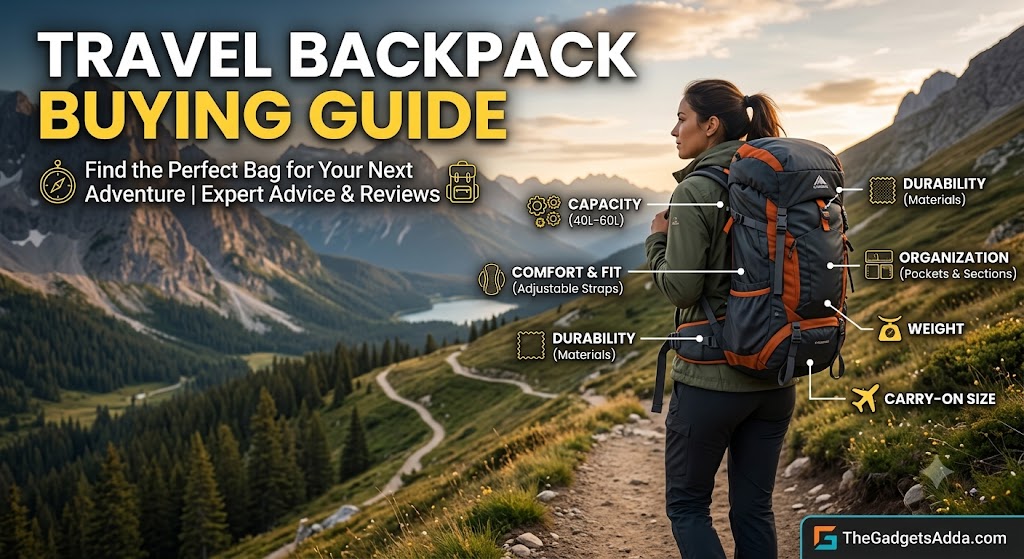
A well-designed travel backpack provides hands-free mobility and lets you bypass the baggage claim entirely. Finding the right pack requires more than just picking a popular style. It means balancing physical comfort, international carry-on rules, and material durability. This guide breaks down the technical specs, design details, and fitting steps to help you find the right backpack for your trips.
What Is a Travel Backpack?
A travel backpack is a piece of luggage engineered specifically for transport and transit, distinct from everyday school bags or wilderness hiking packs. While standard backpacks load from the top and commuter bags prioritize small tech items, a travel backpack combines the suspension system of an outdoor pack with the organizational access of a suitcase.
The defining characteristic of a true travel backpack is its opening style. Most open flat via a 180-degree perimeter zipper-frequently called a clamshell opening-allowing you to pack, unpack, and view your gear exactly like a standard suitcase without digging through layers from the top.
Why Choosing the Right Travel Backpack Matters
Your backpack acts as your home on the move. Choosing an ill-fitting or poorly made pack has practical financial and physical impacts.
The Cost of Poor Selection
- Baggage Fee Overages: Budget airlines enforce strict weight and size limits. A pack that is just a half-inch too thick can turn a budget $40 flight into a $110 trip after gate-checking fees.
- Physical Strain: Carrying 25 pounds on your shoulders without a proper load-bearing suspension system can cause neck strain, lumbar pain, and fatigue, reducing your energy for exploring.
- Gear Damage: Cheaply constructed tech sleeves that touch the bottom of the bag fail to protect laptops when the bag is dropped or jarred.
Mobility and Access Benefits
A properly fitted travel pack lets you move efficiently through crowded spaces. You can walk down narrow train aisles, navigate subway turnstiles, and climb stairs without blocking the flow of traffic. It also gives you the freedom to explore during long layovers or before hotel check-in times, rather than searching for luggage storage.
How a Travel Backpack Works: The Physics of Load Carrying
To understand how a high-quality pack functions, you have to look at how it manages weight. Carrying 20 to 30 pounds directly on your shoulders for extended periods will compress the spine and tire the trapezius muscles. A high-quality travel pack uses a structural harness to redistribute that load.
1. The Internal Frame
Internal frames use lightweight aluminum stays, fiberglass rods, or a high-density polyethylene (HDPE) framesheet to keep the bag from bowing outward when packed. This rigidity holds the pack upright against your back, keeping the center of gravity close to your body.
2. The Hip Belt
The hip belt transfers up to 80% of the pack’s total weight from your shoulders to your iliac crest—the bony ridge of your pelvis. Your legs and hips are much better suited for carrying heavy loads over long distances than your shoulders and spine.
3. Load Lifters and Sternum Straps
Load lifters are adjustable straps that connect the top of the shoulder harness back to the frame at roughly a 45-degree angle. Pulling them tight draws the top of the pack closer to your upper back, which keeps the bag from pulling backward. The sternum strap secures across your chest, keeping the shoulder straps from sliding outward and rubbing against your armpits.
Benefits and Limitations of Travel Backpacks
While travel backpacks offer excellent mobility, they are designed for specific uses. Weighing their strengths against their drawbacks will help you decide if a backpack fits your travel style.
Key Benefits
- Terrain Adaptability: Move easily over sand, cobblestones, stairs, mud, and broken pavement.
- Time Savings: Skip the check-in lines and the baggage claim carousels.
- Security: Keeping your bag on your back means it stays in your sight, reducing the risk of theft or loss by transit handlers.
- Hands-Free Convenience: Keep your hands free to handle boarding passes, navigate using your phone, or hold a coffee.
Limitations and Trade-offs
- Physical Limits: You must be physically comfortable lifting and carrying the total weight of your gear.
- Wrinkled Clothing: Packing clothes tightly into a backpack, even with packing cubes, leads to more wrinkles than a large, flat hardshell suitcase.
- Professional Contexts: In traditional corporate or business settings, showing up to client meetings with a large travel backpack may not match formal dress codes.
Types of Travel Backpacks
Travel backpacks are categorized by their capacity and how they fit into airline sizing rules.
| Backpack Category | Capacity Range | Primary Sizing Compliance | Best Used For |
| Personal Item Packs | 20L – 30L | Fits under the front seat of most budget carriers | Weekend trips, minimalists, or daypacks |
| Carry-On Standard | 35L – 45L | Fits in overhead bins on domestic and international flights | Multi-week trips, long-term travel, digital nomads |
| Wheeled Hybrids | 40L – 50L | Fits overhead bins (when handles/wheels are factored in) | Travelers wanting options when carrying gets tiring |
| Travel/Hiking Hybrids | 50L – 65L+ | Must be checked for commercial flights | Multi-month backcountry and urban multi-destination trips |
Personal Item Packs (20L – 30L)
These compact bags maximize under-seat space on budget airlines like Spirit, Ryanair, or Frontier. They require strict, minimalist packing but save you from paying any carry-on luggage fees.
Carry-On Standard Packs (35L – 45L)
The most popular size for independent travelers. These dimensions sit right at the maximum allowable limits for major airlines (typically around 22 x 14 x 9 inches). They provide enough space for indefinite travel if you wash clothes along the way.
Wheeled Backpack Hybrids
These bags feature a pull-out handle and integrated wheels alongside a stowable backpack harness. They offer flexibility but add three to five pounds of dead weight from the wheel and handle chassis, reducing your actual packing capacity.
Travel/Hiking Hybrids
These packs use heavy-duty outdoor suspension systems paired with lockable zippers and panel-loading designs. Because they exceed overhead bin limits, you will need to check them on most flights.
Key Features to Evaluate Before Buying
To find a reliable pack, look past marketing claims and examine the technical construction, materials, and hardware choices.
1. Exterior Materials and Fabrics
The exterior fabric determines how well the bag handles abrasions, weather, and rough use. Fabric durability is measured in Denier (D), which reflects the mass in grams of 9,000 meters of a single yarn strand. Higher numbers generally indicate thicker, heavier fibers.
- Ballistic Nylon (e.g., 840D to 1680D): Originally developed for military body armor, this fabric uses a smooth basket-weave design. It provides excellent tear and puncture resistance but is heavier than other options.
- Cordura Nylon: A textured nylon fabric known for its excellent resistance to abrasions and scuffs. A 500D Cordura pack offers a great balance of lightweight handling and durability.
- X-Pac: A multi-layer laminate material adapted from high-performance sailcloth. It features a distinctive X-ply mesh pattern, is highly waterproof, lightweight, and holds its shape well, though it tends to cost more.
- Polyester: Commonly found on budget bags. Polyester is less expensive and holds color well, but it has lower tensile strength and breaks down faster under heavy wear than nylon.
2. Zippers and Buckles
Zippers are the most frequent point of failure on travel luggage. Look for heavy-duty YKK zippers, specifically RC (Racquet Coil) or AquaGuard styles.
Technical Check: A primary luggage compartment should use at least a size #10 YKK zipper. Smaller #5 or #8 zippers are fine for accessory compartments but can separate under pressure when the main bag is fully packed.
Look for compression buckles made by trusted brands like Duraflex or Woojin, which resist cracking and handle temperature extremes without turning brittle.
3. Harness Comfort and Adjustment
Turn the bag over and look closely at the back panel. High-quality harnesses use high-density EVA foam or dual-density closed-cell foam that resists collapsing over time. Open-cell foam feels soft initially but compresses completely under a 20-pound load, creating pressure points. Look for 3D air mesh channels along the back to help manage heat and sweat.
- Stowable Straps: Look for a pack with shoulder straps and hip belts that tuck away into a dedicated zip compartment. This keeps loose straps from getting caught in airport conveyor belts if you ever need to check the bag.
- Torso Adjustment: Premium packs feature an adjustable yoke system that lets you move the shoulder straps up or down to match your exact torso length.
4. Pocket Layout and Tech Storage
A good travel backpack balances open packing space with dedicated pockets for quick access.
- Laptop Compartment: Look for a dedicated, zippered tech section with a suspended laptop sleeve. This design keeps the bottom of the sleeve floating an inch above the base of the bag, protecting your laptop from hitting the ground when you set the pack down.
- Quick-Access Top Pocket: Essential for storing items like passports, liquids, and noise-canceling headphones for quick retrieval at airport security.
- Water Bottle Pocket: Look for pockets with elastic gussets or zippers that sit flat against the bag when empty to keep the pack’s profile clean.
Common Travel Backpack Mistakes to Avoid
- Buying by Volume Alone: A 45-liter bag from one company might have dimensions of 24 x 13 x 7 inches, while another is 22 x 14 x 9 inches. The first bag will fail carry-on checks on many airlines because it is too tall, even though the total volume is the same. Always prioritize the physical dimensions over listed liters.
- Ignoring Torso Sizing: Your height does not dictate your torso length. A tall person can have short torso dimensions, and a shorter person can have a long torso. Buying a fixed-frame pack that doesn’t match your torso length means the hip belt won’t sit on your hips, forcing your shoulders to carry the entire load.
- Choosing Tactical/Military Styling: Backpacks covered in external MOLLE webbing, camouflage patterns, and velcro patches can look aggressive. They draw extra attention from customs agents, security checkpoints, and pickpockets in transit hubs. Clean, low-profile designs blend into urban settings much better.
- Over-packing Structural Spaces: Forcing gear into external pockets can compress the interior main compartment, causing the bag to bow out into a round shape that makes it hard to fit into overhead bins.
Step-by-Step Guide to Choosing Your Pack
Finding the right pack requires matching its physical dimensions to your body and your travel habits.
1.Measure Your Torso Length:Prerequisite Step.
Tilt your chin to your chest and locate the bony bump where your neck joins your shoulders (the C7 vertebra). Next, locate the top of your hip bones (the iliac crest). Have someone use a flexible tape measure to track the distance down your spine from the C7 bump to the point directly between your hip bones. This measurement is your torso length.
2.Establish Your Travel Sizing Boundary:Airlines Check.
Review the baggage limits for the airlines you fly most often. For US domestic flights, look for dimensions around 22 x 14 x 9 inches (approx. 45L). For international budget carriers, aim closer to 21.5 x 15.5 x 7.5 inches or choose a dedicated 35L personal item style pack.
3.Select Your Optimal Packing Volume:Gear Estimation.
Lay out all the clothing and gear you intend to bring on a typical one-week trip. Place them into standard packing cubes. If your packed gear fills three medium cubes along with a tech kit, a 35L to 40L pack will offer plenty of space.
4.Evaluate the Harness with Weight:Fit Testing.
Do not test a backpack empty. Load the bag with 15 to 20 pounds of weight (books or packed gear work well). Put the pack on, loosen all the straps, and tighten the hip belt directly over your hip bones first. Next, pull the shoulder straps down until they fit snugly against your upper back, then pull the load lifters to bring the bag’s weight forward.
5.Inspect the Final Load Profile:Physical Test.
Walk around with the weighted bag for 15 minutes. Check if the shoulder straps rub against your neck, if the hip belt slides down, or if the bag pulls backward away from your spine. If the pack shifts or causes hot spots, adjust the torso yoke position or try a different model.
Best Practices for Packing and Travel
To get the most performance out of your travel backpack, follow these basic packing methods:
- Heavier Items Against the Spine: Place your heaviest gear-like tech pouches, shoes, or extra cameras-in the middle of the main compartment, as close to your back as possible. Packing heavy items near the outer edge or bottom of the bag creates a lever effect that pulls the pack away from you, straining your lower back.
- Use Compression Panels: Use the internal compression straps to pull your clothing down and flatten the bag before closing the main zipper. This reduces strain on the exterior zippers and prevents the contents from shifting during transit.
- Secure Loose Straps Before Boarding: Before placing your pack into an overhead bin or handing it over for check-in, tuck all loose shoulder straps and adjustment cords into the harness compartment or use velcro keepers. This keeps loose straps from snagging on bin doors or conveyor machinery.
Expert Care and Maintenance Tips
- Never Machine Wash Your Pack: Putting a technical travel backpack into a washing machine can damage the interior polyurethane waterproof coatings and deform the foam padding within the harness.
- Spot Clean Only: Use lukewarm water, a soft nylon brush, and a mild, fragrance-free soap to clean off dirt, mud, or stains. Always let the pack air dry completely away from direct heat or sunlight.
- Maintain the Zippers: Keep your zippers running smoothly by cleaning dirt out of the tracks with an old toothbrush. Periodically apply a silicone-based zipper lubricant to protect the teeth from wear, especially after exposure to salt air or sand.
Visual Comparison: Travel Profiles
Different travel styles require different packing configurations and capacities.
The Minimalist Weekend Explorer
- Target Volume: 25L – 30L (Personal Item Compliant)
- Packing Strategy: Two pairs of pants, three shirts, one extra layer, minimal tech accessories. Fits easily under the seat in front of you.
The Balanced Digital Nomad
- Target Volume: 35L – 40L (Standard Overhead Carry-On)
- Packing Strategy: Five days of clothes, full laptop setup, roaming tech pouch, dedicated toiletry kit, and an extra pair of shoes.
The Multi-Destination Long-Hauler
- Target Volume: 45L Max Carry-On or 50L Hybrid Pack
- Packing Strategy: Full wardrobe rotation, extra cold-weather gear, external electronics, and integrated travel security locks.
Key Takeaways
- Harness system quality is critical: Always verify that a travel pack features high-density EVA foam and a load-bearing hip belt to protect your back and shoulders.
- Prioritize physical dimensions over volume: Airlines use sizing boxes, not volume gauges. Check that the bag’s height, width, and depth comply with your airline’s rules.
- Look for high-quality hardware: Stick to size #10 YKK RC or AquaGuard zippers and durable Duraflex or Woojin buckles to prevent failures while away from home.
- Choose a clamshell design: A 180-degree flat-opening design makes packing much easier and saves you from digging through your gear from the top.
Frequently Asked Questions
What is the maximum size for a carry-on backpack?
For most major domestic airlines in the United States, the maximum dimension limit is 22 x 14 x 9 inches. This footprint usually translates to an internal volume capacity of 40 to 45 liters, depending on the thickness of the exterior frame and pocket layout.
Is a 40L backpack too big for an international carry-on?
It depends on the airline. While a 40L pack easily clears domestic overhead bins, international budget carriers often enforce smaller limits, sometimes restricting depths to 7.5 or 8 inches. When flying internationally, look for a 35L pack or avoid over-packing your 40L bag so it can compress down if checked.
How do I know if a backpack fits my body?
A proper fit means the hip belt wraps securely around the top of your hip bones, the shoulder straps curve smoothly over your shoulders without leaving air gaps behind your neck, and the pack body does not extend past your lower back or hit your legs when walking.
Can I bring a laptop in a travel backpack if I check the bag?
If you must check your travel backpack at the gate, always remove your laptop, tablet, and any lithium-ion external battery packs first. Checked luggage undergoes rough handling, and lithium batteries present a thermal safety risk in cargo holds.
What is the difference between water-resistant and waterproof fabrics?
Water-resistant fabrics (like DWR-coated Cordura or nylon) handle light rain and splashes easily, giving you time to find shelter. Waterproof fabrics (like X-Pac or TPU-laminates) block heavy downpours completely, though water can still seep through standard stitching if the seams aren’t fully taped.
Are wheeled backpacks worth the extra weight?
Wheeled hybrids work well if you have physical limitations that make long carries difficult, or if you regularly travel through long, flat airport concourses. If you frequently navigate stairs, cobblestones, or unpaved paths, the extra three to five pounds from the wheel system is rarely worth the trade-off.
Do I need a women’s-specific travel backpack?
Women’s-specific packs feature shorter overall torso lengths, narrower shoulder yoke widths, and S-shaped shoulder straps designed to contour around the chest. If standard unisex packs cause rubbing or slip off your shoulders, a gender-specific harness will offer a more comfortable fit.
How do I protect my travel backpack from theft?
Look for lockable zipper sliders that allow you to secure the main compartment with a TSA-approved padlock. Additionally, look for packs with hidden passport pockets built directly into the back panel, which keeps your most important documents safe against your body while wearing the bag.
Can a 30L backpack work for a week-long trip?
Yes, a 30L pack works well for a week if you use lightweight packing cubes, pack versatile clothing layers that you can mix and match, and wash items during your trip.
Do compression straps actually save space?
Compression straps do not lower the weight of your bag, but they do compress fluffy clothing layers to reduce the bag’s depth. This pulls the total mass closer to your body, improving your balance and keeping the pack from bulging past airline size limits.
Why are hiking backpacks bad for traditional airport transit?
Hiking packs are tall, narrow, and load from the top, making it tough to grab items from the bottom without unpacking everything. They also feature loose exterior straps, buckles, and open mesh pockets that easily catch and tear on airport conveyor belts or overhead bins.
Final Verdict: How to Choose Your Ideal Travel Pack
Choosing the perfect travel backpack comes down to evaluating your physical build and your travel habits objectively. If you prefer traveling light and bypassing budget airline fees, focus on a streamlined 30L to 35L pack with a low-profile harness. If you travel for months at a time, carry a mobile office, or need to pack for multiple climates, choose a maximum-sized 40L to 45L carry-on pack built with heavy-duty 500D+ Cordura or Ballistic nylon and an adjustable suspension frame.
Avoid buying a pack based on color, trends, or brand popularity alone. Focus on finding high-quality materials, checking structural dimensions, and achieving a proper physical fit. A well-chosen travel backpack should feel like a natural extension of your body, keeping your gear safe and letting you focus completely on the journey ahead.